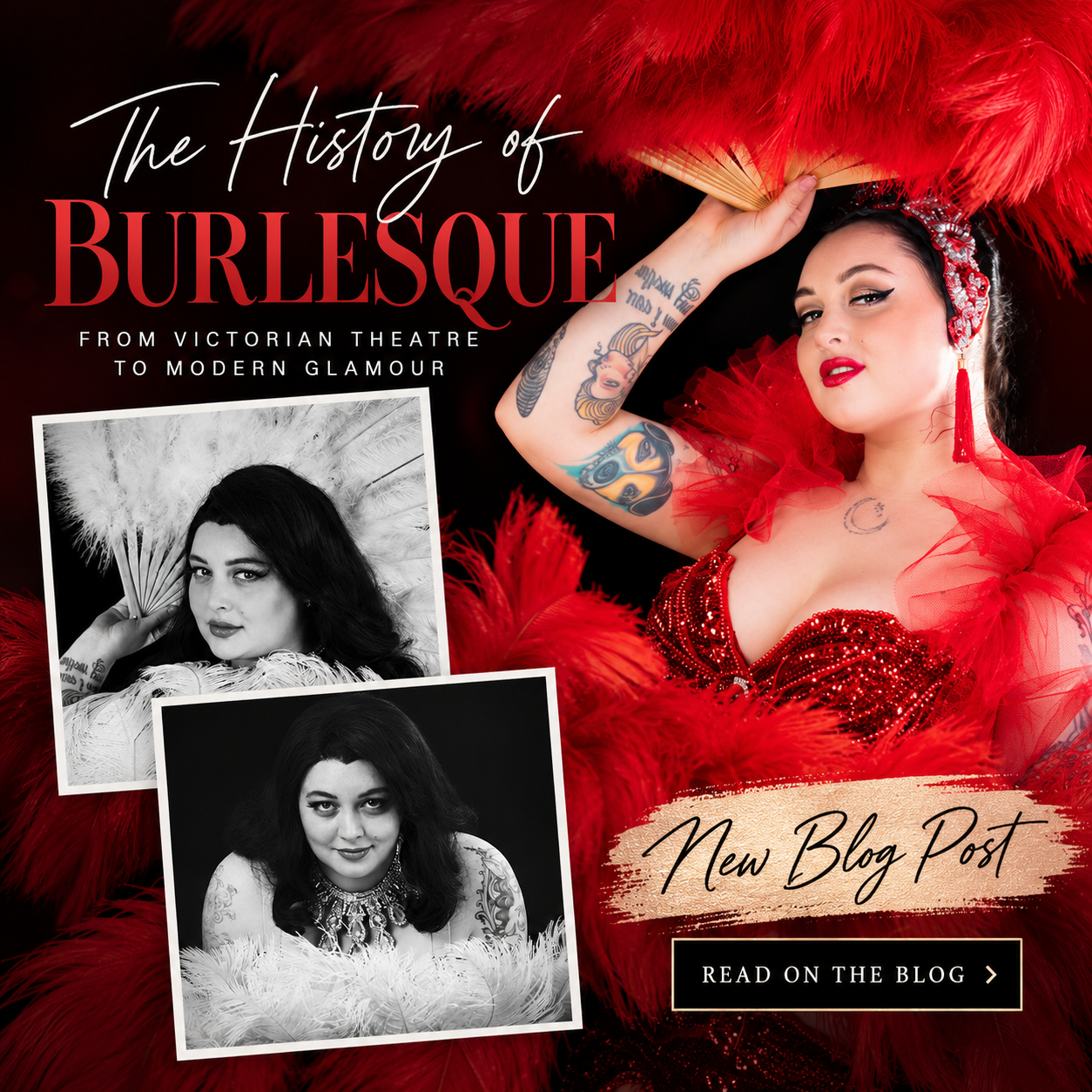
A Little Tease, A Lot of History: The Fascinating World of Burlesque
From Victorian satire to feathers, fans and fabulous costumes, burlesque has always been about more than meets the eye.
When you think of burlesque, what comes to mind? Feather fans, sparkling corsets, elaborate headpieces, dramatic makeup and perhaps a little cheeky glamour?
While all of those things are certainly part of the burlesque world we recognise today, its history is far more interesting than simply beautiful performers in extravagant costumes.
Burlesque has been entertaining, challenging and occasionally scandalising audiences for centuries. It's a world of theatrical storytelling, comedy, confidence, glamour and self-expression.
And for those of us who love creative portrait photography, it's an absolute treasure trove of inspiration.
So, where did it all begin?
The Origins of Burlesque: A Little Mockery and Mischief
Believe it or not, burlesque didn't begin with striptease.
The word burlesque comes from the Italian burlesco, meaning something along the lines of a joke or mockery.
Its origins can be traced back to literary and theatrical traditions that used exaggeration, parody and humour to poke fun at serious subjects, established conventions and the upper classes.
By the Victorian era, theatrical burlesque had become a popular form of entertainment in Britain. These productions often took well-known plays, operas and historical stories and turned them upside down with outrageous costumes, clever dialogue, songs and comedy.
Imagine Shakespeare with a cheeky twist, or a grand opera performed with a healthy dose of nonsense.
It was irreverent, theatrical and deliberately over the top.
And audiences loved it.
Women frequently played traditionally male heroic roles, appearing in tights and costumes that were considered rather daring for the time.
This wasn't quite the burlesque we know today, but the foundations were being laid.
Burlesque Crosses the Atlantic
During the nineteenth century, burlesque began making its mark in America.
One of the most influential figures in this transition was Lydia Thompson, a British performer who arrived in New York in 1868 with her troupe, the British Blondes.
Their performances combined comedy, music, satire, elaborate costumes and women taking on roles traditionally reserved for men.
They caused quite a sensation.
For some audiences, the performances were exciting and liberating. For others, they were scandalous.
Of course, controversy has always been rather good publicity!
As American burlesque evolved, it gradually moved away from its theatrical parody roots and became a variety entertainment format featuring comedians, singers, dancers and novelty acts.
By the early twentieth century, striptease was becoming an increasingly prominent part of the entertainment.
But even then, it wasn't simply about removing clothing.
It was about anticipation, performance, timing and knowing exactly how to hold an audience's attention.
The tease was often just as important as the reveal.
The Golden Age of Burlesque
The 1920s through to the 1950s are often remembered as burlesque's golden age, particularly in America.
This was the era of glamorous showgirls, elaborate costumes, theatrical lighting and larger-than-life personalities.
Burlesque performers developed distinctive stage personas, combining dance, comedy, sensuality and storytelling.
Some of the most famous names included:
Gypsy Rose Lee, renowned for her wit, elegance and sophisticated approach to striptease.
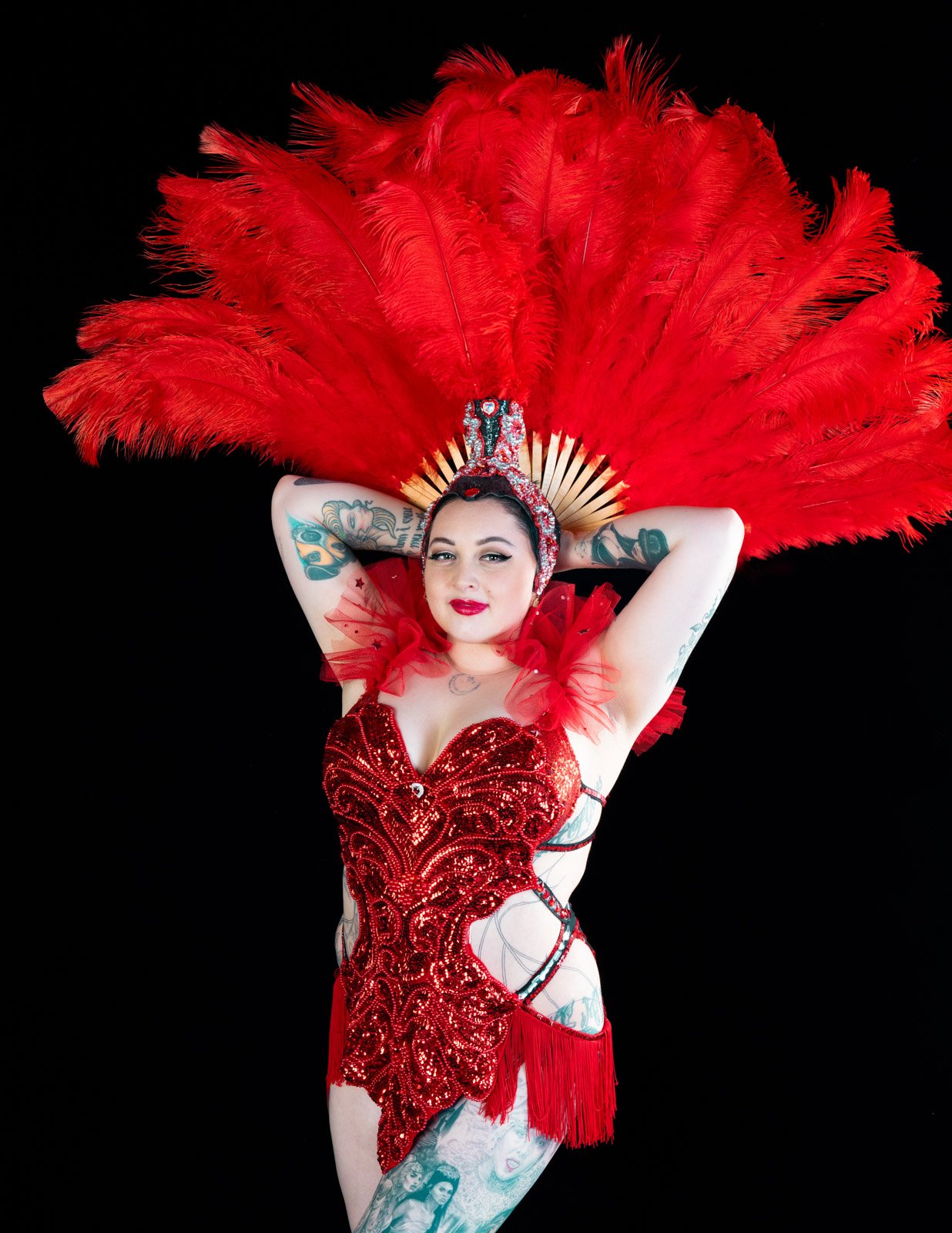
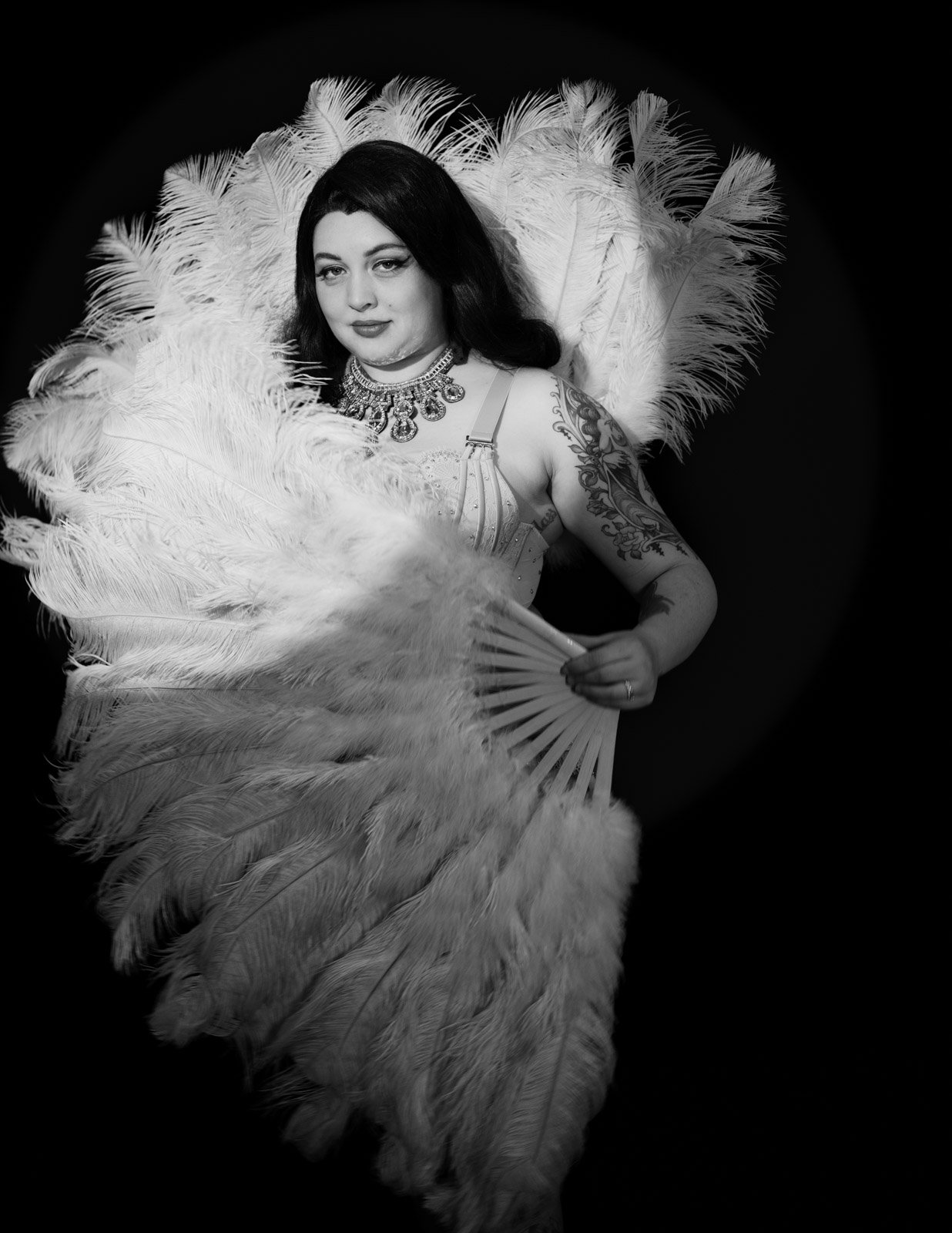
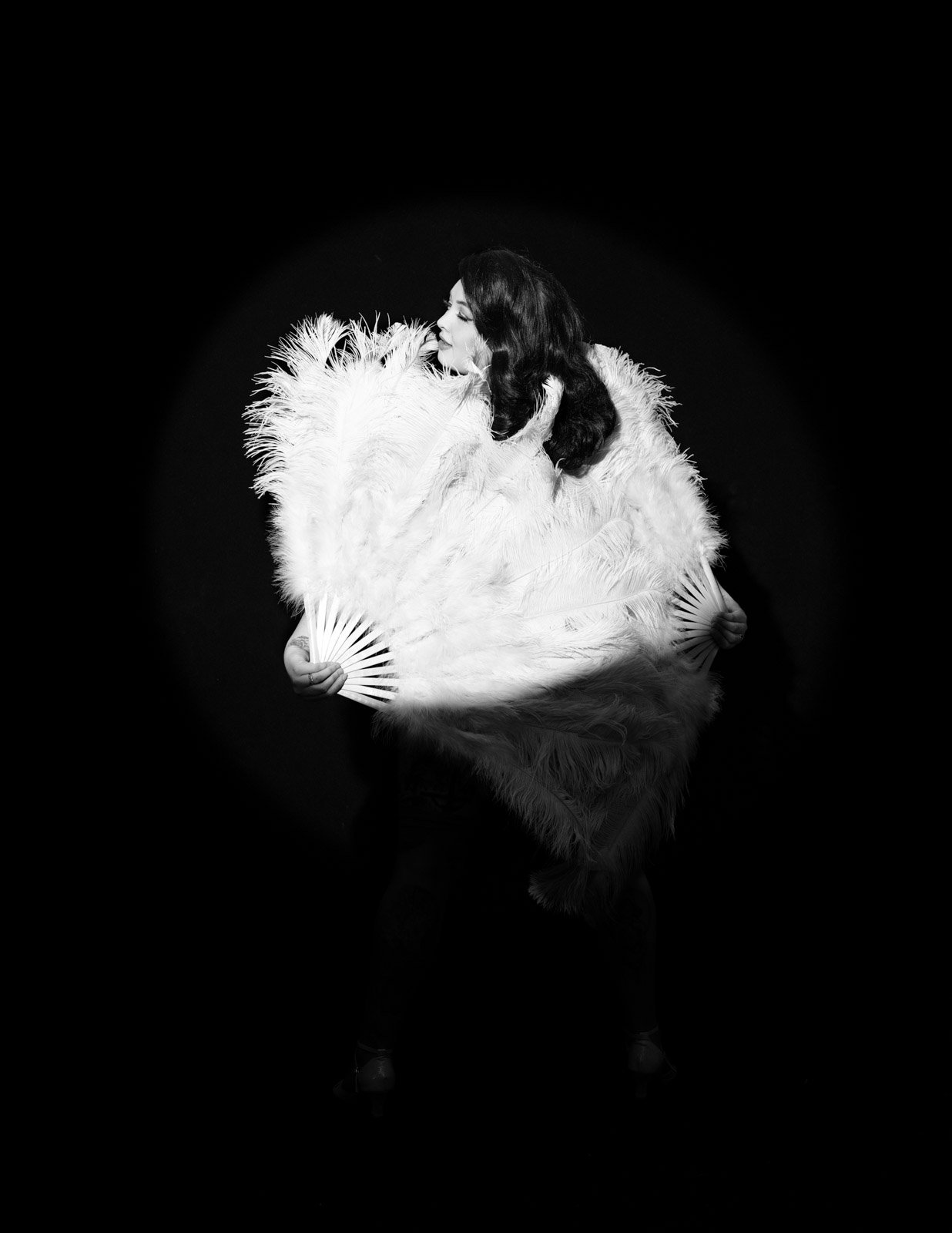
Sally Rand, famous for her graceful fan dances and performances with enormous feather fans.
Tempest Storm, known for her striking red hair, glamour and remarkable stage career.
Lili St. Cyr, whose luxurious costumes and theatrical performances helped define mid-century burlesque glamour.
These women were entertainers, performers and, in many cases, savvy businesswomen.
Their performances weren't necessarily about revealing everything. Quite the opposite.
They understood the power of suggestion.
A glance over the shoulder, the slow movement of a feather fan, the careful removal of a glove or a perfectly timed expression could captivate an entire audience.
There's something rather wonderful about that.
And, from a photographer's perspective, plenty to learn.
Costumes, Corsets and the Art of Transformation
One of the things I find most fascinating about burlesque is the sheer artistry involved in creating a character.
The costumes alone can be extraordinary.
Corsets, stockings, sequins, satin gloves, elaborate jewellery, towering headpieces, feather fans and sparkling accessories all contribute to the performance.
But it's not simply about looking glamorous.
Every detail helps tell a story.
A performer might be playful and mischievous, mysterious and seductive, powerful and commanding, or delightfully outrageous.
Hair and makeup play an enormous role too.
Think sculpted vintage waves, dramatic eyeliner, bold red lips, perfectly styled curls and beautiful theatrical makeup.
It's a complete transformation.
And that is precisely what makes burlesque such an exciting source of inspiration for creative portrait photography.
When Burlesque Began to Fade
By the middle of the twentieth century, traditional American burlesque was facing increasing competition.
Cinema, television, changing entertainment tastes and stricter regulations all contributed to its decline.
Many of the grand burlesque theatres closed or changed their programming.
As strip clubs and other forms of adult entertainment became more common, the distinction between burlesque's theatrical traditions and more straightforward striptease became blurred.
For a while, it seemed that the elaborate costumes, comedy and theatrical spectacle might become little more than a nostalgic memory.
But burlesque wasn't quite finished.
Not by a long shot.
The Revival: Welcome to Neo-Burlesque
During the 1990s, a new generation of performers began rediscovering and reinventing burlesque.
Known as neo-burlesque, this revival brought back the theatricality, glamour, humour and individuality of earlier performances while introducing contemporary ideas and creative freedom.
Modern burlesque embraces an enormous variety of styles.
Some performers celebrate classic Hollywood glamour and vintage pin-up aesthetics. Others incorporate comedy, cabaret, drag, alternative fashion, gothic themes or contemporary dance.
Performers such as Dita Von Teese helped bring classic burlesque aesthetics back into the mainstream, introducing new audiences to elaborate costumes, beautiful staging and vintage-inspired glamour.
But modern burlesque is much broader than any one performer or visual style.
It can be elegant, funny, political, provocative, empowering or completely ridiculous.
Sometimes all at once.
Importantly, the modern movement has also created space for performers of different genders, body types, ages and backgrounds to celebrate their individuality.
There is no single way to look like a burlesque performer.
And I rather love that.
Burlesque and Photography: A Match Made in Creative Heaven
Now, this is where things get especially interesting for me.
As a creative portrait photographer, I love anything that allows us to build a character, create a mood and tell a story through an image.
Burlesque offers all of that and more.
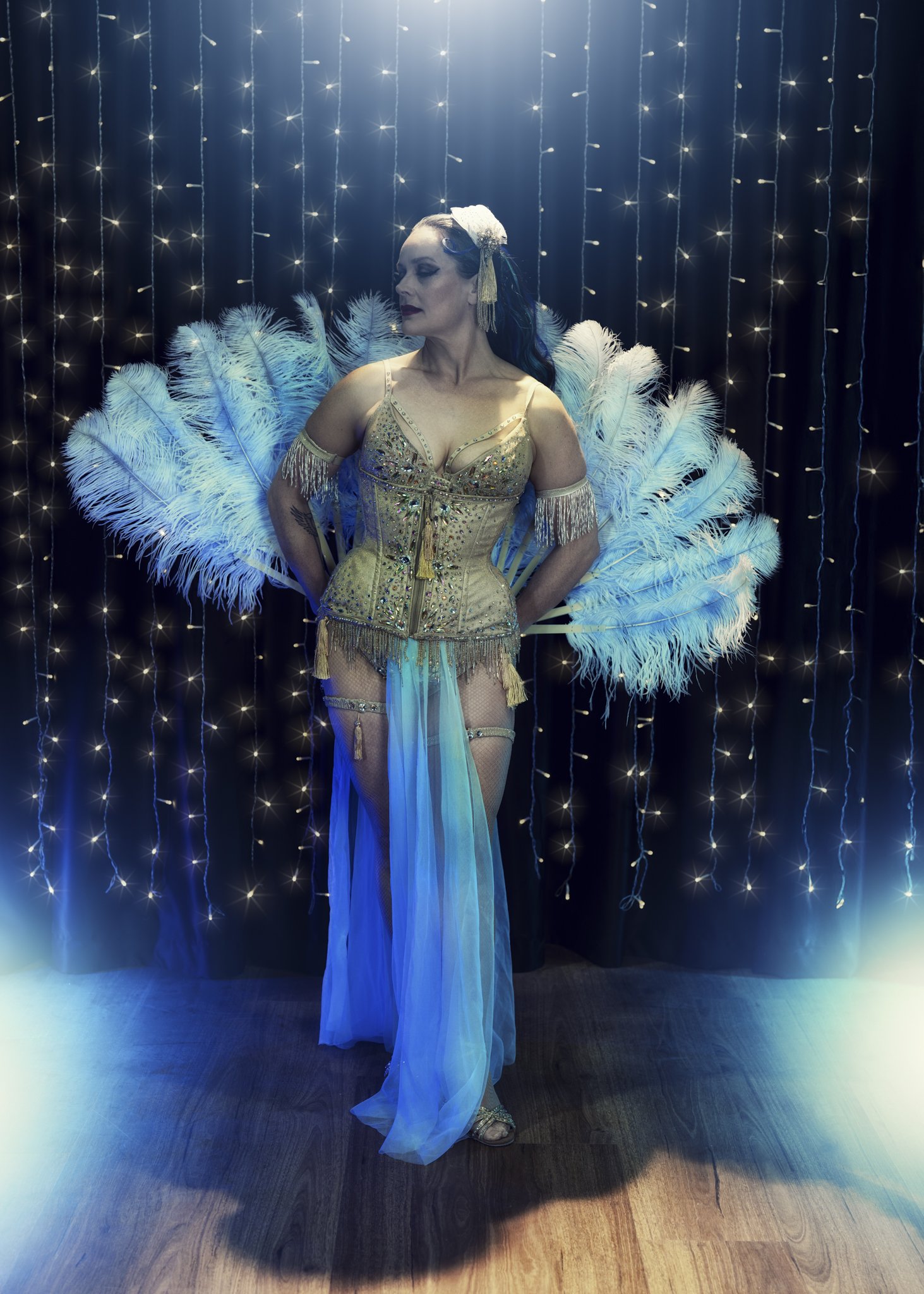
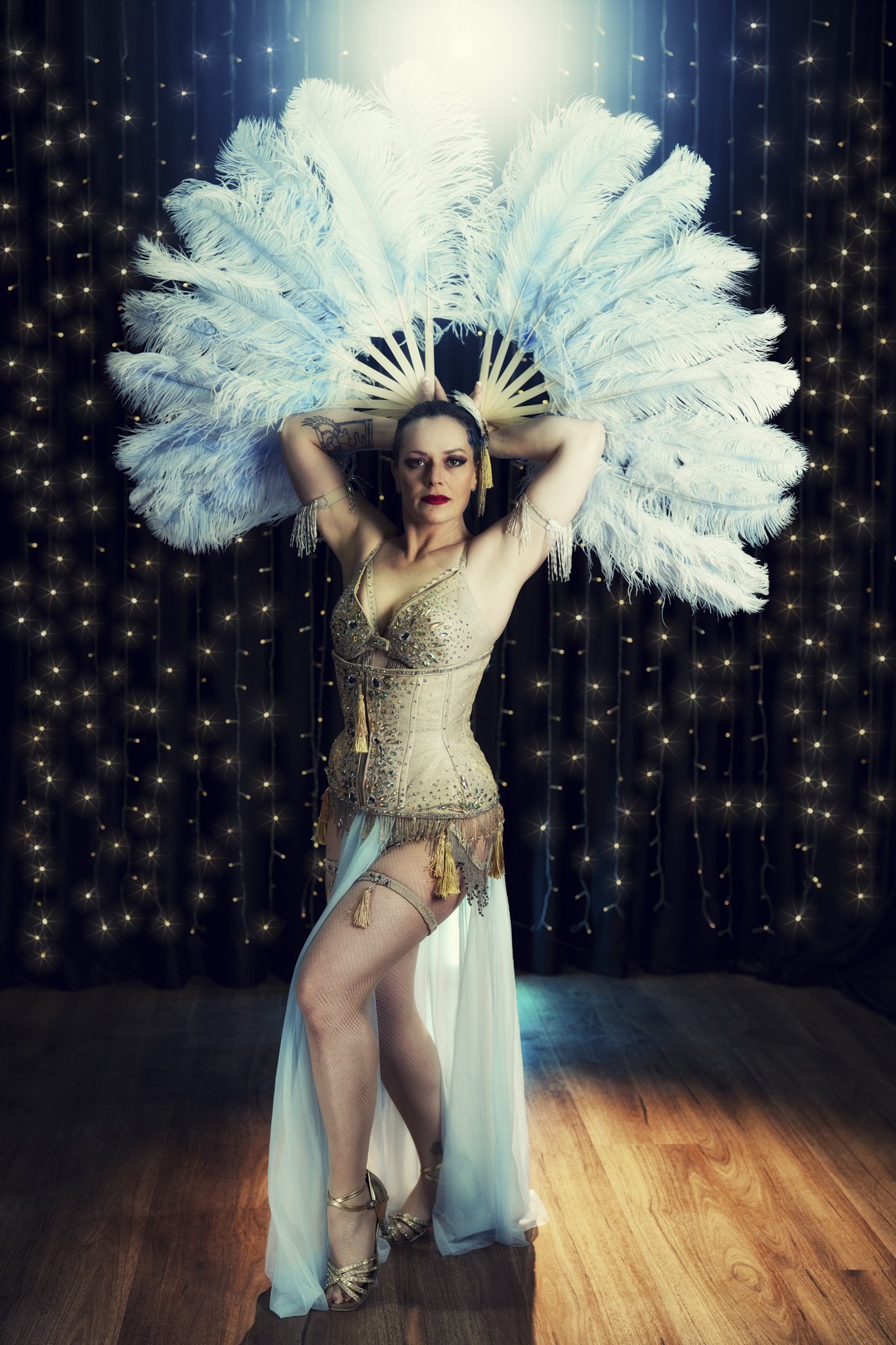
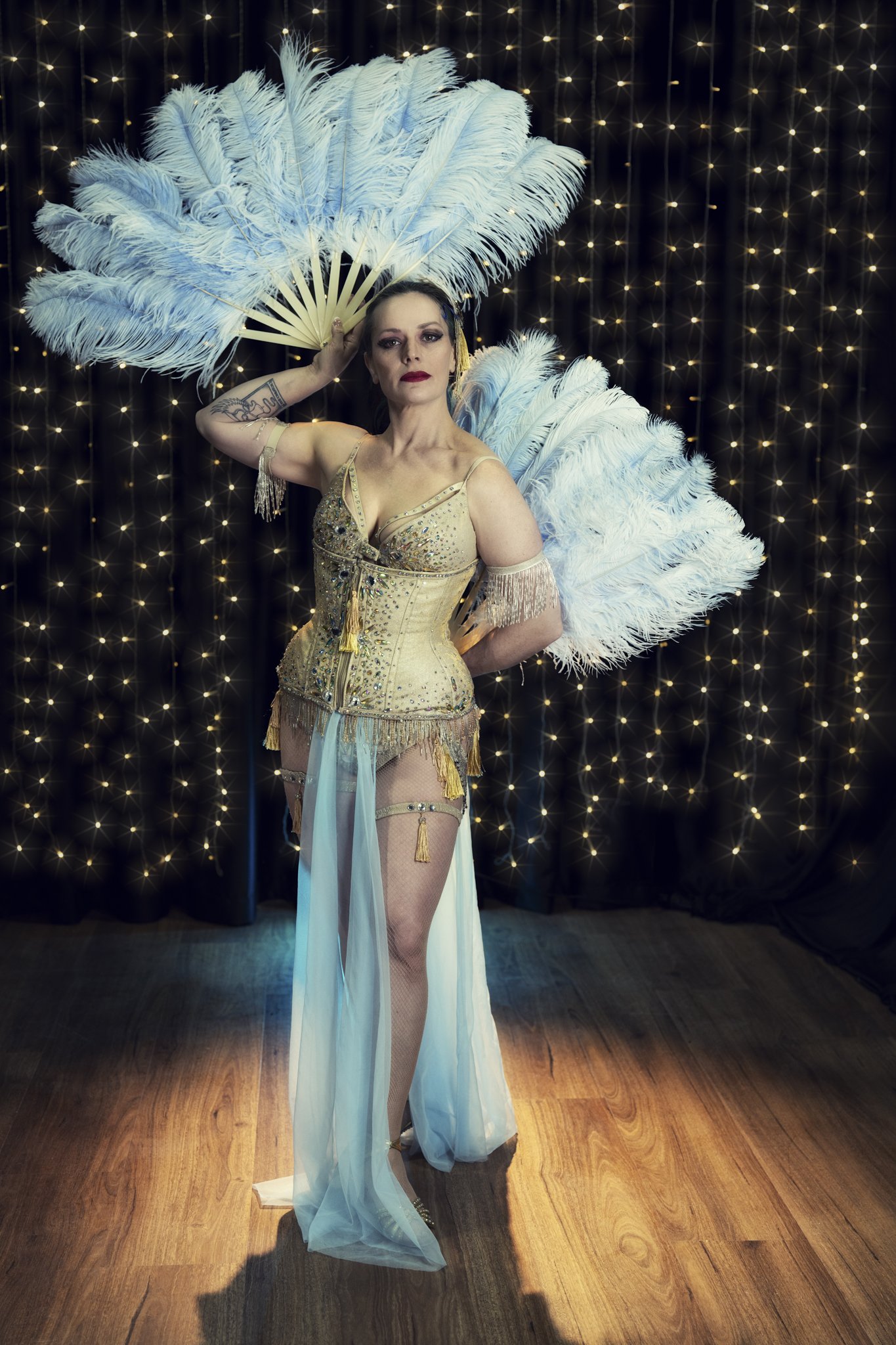
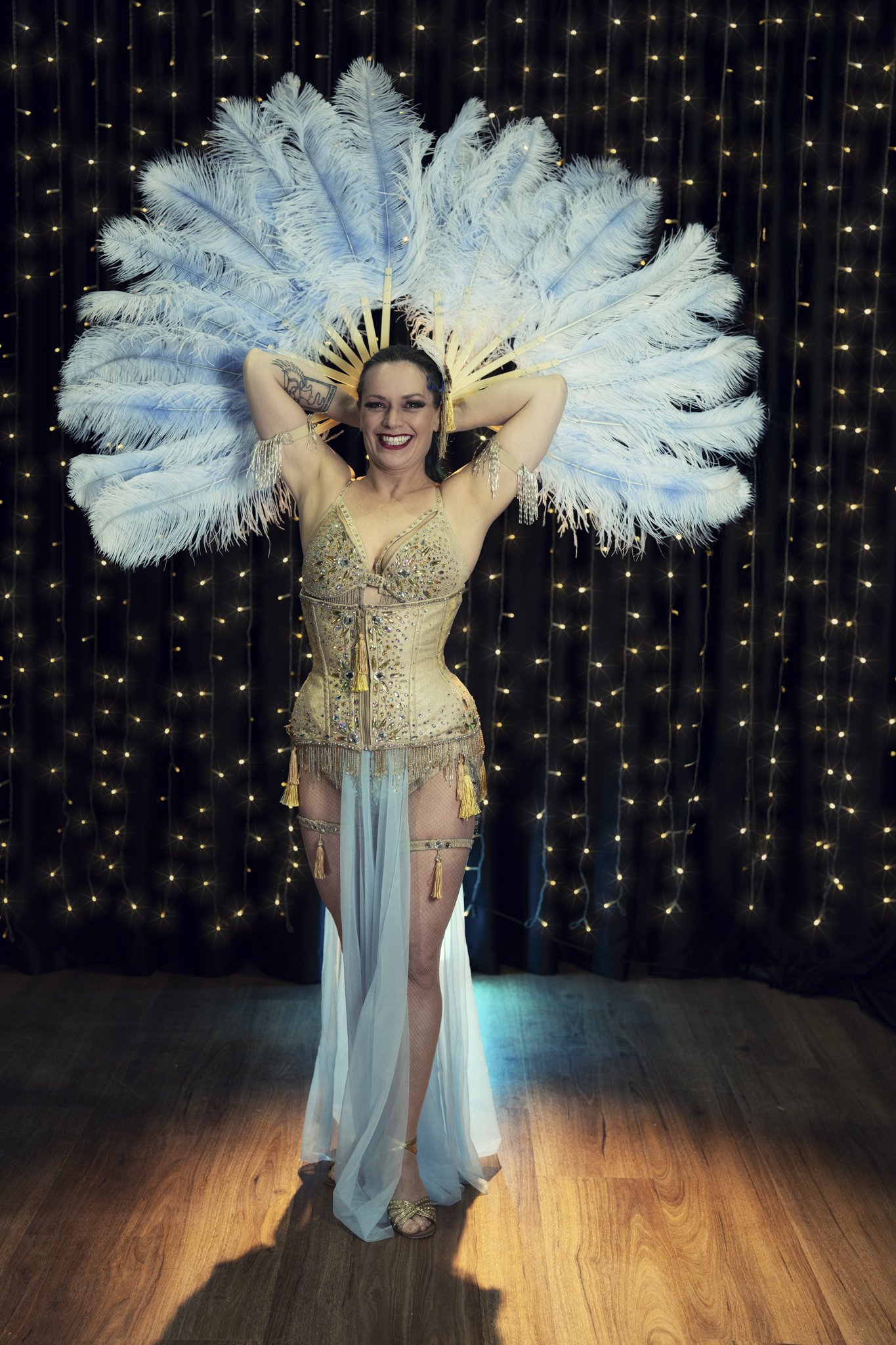
The costumes, poses, expressions, props and lighting are practically begging to be photographed.
But what makes a great burlesque-inspired portrait?
It's not necessarily the most elaborate costume or the biggest feather fan.
It's the attitude.
Confidence, expression and character are everything.
A simple seated pose, a carefully positioned hand, a knowing smile or a dramatic glance can tell an entire story.
And lighting can completely transform the mood.
Soft, glamorous light can create that beautiful vintage Hollywood feeling.
Harder, directional light can add drama and mystery.
A little backlighting can make feather fans glow, while rich shadows can give an image that wonderful theatrical atmosphere.
I also love the connection between burlesque and classic Hollywood portraiture.
Photographers such as George Hurrell helped establish a glamorous visual language through sculpted lighting, elegant posing and dramatic contrast. While his work wasn't exclusively connected to burlesque, that old Hollywood aesthetic remains a wonderful reference for burlesque-inspired photography.
There's so much creative potential here, even without an elaborate studio setup.
A Few Ideas for Your Own Burlesque-Inspired Portraits
You don't need a professional burlesque performer or a wardrobe full of sequins to explore this style.
Start with a simple concept.
Perhaps a vintage-inspired portrait with a feather boa, satin gloves and beautiful directional light.
Or a darker, moodier scene using deep red fabrics, dramatic shadows and a little theatrical attitude.
You could experiment with:
Classic Hollywood glamour: Soft highlights, sculpted shadows, elegant posing and beautiful vintage styling.
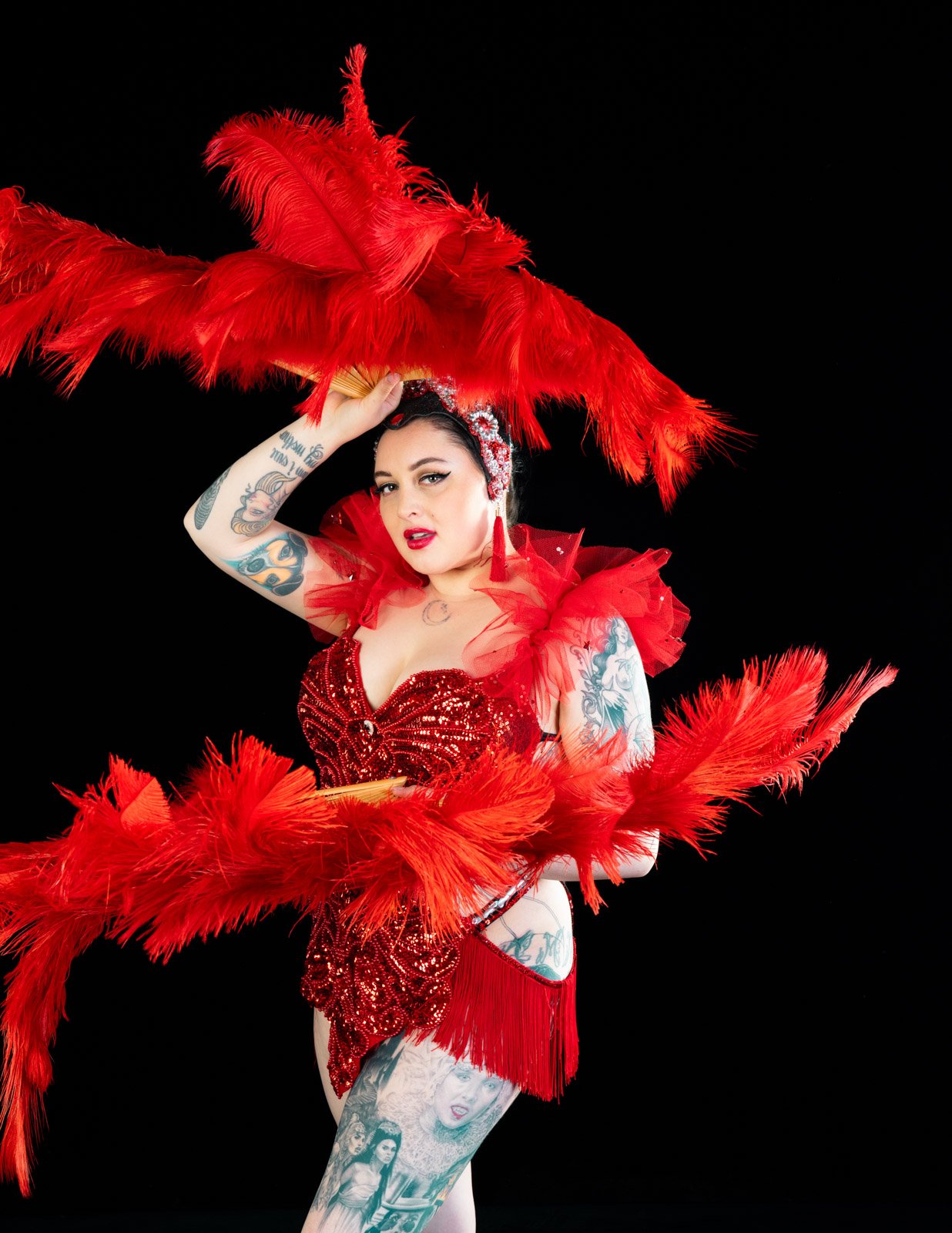
The mysterious showgirl: Dark backgrounds, feather fans, dramatic expressions and carefully controlled light.
Playful pin-up: Bright colours, cheeky expressions and a more lighthearted approach.
Cabaret drama: Rich reds, velvet textures, spotlight effects and theatrical poses.
Modern burlesque: Bold styling, unusual accessories, creative makeup and a contemporary twist.
Remember, the aim isn't necessarily to recreate an authentic historical performance.
It's to take inspiration from the style and create something of your own.
And if you're photographing an actual burlesque performer, involve them in the creative process. Their stage persona, movement and understanding of their character can bring something very special to the images.
More Than Feathers and Sparkles
What I love about the history of burlesque is how much it has changed while retaining its theatrical spirit.
From Victorian parody to American variety entertainment, from glamorous showgirls to the modern neo-burlesque movement, it has continually reinvented itself.
At its heart, burlesque has always involved performance, exaggeration, humour and the art of capturing an audience's attention.
And perhaps that's why it translates so beautifully into photography.
Because a wonderful portrait isn't just about what someone is wearing.
It's about the story, the personality and the feeling behind the image.
So next time you see a feather fan, a beautiful corset or a pair of satin gloves, perhaps look beyond the obvious.
There might be a wonderful story waiting to be photographed.
Keep creating, keep experimenting and don't be afraid to add a little theatrical magic to your photography.
Julie x