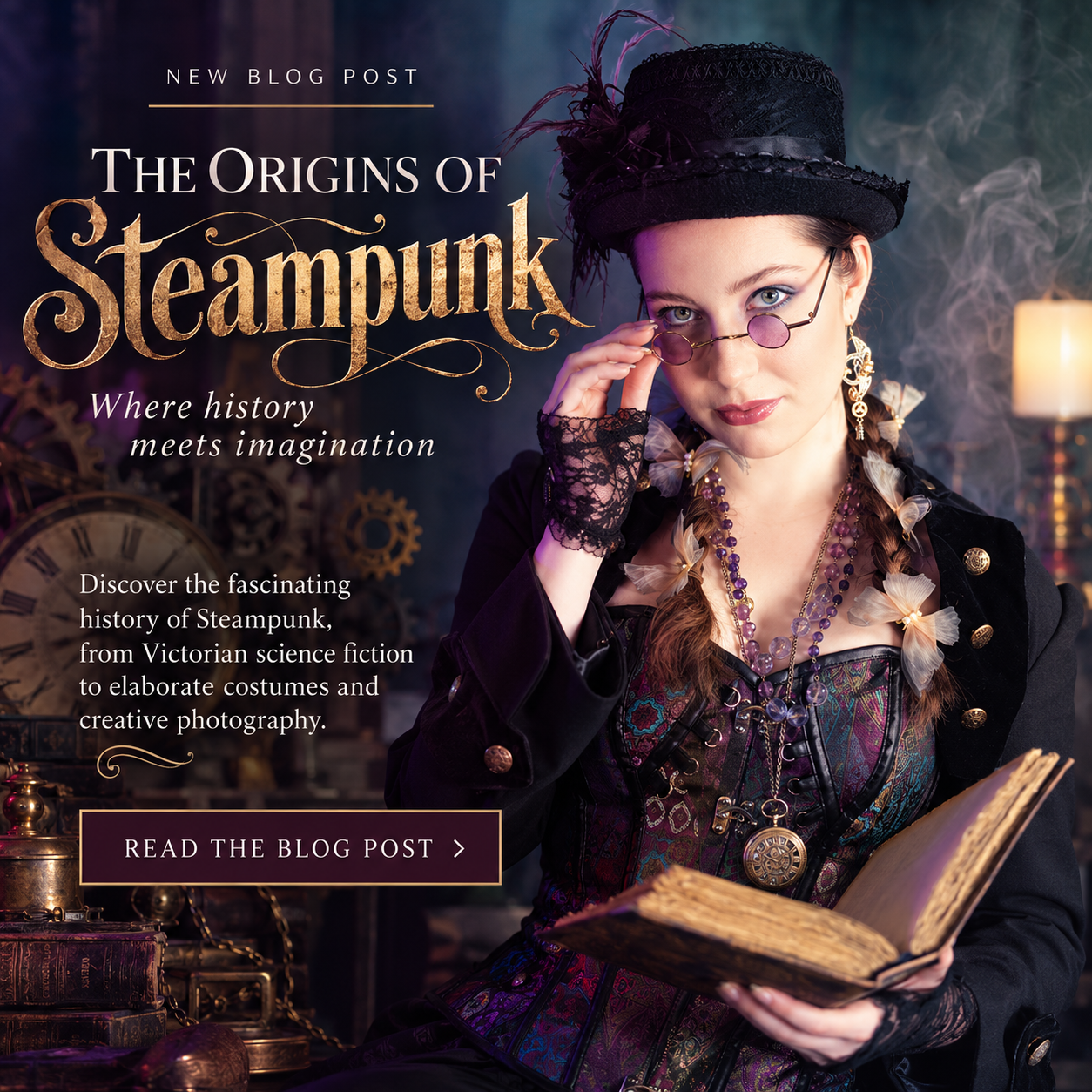
The Wonderful World of Steampunk: Where History Meets Imagination
What happens when you take Victorian elegance, throw in a little science fiction, add some steam-powered machinery and a healthy dose of imagination? You get Steampunk!
If you've ever seen someone dressed in an elaborate Victorian outfit, complete with brass goggles, leather corsets, pocket watches, mechanical wings or an impossibly complicated contraption strapped to their back, chances are you've encountered Steampunk.
It's a wonderfully creative world where history and fantasy collide, and quite frankly, it's a photographer's dream.
But where did it all begin? And how did something inspired by the Industrial Revolution become such a fascinating artistic movement?
Let's wind back the clock. Preferably one with exposed gears and brass fittings!
Before Steampunk Had a Name
Although the term Steampunk is relatively modern, its roots stretch back to the 19th century, when the world was experiencing enormous technological and social change.
The Industrial Revolution transformed everyday life. Steam engines powered trains and factories, mechanical inventions were changing the way people worked, and electricity was beginning to open up extraordinary possibilities.
It was an era of invention, exploration and curiosity.
People were fascinated by what the future might hold, and writers began imagining technologies that seemed almost impossible at the time.
Two of the most influential were Jules Verne and H.G. Wells.
Jules Verne gave us extraordinary adventures such as Twenty Thousand Leagues Under the Seas (1870), with Captain Nemo's remarkable submarine, the Nautilus. He also wrote Journey to the Centre of the Earth (1864) and Around the World in Eighty Days (1872).
H.G. Wells took things even further with The Time Machine (1895), The Invisible Man (1897) and The War of the Worlds (1898).
These stories weren't called Steampunk at the time, but they helped establish its foundations: imaginative technology, extraordinary machines, adventurous characters and a fascination with what science might make possible.
The idea that you could create an entirely different world using the technology and aesthetics of the Victorian era was already taking shape.
So, Where Did the Name Steampunk Come From?
Interestingly, Steampunk didn't actually get its name until the 1980s.
In 1987, science fiction author K.W. Jeter used the term in a letter to Locus magazine while discussing the Victorian-inspired fantasy and science fiction being written by himself and fellow authors Tim Powers and James Blaylock.
It was a playful variation on the term cyberpunk, a science fiction genre associated with advanced technology and dystopian futures.
Where cyberpunk imagined worlds dominated by computers and digital technology, Steampunk looked backwards for its inspiration.
What if steam power had continued to dominate technological development? What if Victorian inventors had created flying machines, mechanical robots, extraordinary weapons and elaborate devices powered by gears and steam?
Suddenly, an entirely new world of possibilities opened up.
And the name stuck.
The Victorian Influence
One of the most recognisable elements of Steampunk is its strong connection to Victorian fashion and design.
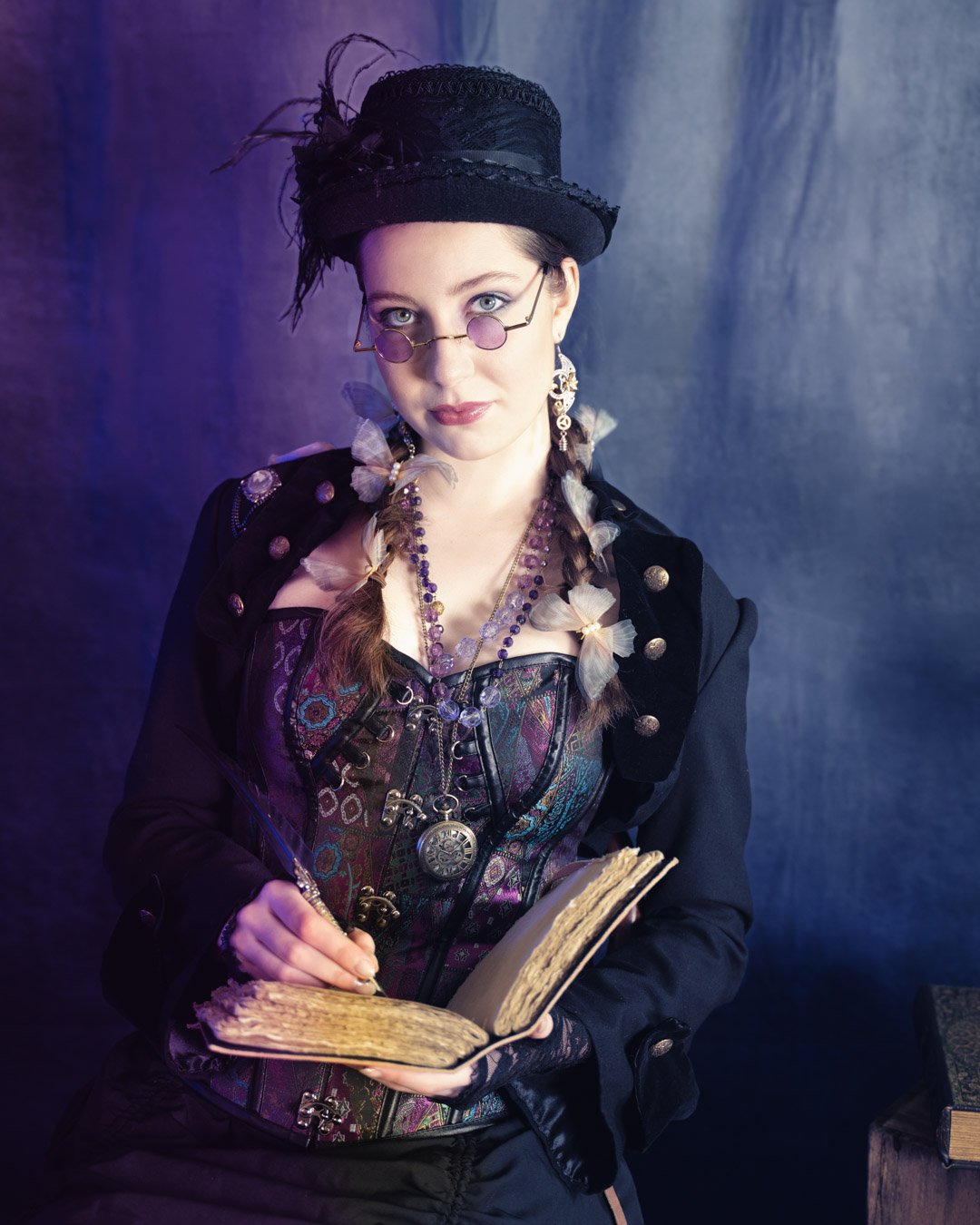
Think elaborate dresses, corsets, waistcoats, top hats, lace, leather boots, pocket watches and beautiful tailoring.
But Steampunk isn't simply about recreating Victorian clothing.
It's about reinventing it.
A traditional Victorian gentleman might suddenly become an eccentric inventor, complete with brass goggles and a mechanical arm.
An elegant Victorian lady might transform into an airship captain, an explorer, a scientist or even a rather dangerous adventurer.
And that's part of what makes Steampunk so much fun.
There are no strict rules about remaining historically accurate. In fact, the more imaginative the interpretation, the more interesting it can become.
The movement also borrows from Edwardian fashion, the American Wild West, Gothic literature, fantasy and other historical influences.
It's worth remembering, though, that the Victorian era wasn't all beautiful dresses and wonderful inventions. Industrialisation also brought difficult working conditions, enormous social inequalities and the expansion of colonial empires. Some modern Steampunk creators explore and challenge those aspects of history rather than simply romanticising the past.
Brass, Gears and Goggles: The Steampunk Aesthetic
If there is one thing Steampunk does particularly well, it's the details.
Everything feels wonderfully mechanical, tactile and just a little eccentric.
Brass and copper fittings, exposed gears, leather straps, old clocks, intricate jewellery, scientific instruments and mysterious mechanical devices are all part of the visual language.
Goggles have become something of a Steampunk trademark, even when the wearer isn't actually operating a steam-powered flying machine!
Colour also plays an important role.
Rich browns, copper, bronze, gold, burgundy, olive green and deep blacks are frequently used to create that aged, industrial atmosphere.
Of course, there are plenty of interpretations that move beyond these traditional colours.
Some Steampunk designs are dark and mysterious, while others are colourful, flamboyant and wonderfully theatrical.
One of my favourite things about Steampunk is the creativity people put into their costumes and props.
It's not unusual to discover that someone has spent months building an elaborate outfit, carefully assembling individual pieces, modifying old objects and creating accessories from scratch.
The craftsmanship can be absolutely incredible.
From Books to Film, Fashion and Art
As Steampunk developed, it moved well beyond literature.
Films such as The League of Extraordinary Gentlemen (2003), Wild Wild West (1999) and Hugo (2011) helped bring Victorian-inspired fantasy machinery and elaborate mechanical worlds to wider audiences.
Steampunk influences can also be found in animation, video games, fashion, sculpture, jewellery, interior design and cosplay.
Artists began creating extraordinary sculptures from discarded mechanical parts, while costume designers blended historical fashion with fantasy.
Entire communities formed around Steampunk conventions and festivals, where enthusiasts could share their creations, celebrate their favourite characters and immerse themselves in another world.
It's become much more than a literary genre.
For many people, Steampunk is an opportunity to invent a character, tell a story and express their creativity without the usual boundaries.
And that brings me to one of my favourite aspects of it.
Steampunk and Photography: A Perfect Creative Partnership
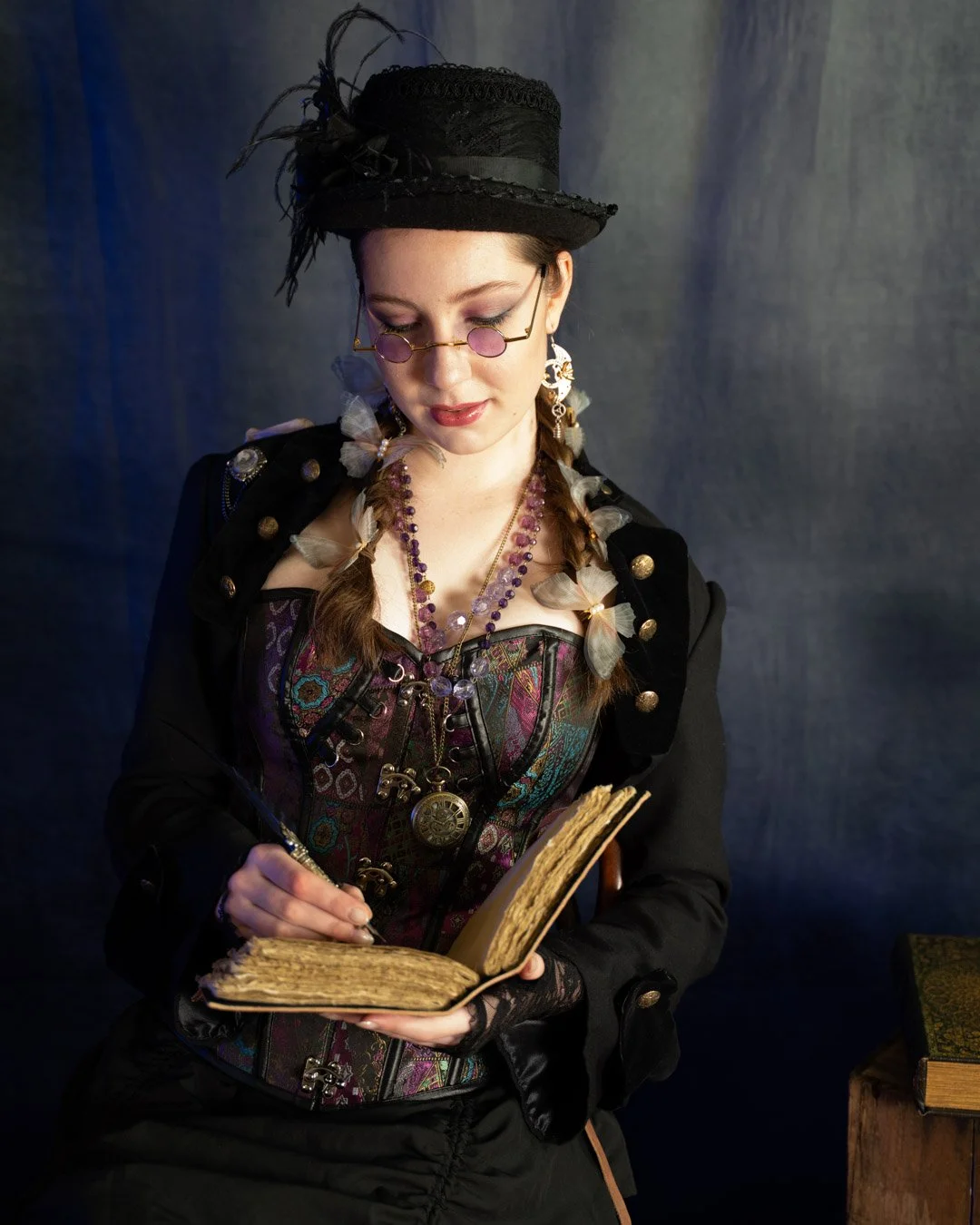
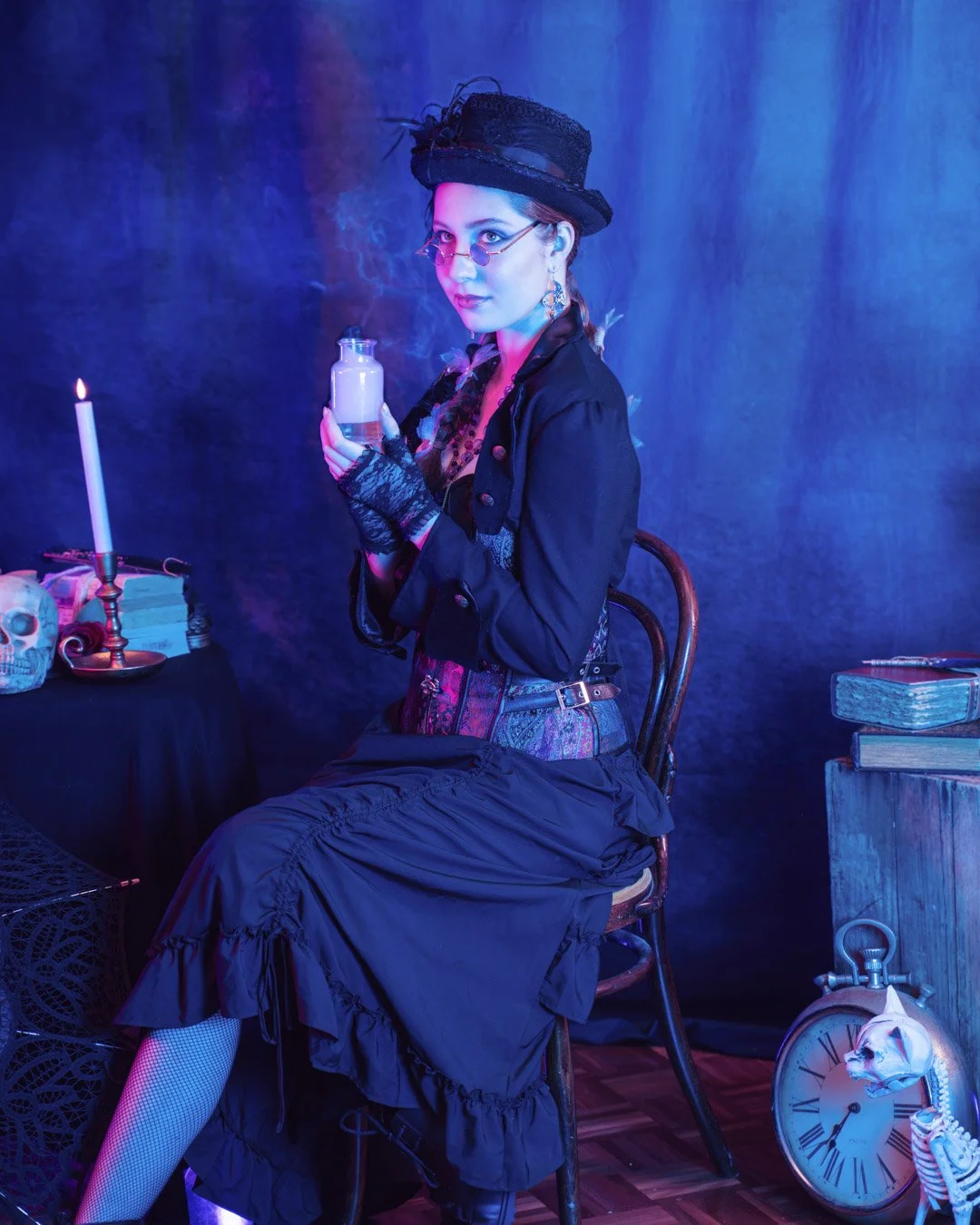
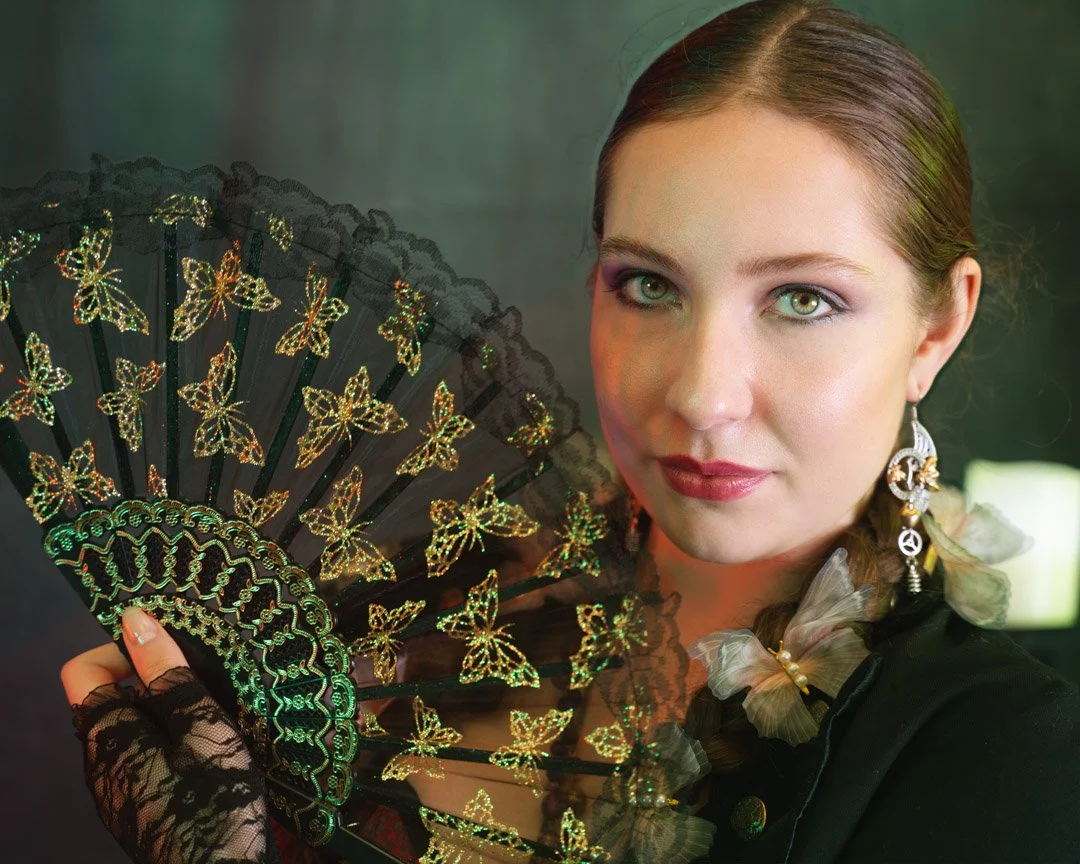
As a creative portrait photographer, I absolutely love the possibilities Steampunk offers.
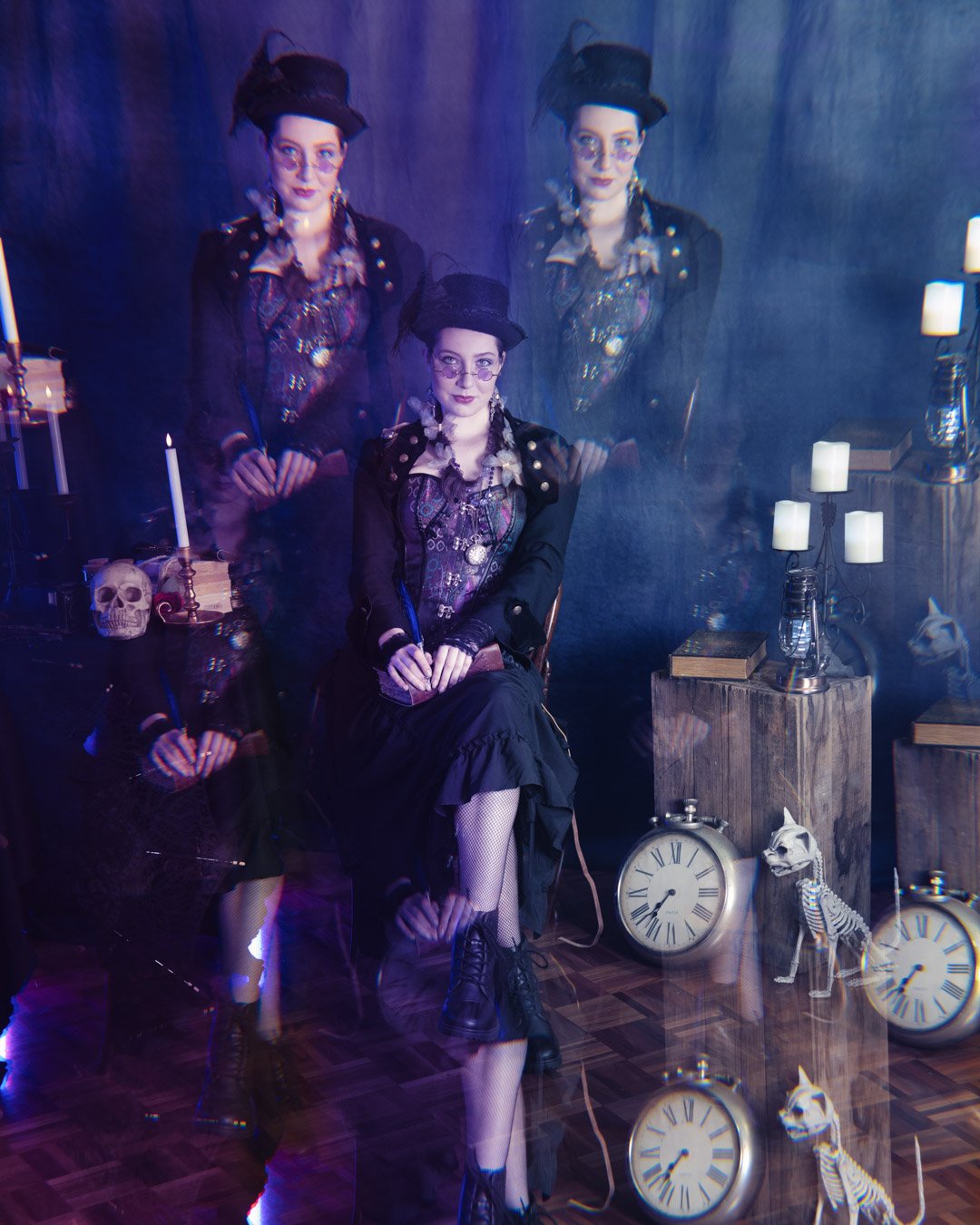
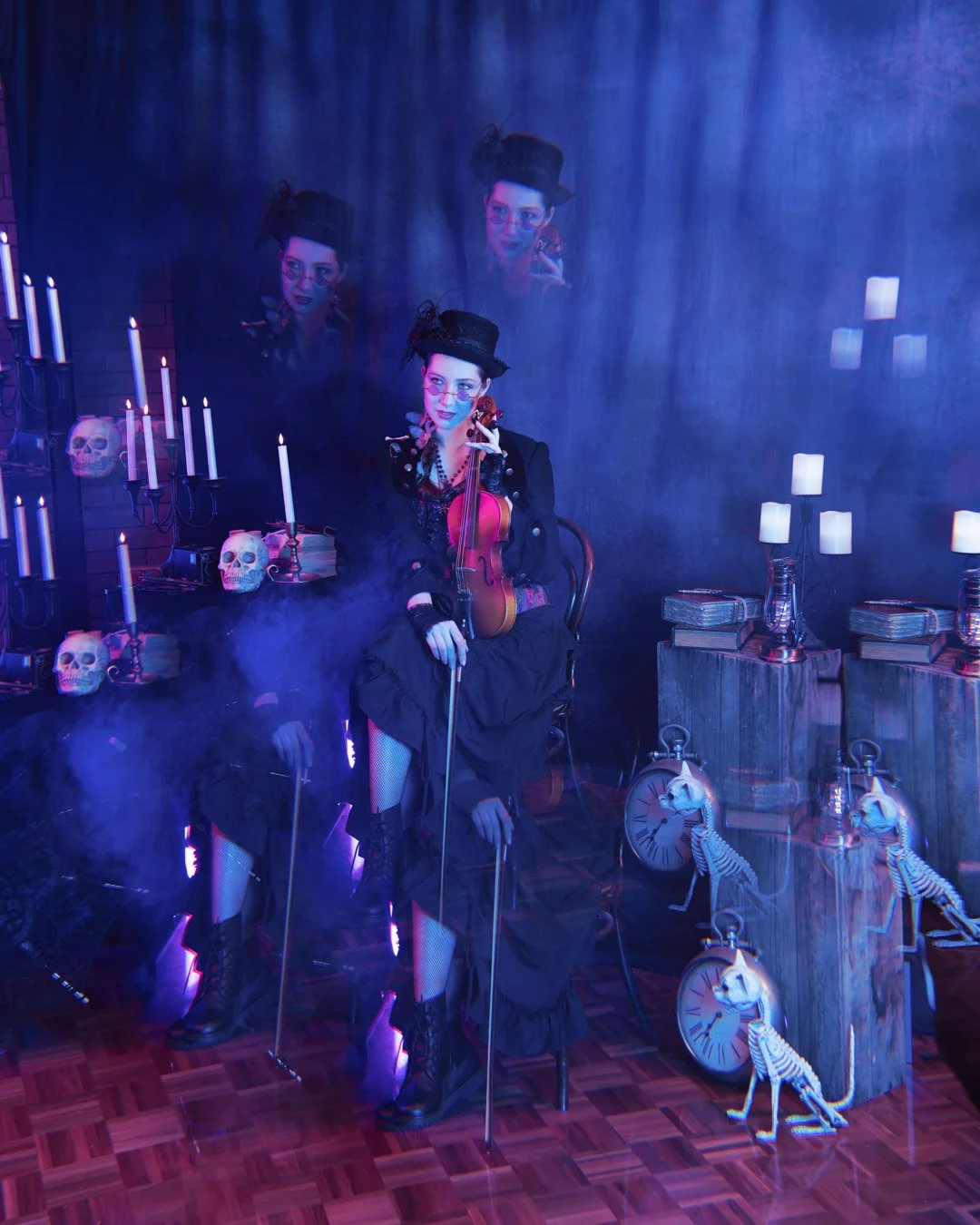
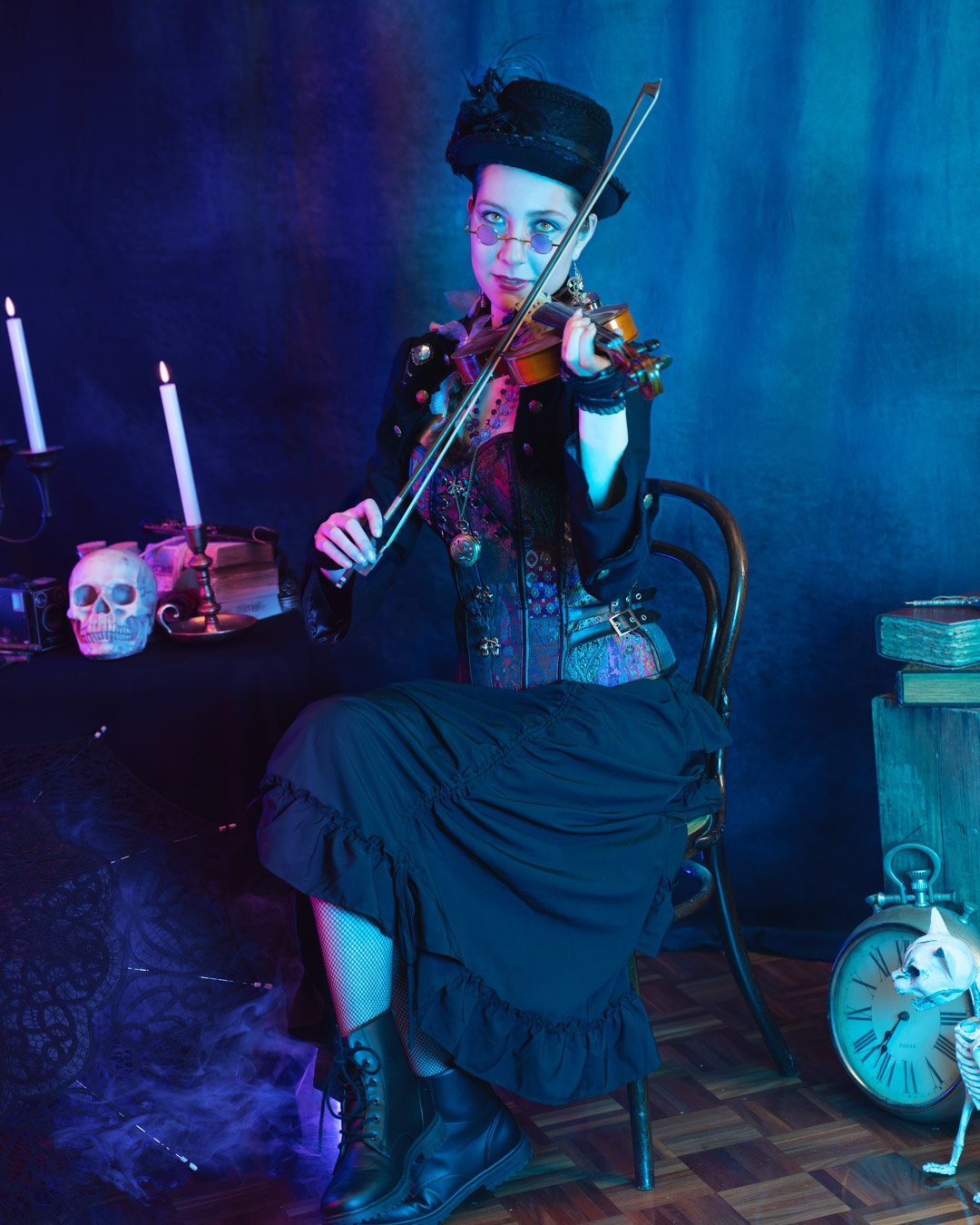
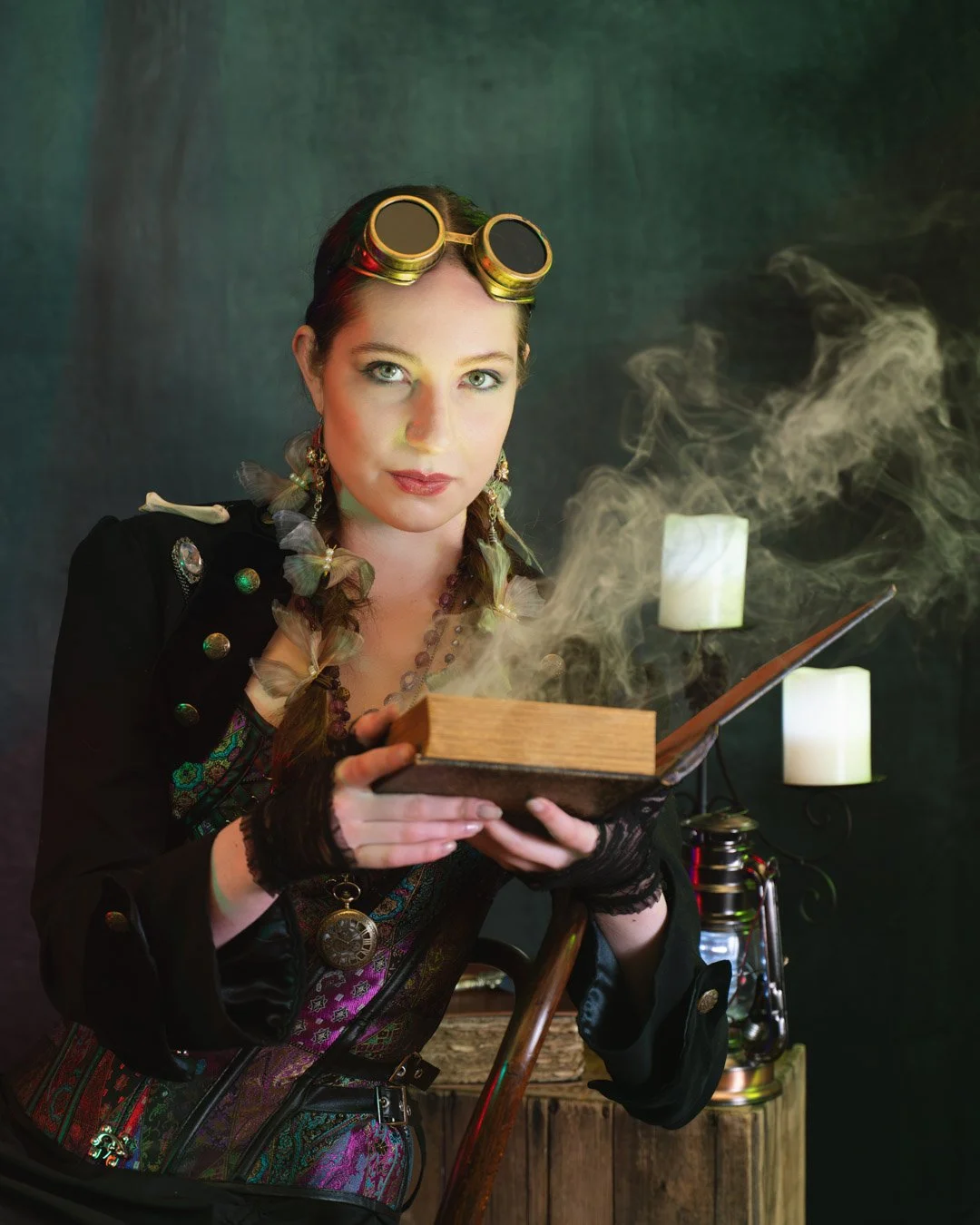
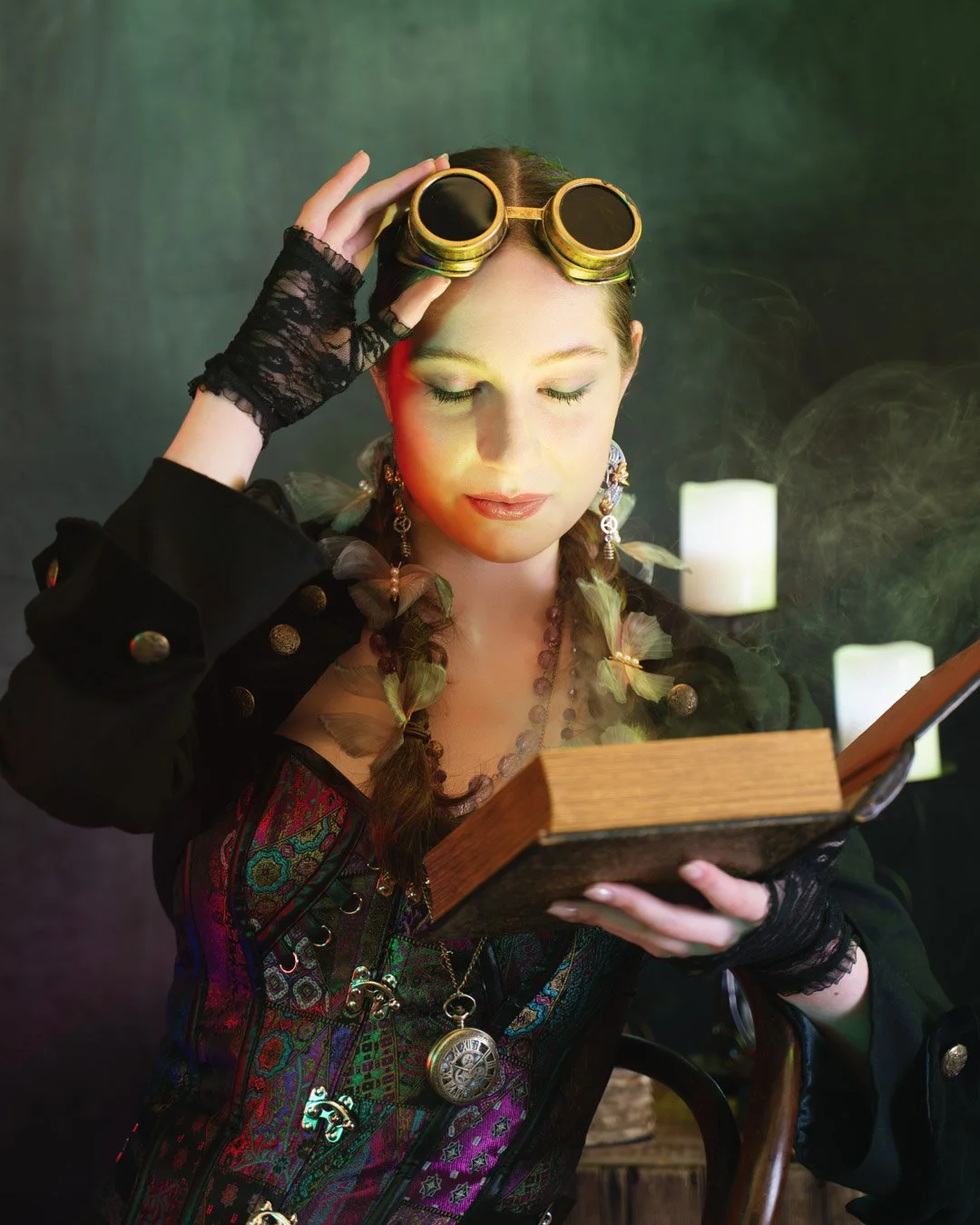
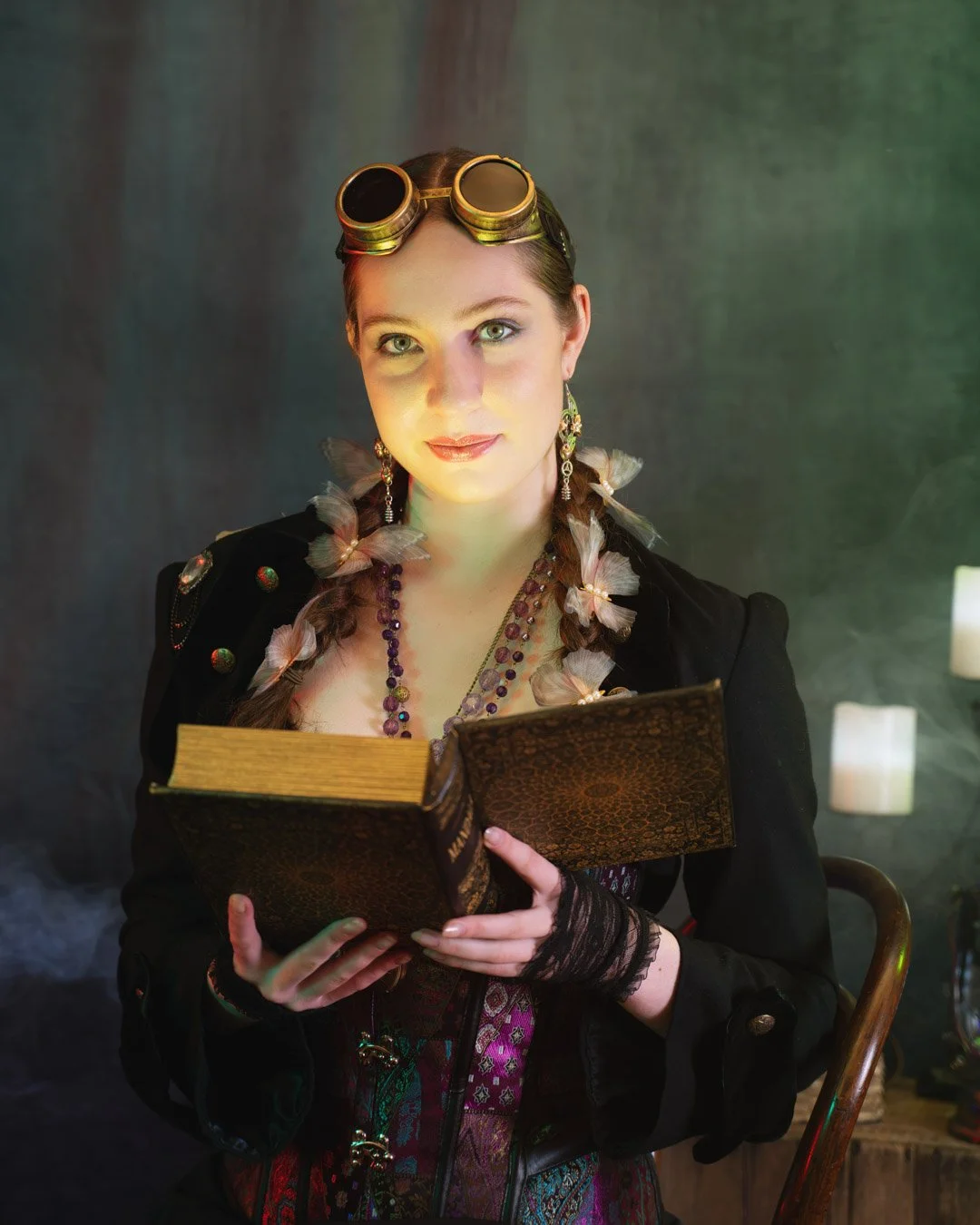
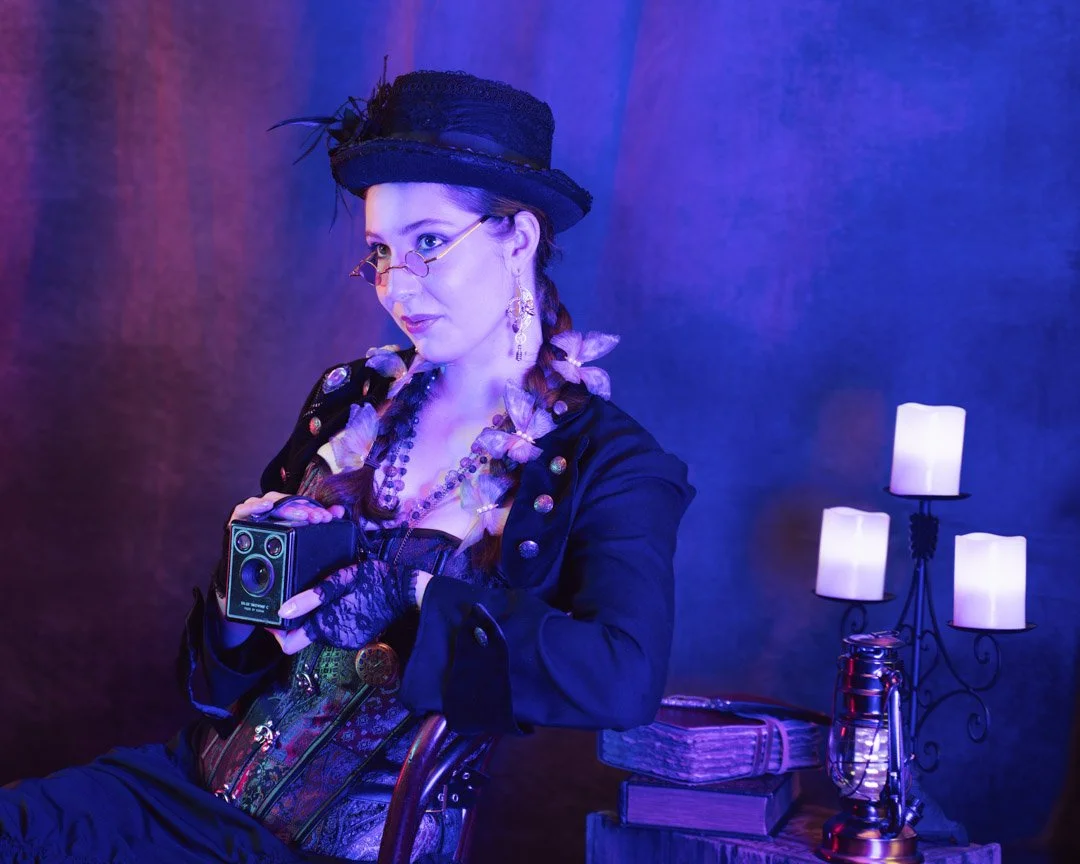
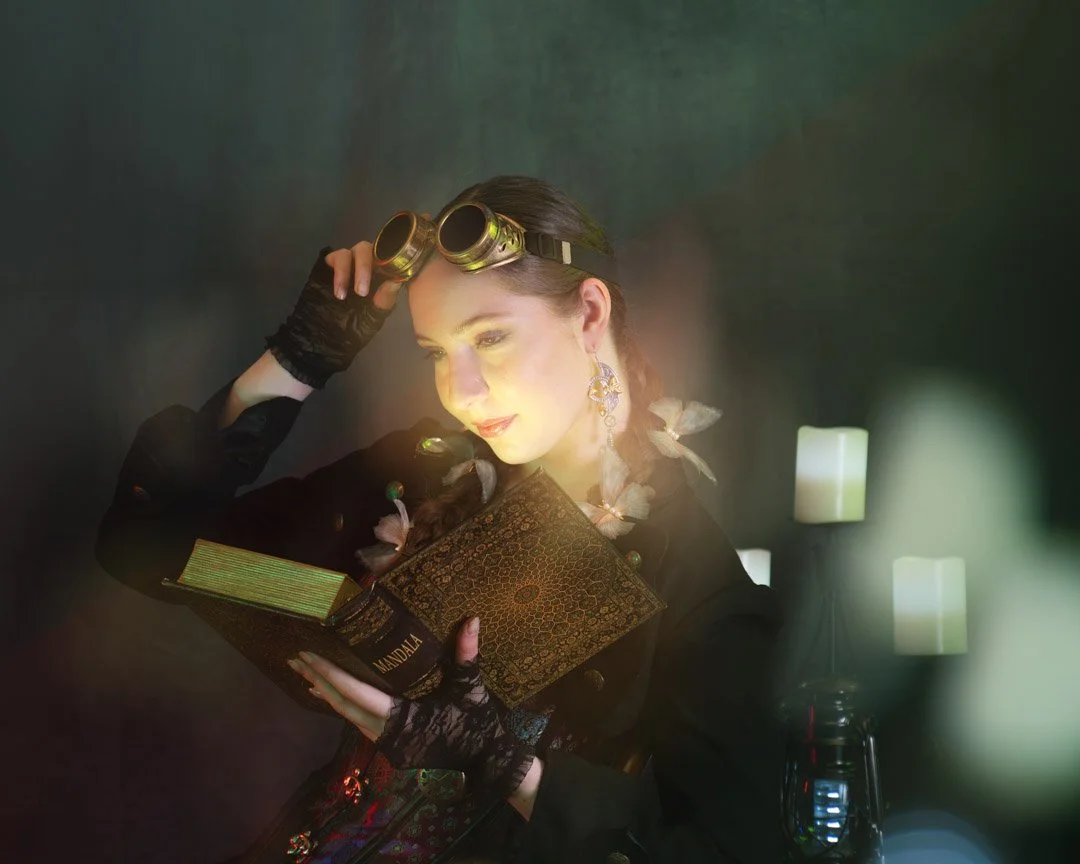
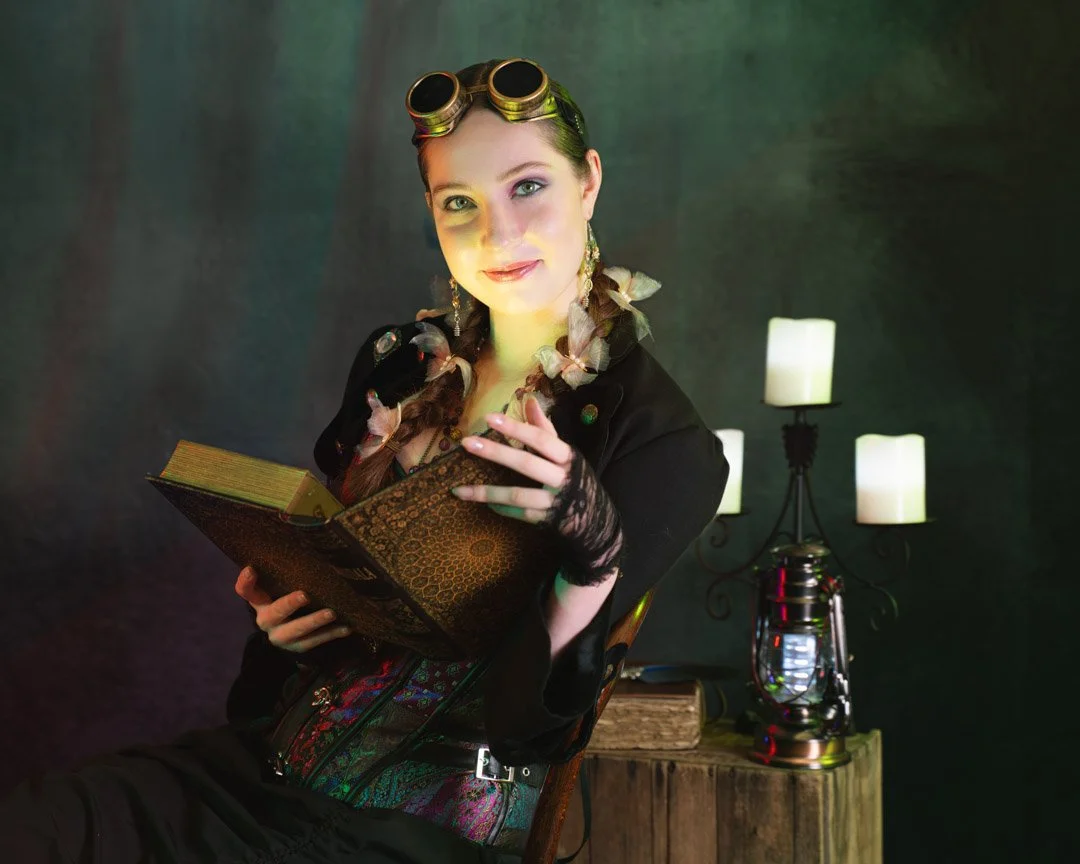
There's something rather magical about combining elaborate costumes, interesting characters, beautiful locations and dramatic lighting.
Steampunk practically begs to be photographed.
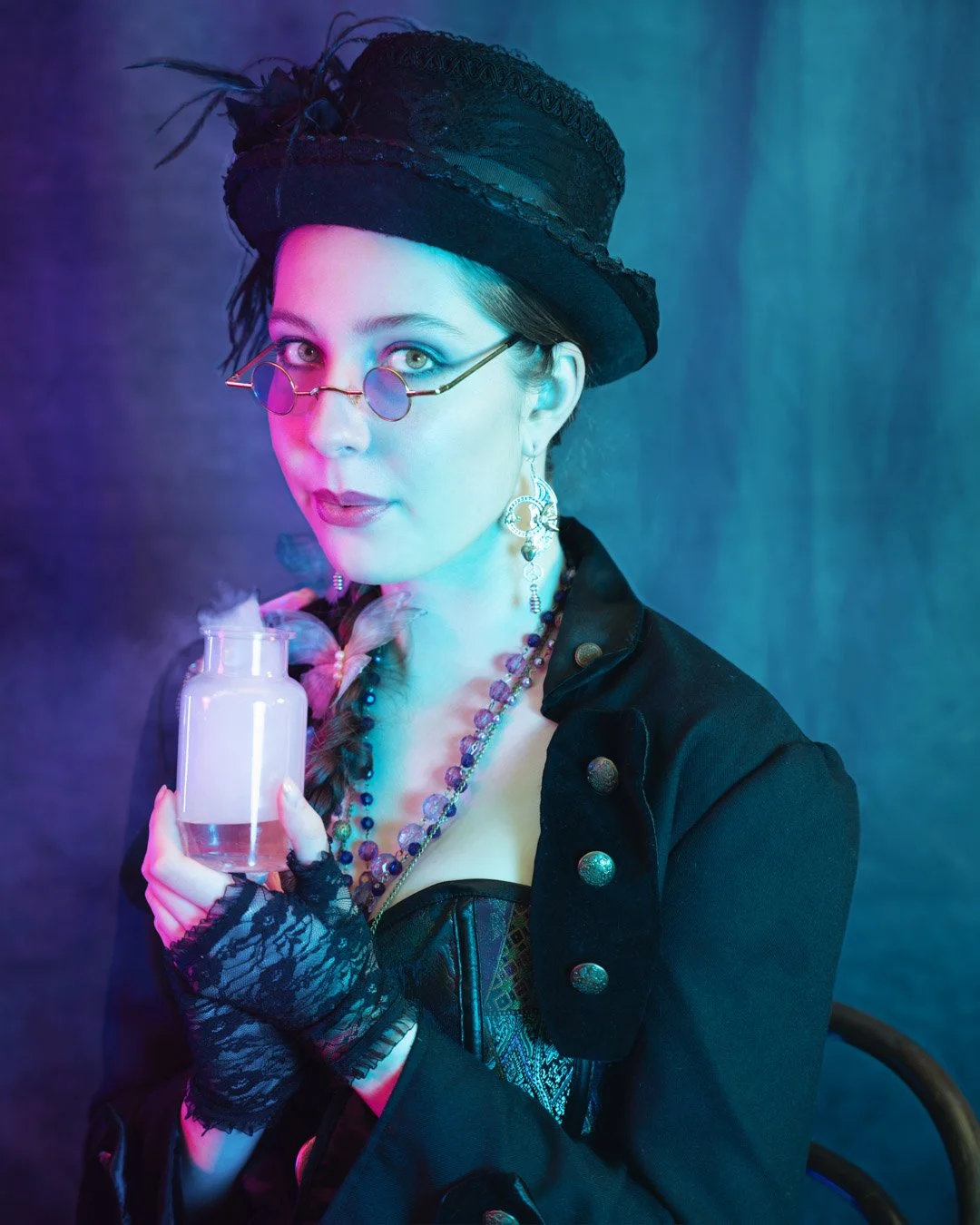
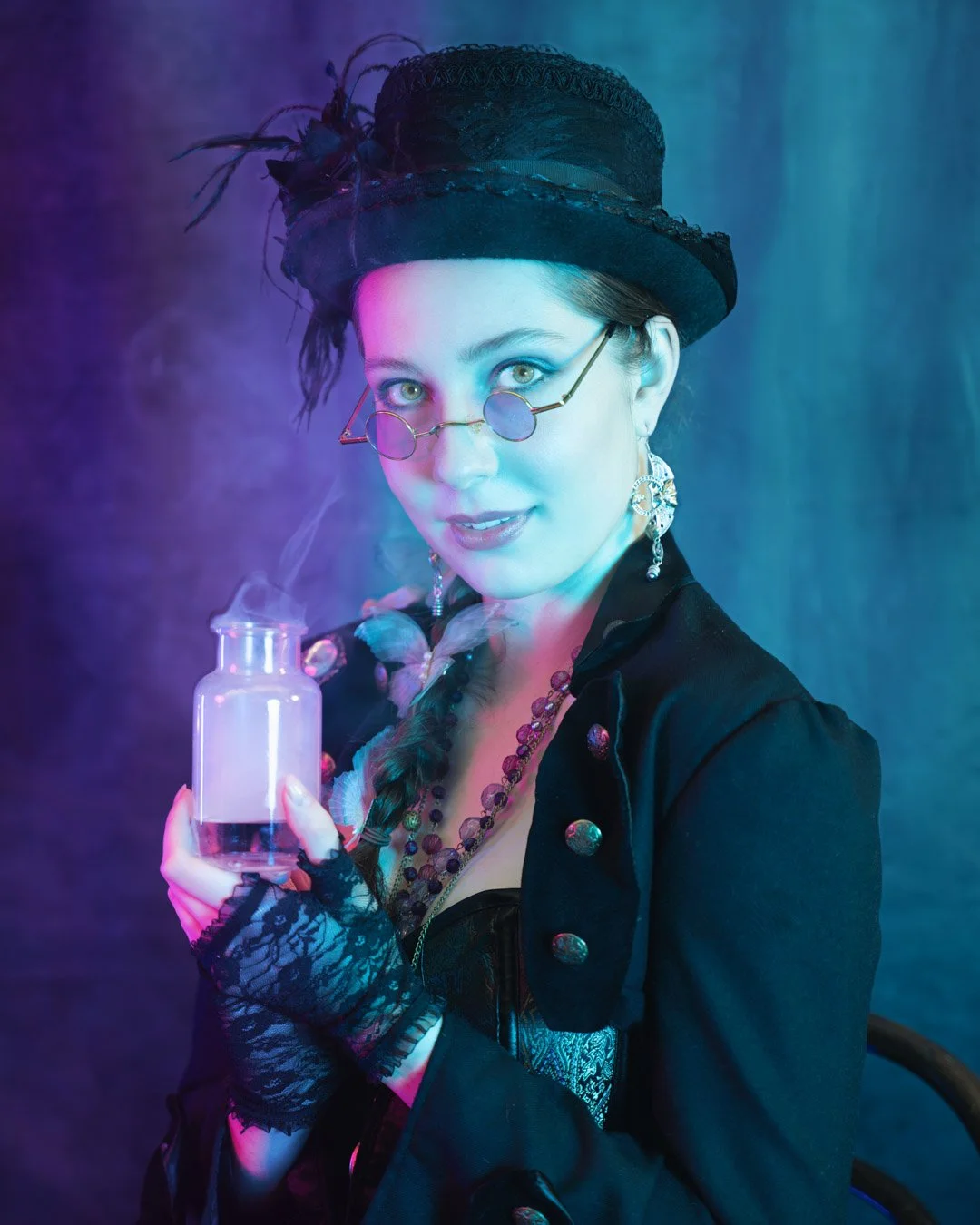
Unlike traditional portraiture, where the focus might be on capturing someone's natural personality, Steampunk gives us an opportunity to create an entirely different character.
Perhaps they're an adventurous explorer, an eccentric inventor, a fearless airship captain or a mysterious traveller from another time.
Who are they? Where have they been? What adventure are they about to embark on?
Those questions can help turn a simple portrait into a story.
And for me, that's where the real magic happens.
Bringing Steampunk to Life Through the Lens
When I'm photographing Steampunk, I like to think beyond simply documenting a fabulous costume.
I want to create an atmosphere.
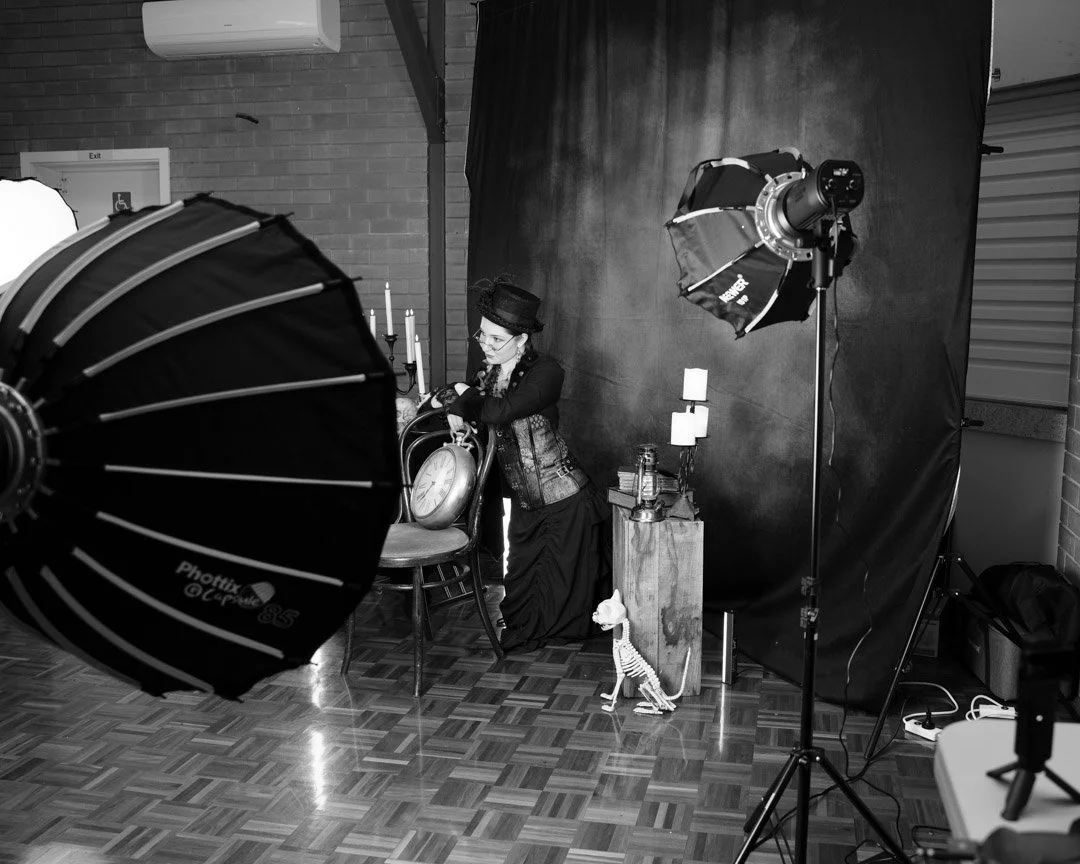
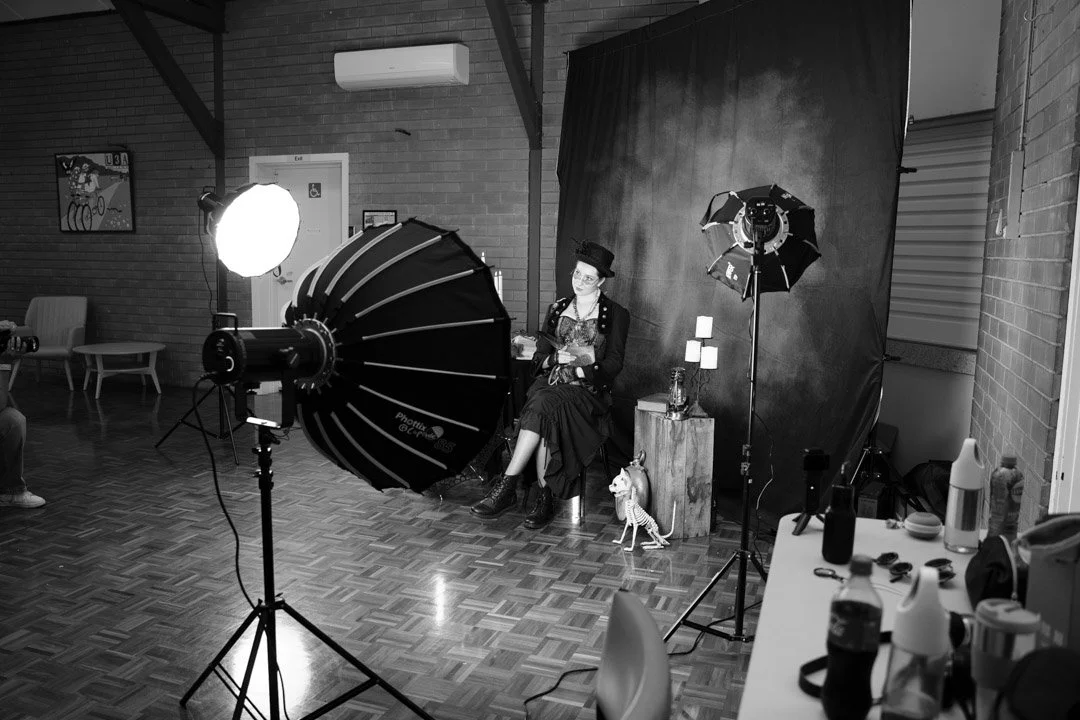
Lighting can make an enormous difference.
A soft, directional light can emphasise the beautiful textures of leather, lace and velvet, while stronger, more dramatic lighting can create that wonderful industrial or cinematic feeling.
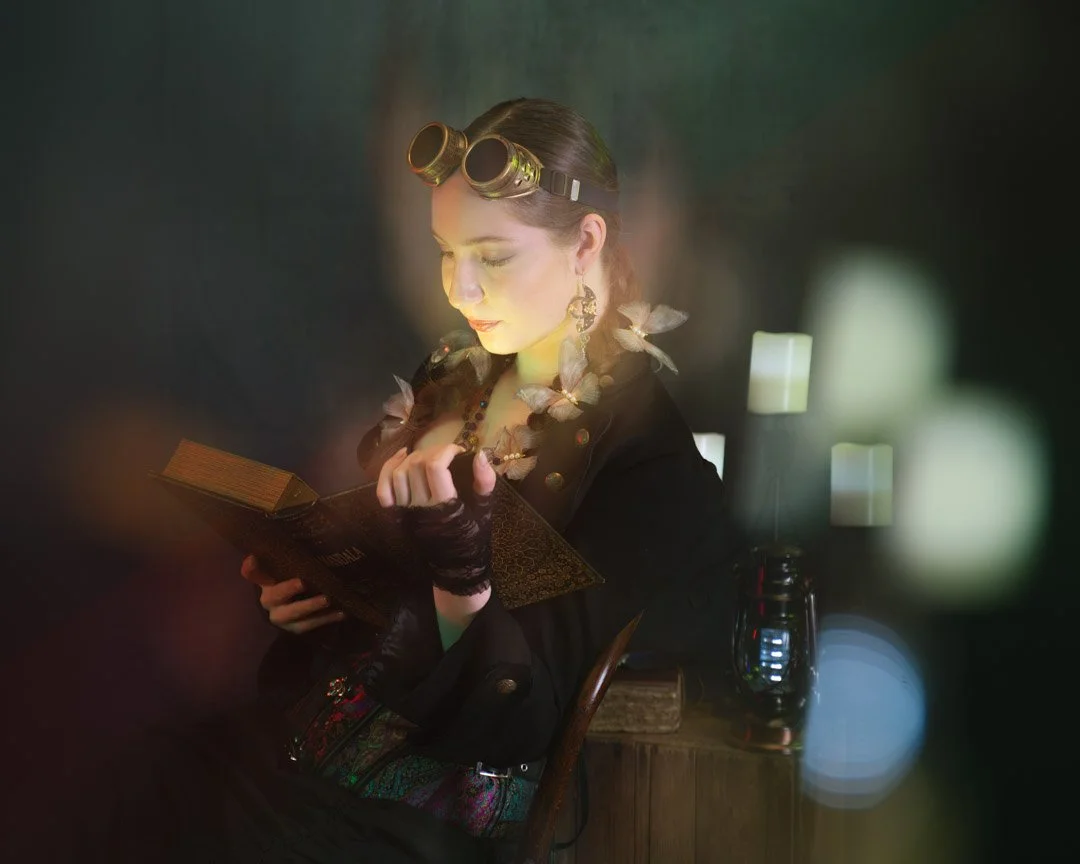
A little haze, some carefully placed backlighting or a warm colour palette can completely transform the mood.
Locations are equally important.
Old buildings, weathered brickwork, railway stations, industrial spaces, vintage furniture and interesting architectural details can all provide wonderful backdrops.
But you don't necessarily need an elaborate location.
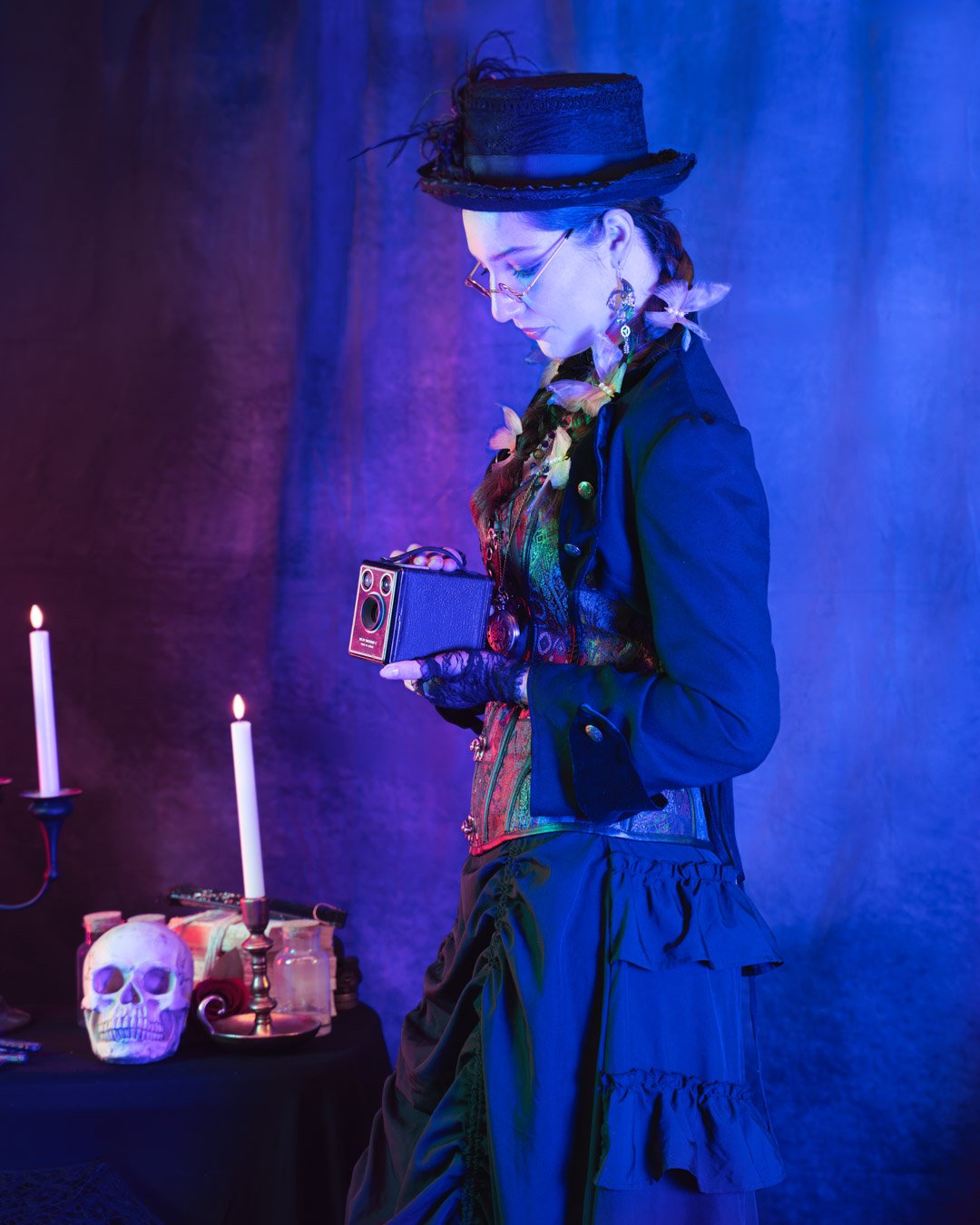
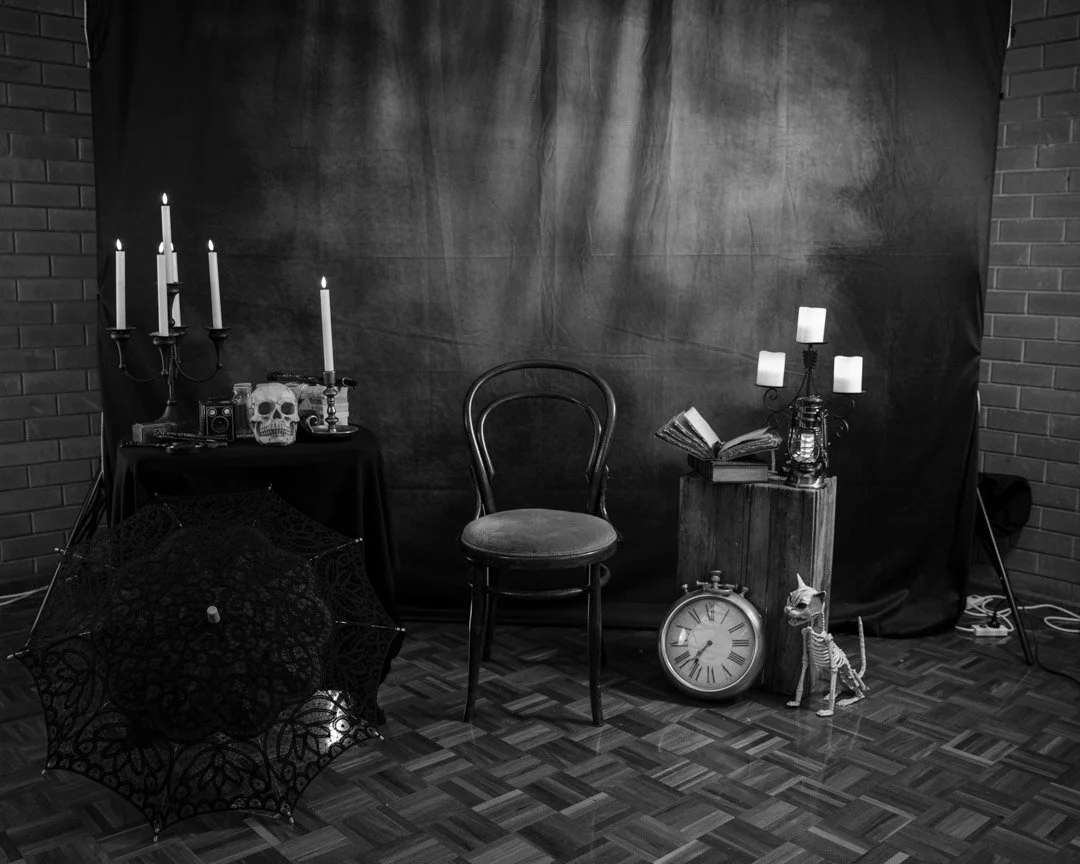
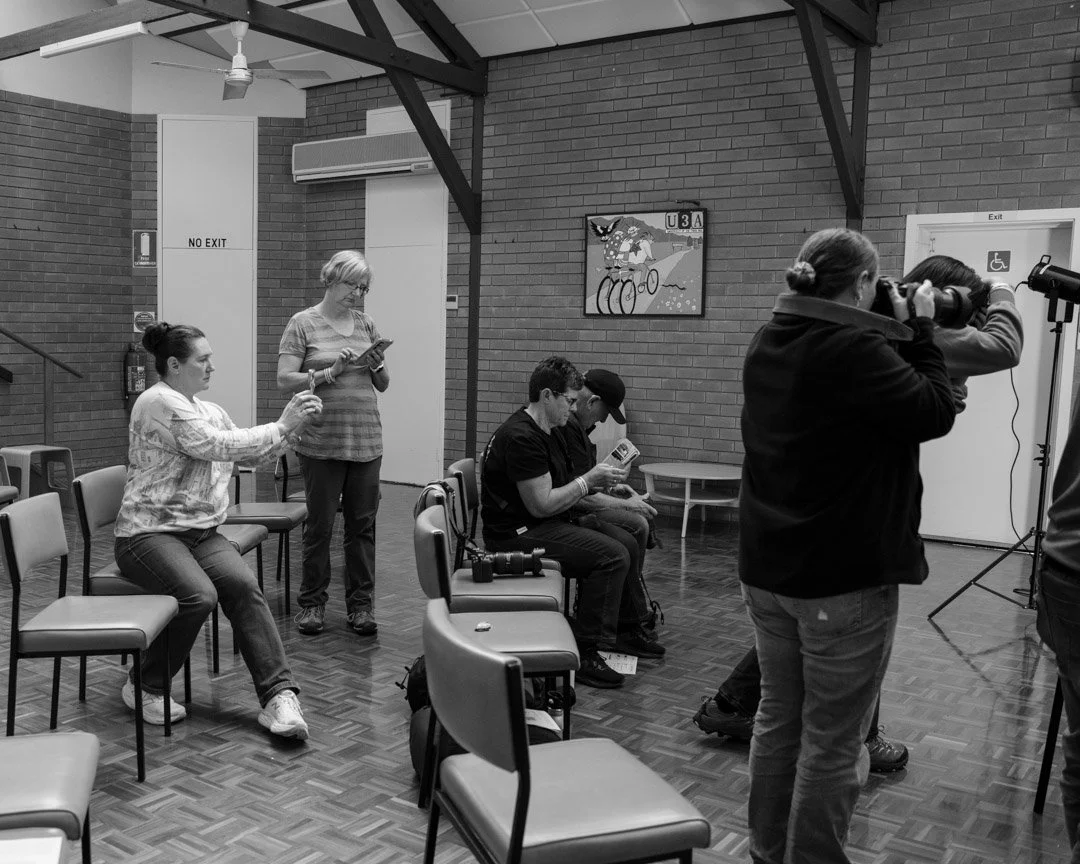
With the right lighting, a few carefully chosen props and some creative composition, you can create an intriguing Steampunk portrait in a relatively simple studio setup.
Sometimes a pocket watch, a pair of goggles or an interesting piece of machinery is enough to suggest an entire story.
And let's not forget posing.
Steampunk characters often have strong personalities. Encouraging your subject to embrace their character, rather than simply stand and smile at the camera, can make a huge difference.
A confident stance, a mysterious glance or a little interaction with a prop can bring everything together.
Why I Keep Coming Back to Steampunk
I think one of the reasons I enjoy Steampunk photography so much is the freedom it gives us to play.
There is room for elegance, drama, humour, mystery and even a little madness.
You can create something dark and cinematic, or something wonderfully whimsical.
You can draw inspiration from history without feeling restricted by it.
And perhaps most importantly, you can collaborate with some incredibly talented and imaginative people.
Models, costume designers, makeup artists, hairstylists and photographers can all bring something different to the creative process.
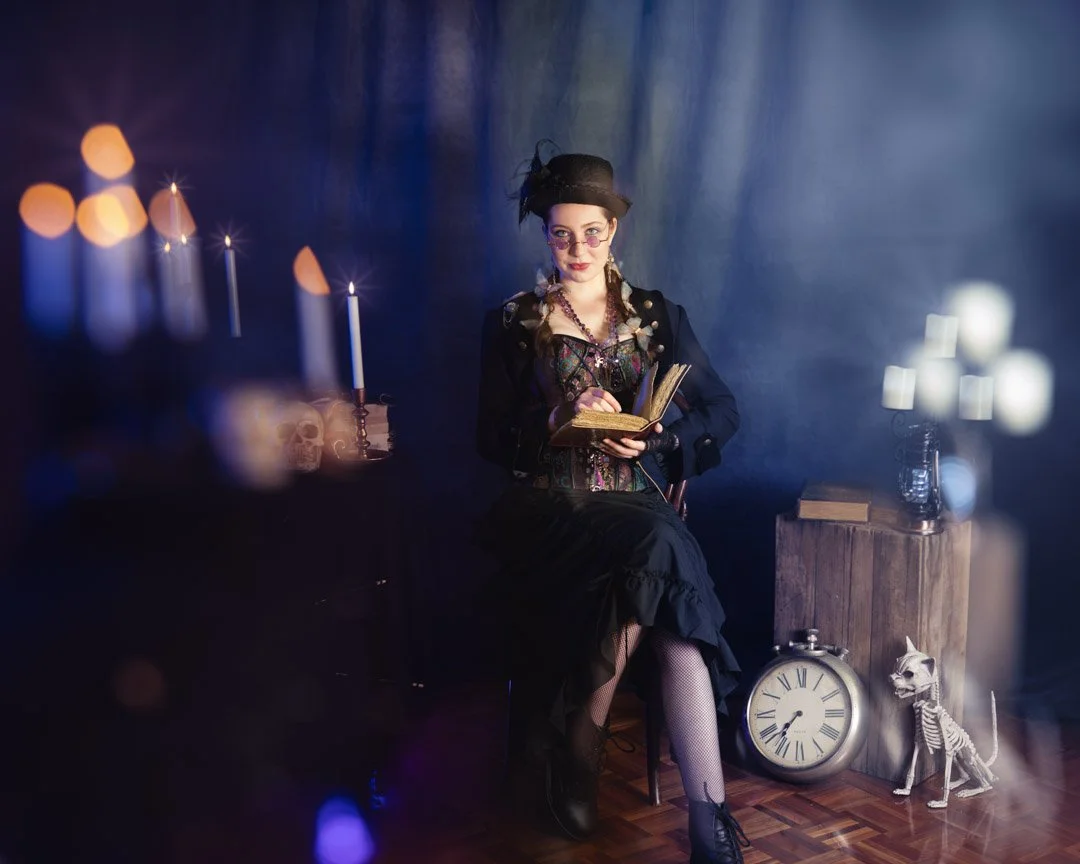
I've been fortunate enough to work on some fabulous Steampunk-inspired shoots over the years, and each one has offered something different.
There's always another character to create, another story to tell or another lighting idea to experiment with.
That's the beauty of creative photography. You're not simply capturing what's in front of you, you're helping bring an imagined world to life.
A Little History, a Lot of Imagination
Steampunk may have its roots in Victorian science fiction and the Industrial Revolution, but it has grown into something much bigger.
It's a celebration of invention, craftsmanship, storytelling and creativity.
It asks a wonderfully simple question:
What if history had taken a different turn?
And then it invites us to imagine the answer.
Whether you're fascinated by the costumes, the machinery, the literature or the incredible photographic opportunities, there's something rather special about this imaginative world.
For photographers, it's also a lovely reminder that we don't always have to photograph reality exactly as it is.
Sometimes we can invent something entirely new.
And if that happens to involve a fabulous corset, a top hat, some brass goggles and a little dramatic lighting, well, I'm certainly not complaining!
Have you ever photographed Steampunk, dressed up for an event or created your own character? I'd love to hear about it. And if you haven't, perhaps it's time to give it a try.
Until next time, keep creating, keep experimenting and don't be afraid to picture things a little differently.
Julie