Getting Creative With Filters: Split Glass, Hexagonal Reflections and a Little Bit of Chaos
There are plenty of filters designed to make our photographs technically better. ND filters help control exposure, polarising filters reduce reflections, UV filters... well, we could probably discuss those all day.
But then there are the filters that are simply designed to make things weird.
Those are very much a LOT of fun to explore, but do tend to push the boundaries.
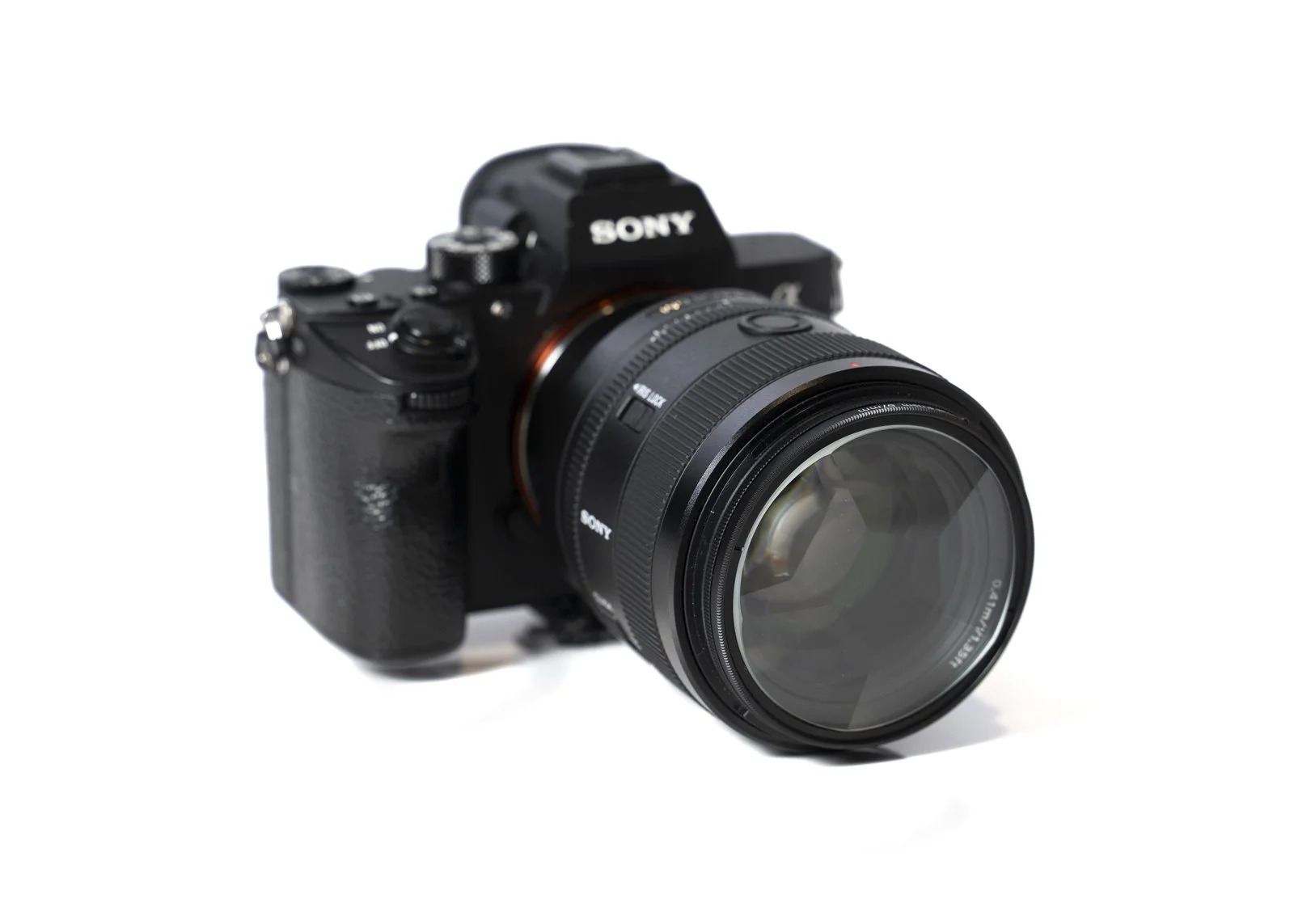
Lately I’ve been playing with a couple of my creative filters, in particular a Split Filter and a Hexagonal Filter, and I was reminded just how much fun something so simple can add to a portrait session.
No Photoshop trickery required. No complicated setup. Just a little piece of glass held in front of the lens and a willingness to experiment.
And perhaps an equally willing model!
What exactly are creative lens filters?
Unlike traditional photographic filters, these aren’t really about correcting anything.
They’re about deliberately introducing imperfections, reflections, distortions, ghosting and repeated elements into the photograph.
In other words, all the things we normally spend years learning how to avoid. 😂
Depending on the filter, you might get duplicated faces, stretched movement, strange reflections, fragments of colour or repeated patterns around your subject.
The wonderful thing is that you don't always know exactly what you're going to get.
You can move the camera a few centimetres, rotate the filter or change the angle of your subject and suddenly the whole effect changes.
The Split Filter
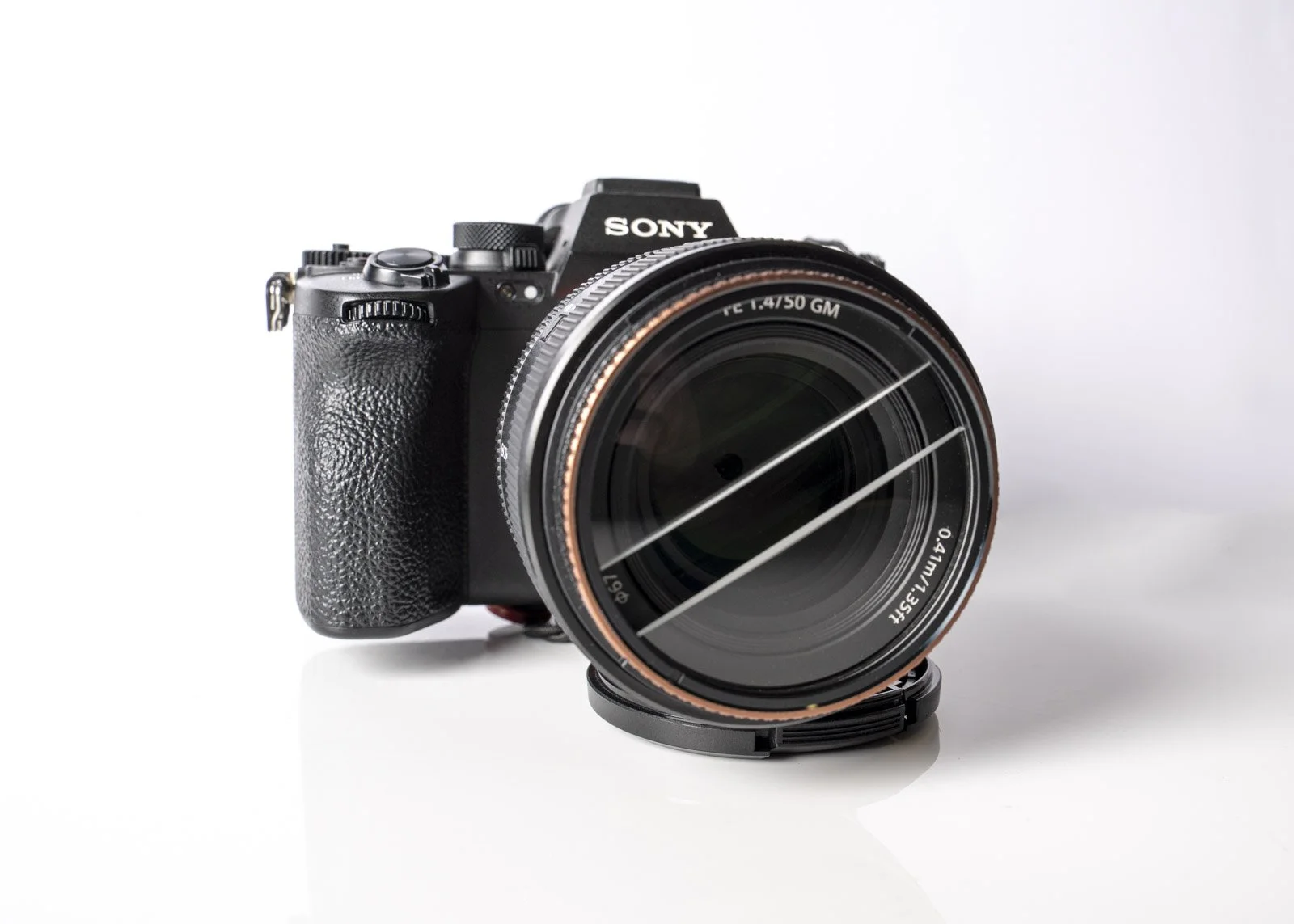
The Split Filter is deceptively simple.
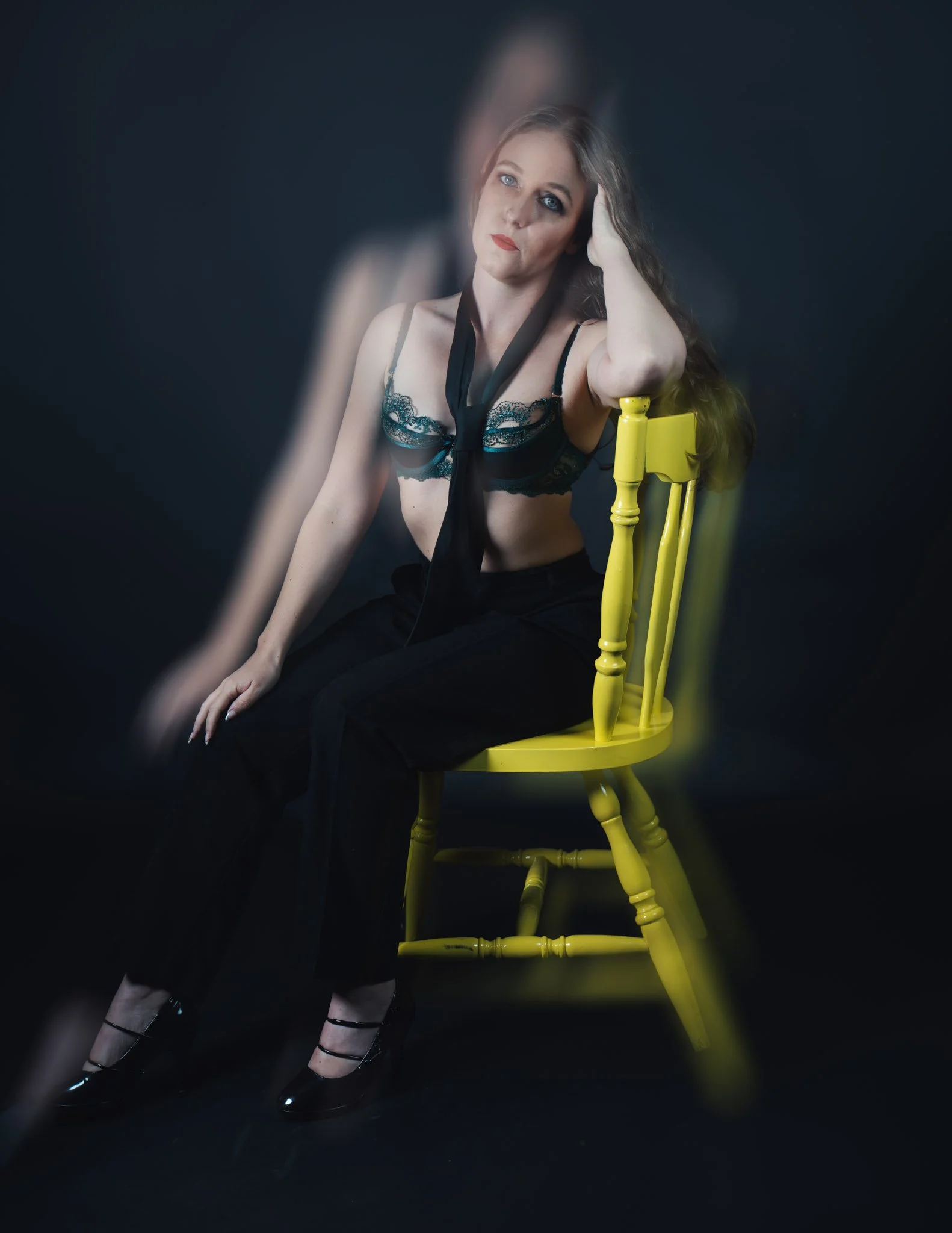
Part of the filter allows you to photograph your subject relatively normally, while the other section bends, smears or duplicates part of the scene.
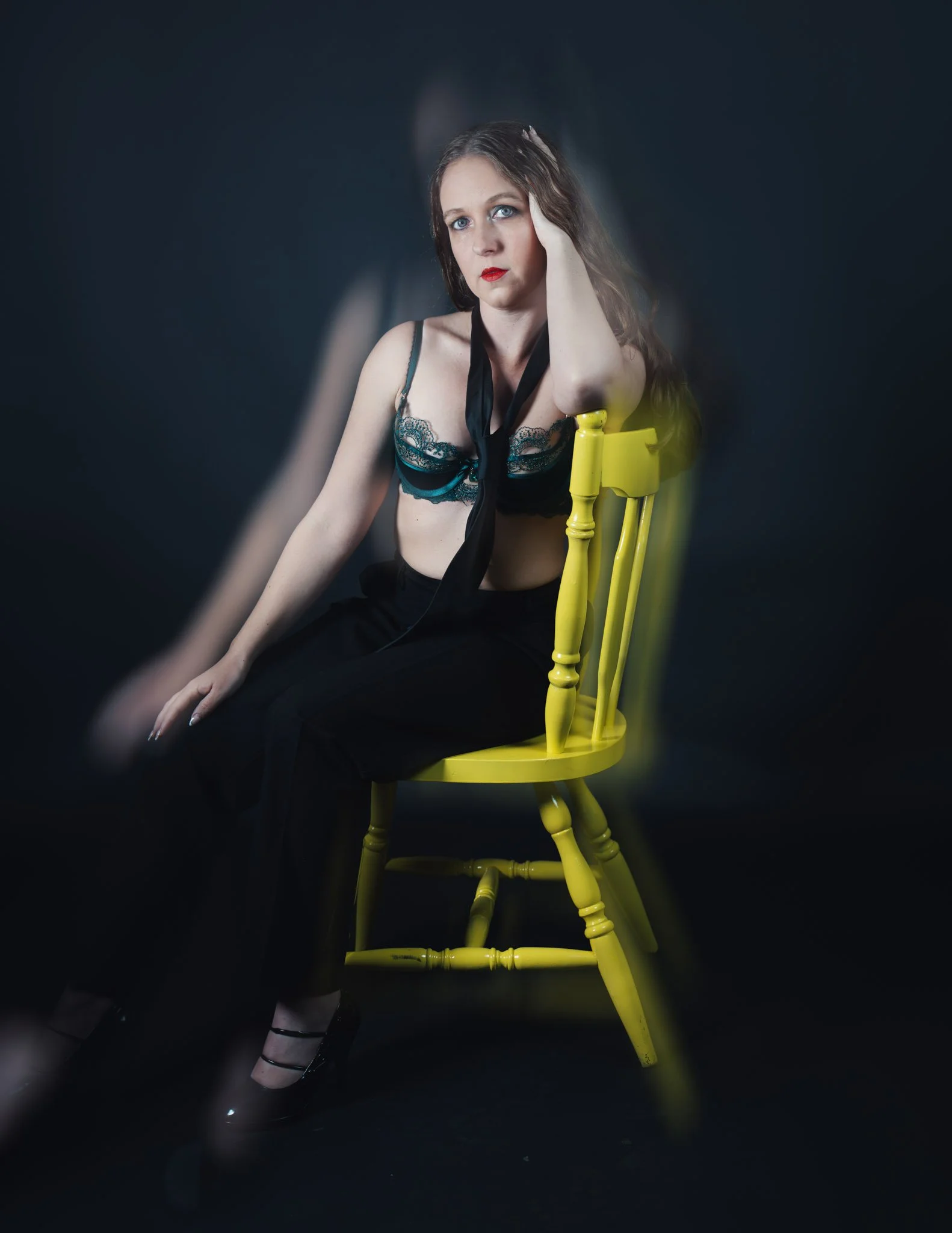
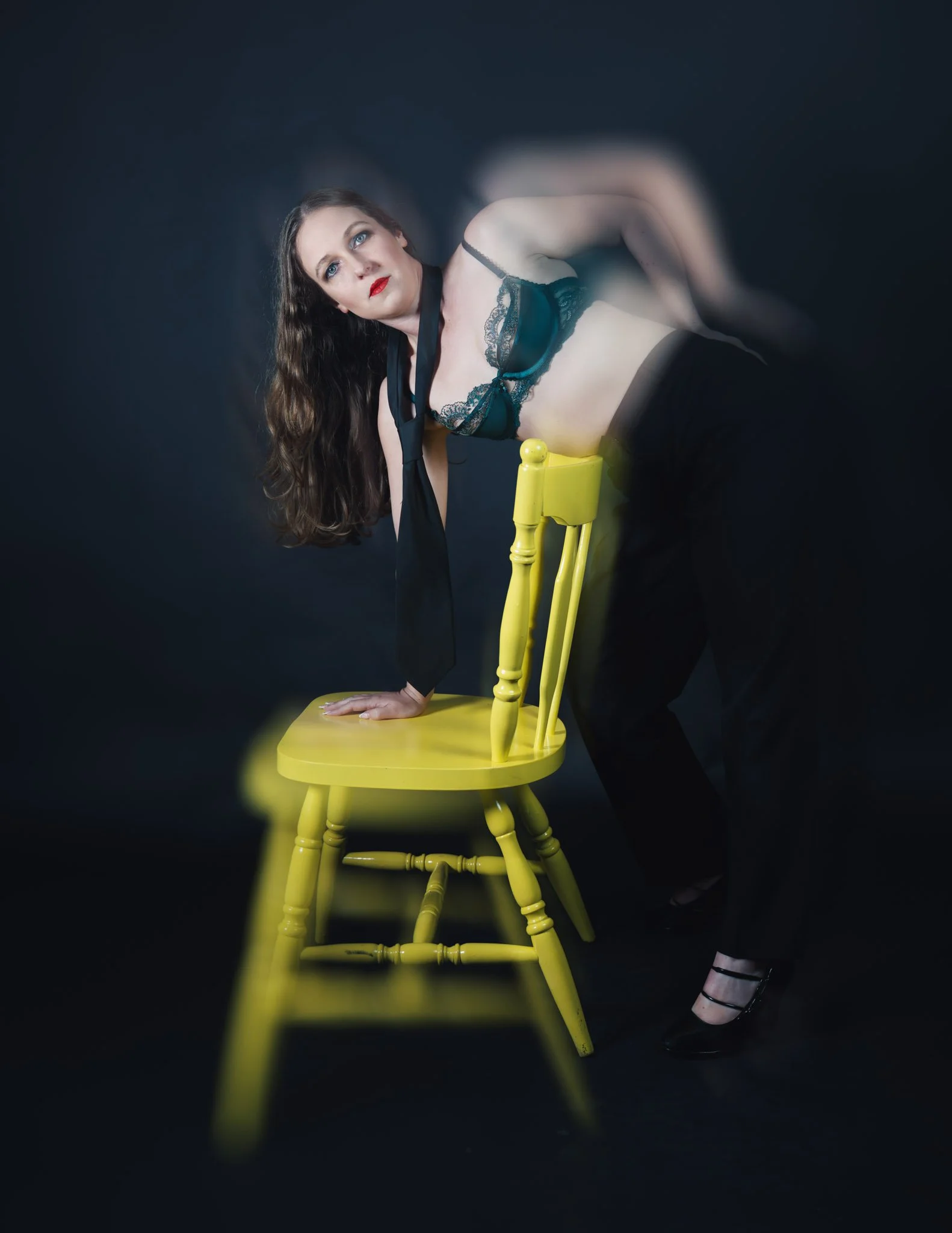
With Emily sitting on that fabulous yellow chair, I could keep her face reasonably clear while allowing the filter to distort her arms, body and chair around the edges.
And this is where I think these filters become far more interesting than simply using them as a gimmick.
The goal isn't necessarily to make the entire photograph distorted.
For me, it's about deciding what I want to keep recognisable and what I'm happy to let fall apart.
In these images, Emily remains the anchor. Her face, expression and pose are still strong, but then there are these strange echoes of movement around her.
It almost feels as though we're seeing several moments happening at once.
Move it. Rotate it. Move yourself.
One of the biggest mistakes you can make with filters like these is putting one on the camera and assuming that's the effect.
It's only the beginning.
Rotate it.
Move closer.
Move further away.
Change your focal length.
Tilt the camera.
Move the filter slightly in front of the lens rather than keeping everything perfectly aligned.
Watch what happens to the distortion as your subject moves around the frame.
Even Emily changing her pose against the chair completely changed the way the filter interacted with her body.
Some frames won't work.
Actually, quite a few probably won't work.
That's part of the fun.
You're not looking for consistency. You're looking for the happy accident.
Emily and the Hexagonal Filter
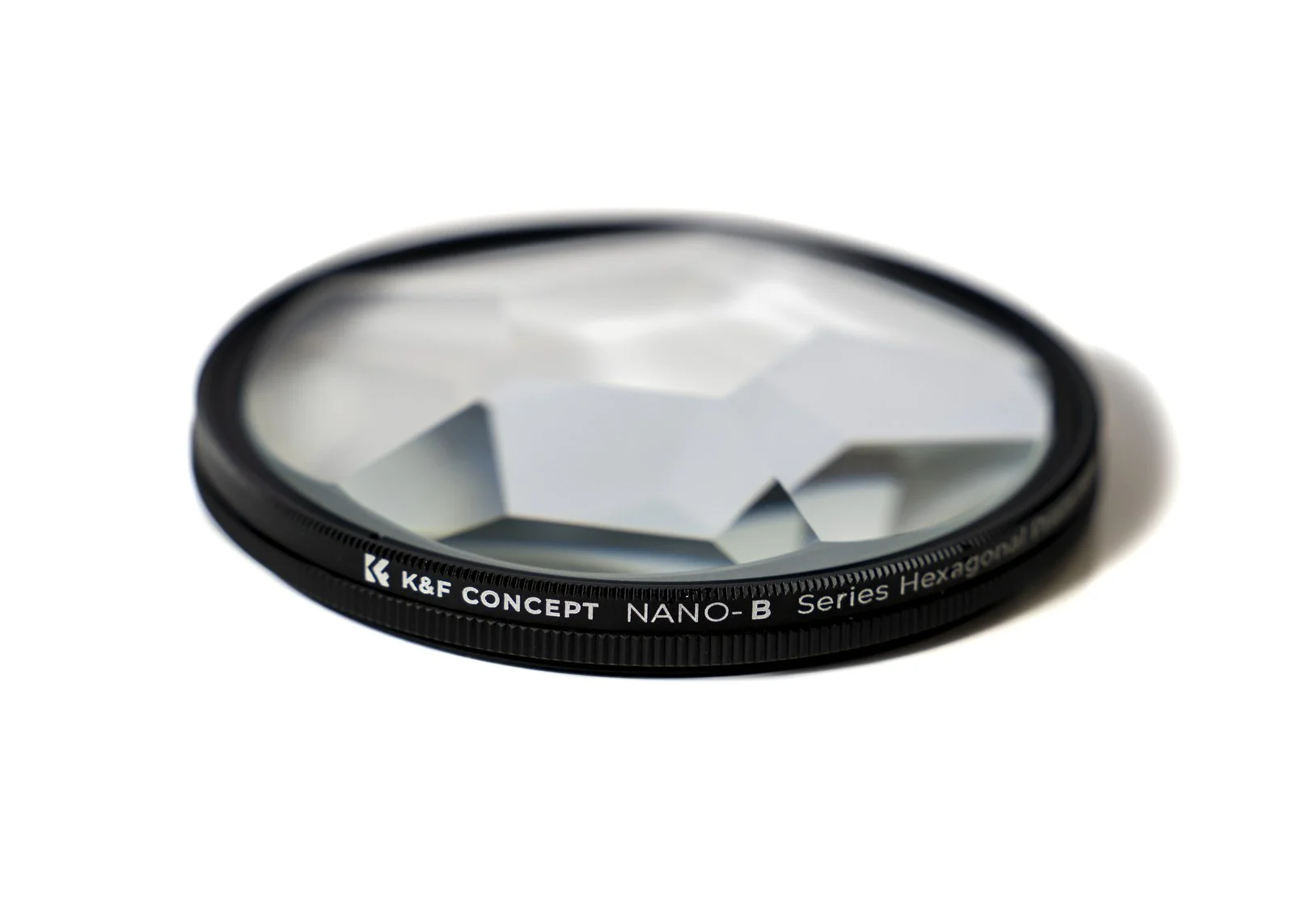
Then there's the Hexagonal Filter...
This one can get wonderfully strange.
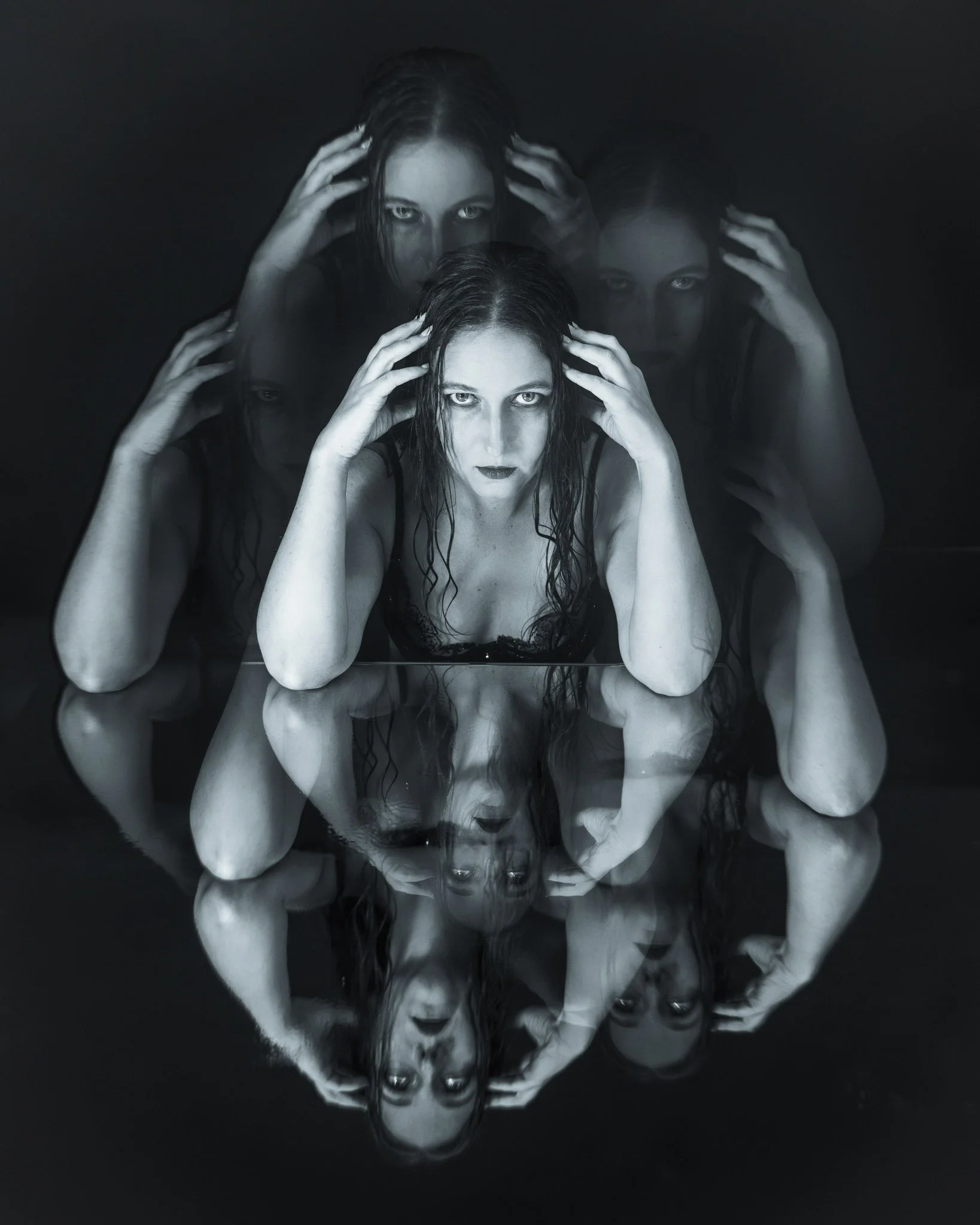
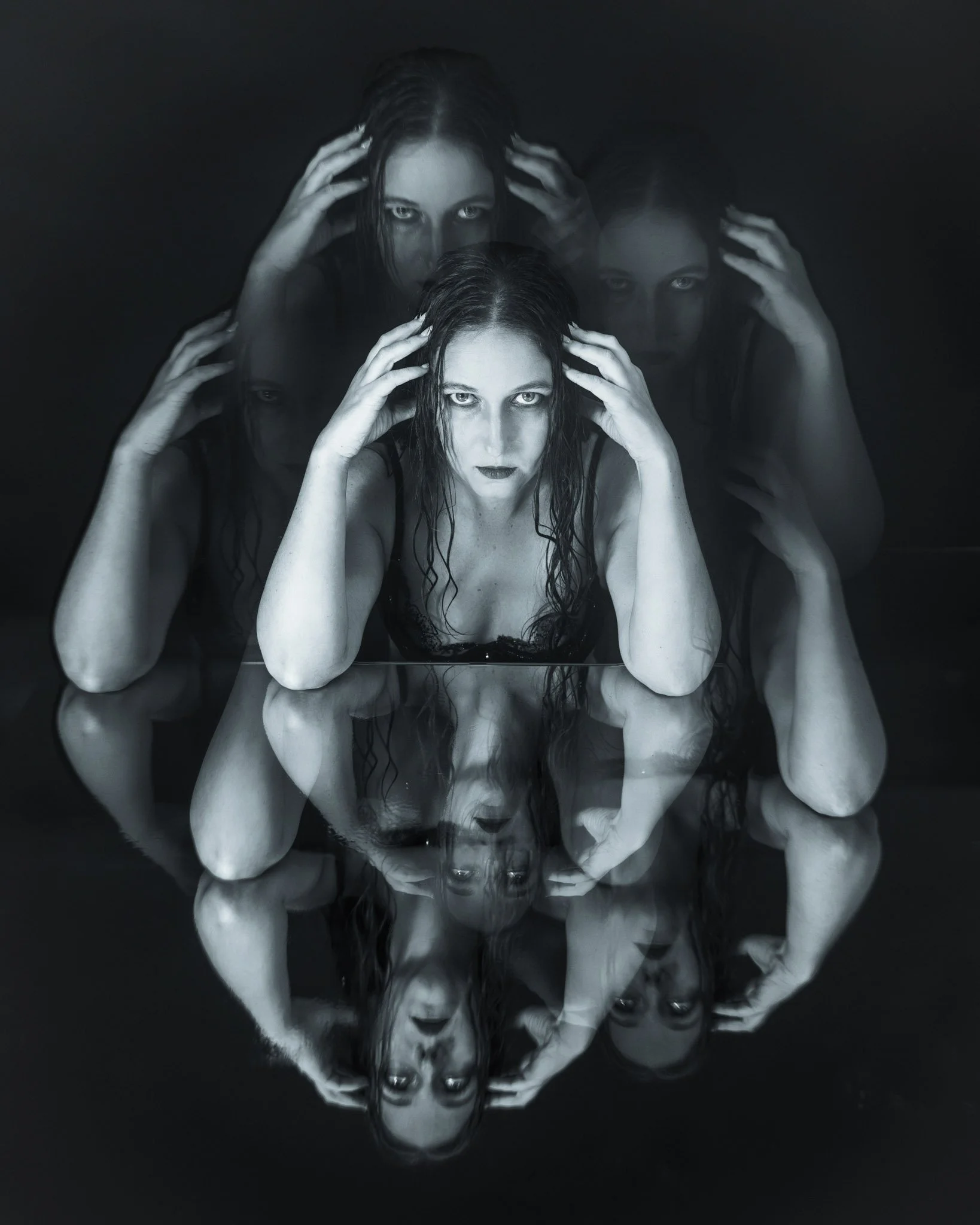
Rather than simply distorting part of the photograph, the Hexagonal Filter can create multiple versions of your subject around the frame.
With the right positioning, suddenly you have faces, hands and fragments appearing around your main subject.
For the portrait of Emily leaning over the reflective surface, I really leaned into that repetition.
We already had Emily reflected below, then the filter created additional versions around her.
One Emily became several Emilys.
And things got just a little bit creepy.
I love it.
The monochrome treatment works particularly well here too because colour would have introduced another element competing for attention. By stripping that away, the photograph becomes much more about shape, repetition, eyes, hands and reflection.
It's no longer simply a portrait of Emily.
It becomes something more surreal.
Don't just put the filter on and shoot
This is probably the most important thing I've discovered while playing with creative filters.
The filter doesn't make the photograph creative.
You do.
If you simply photograph exactly the same way you normally would and expect a $30, $50 or $100 piece of glass to magically make the image interesting, you're probably going to be disappointed.
Ask yourself what the effect could add to the photograph.
With the Split Filter, perhaps you want a sharp face surrounded by movement.
With the Hexagonal Filter, perhaps you're looking for repetition.
Maybe you deliberately place your subject off-centre so their reflection appears somewhere unexpected.
Perhaps you use hands, flowers, fairy lights, candles, jewellery or another strong graphic element and see how the filter repeats them.
That's when these little filters start becoming genuinely creative tools rather than novelty effects.
Look through the camera and PLAY
I think that's the biggest lesson here.
Don't decide what the finished photograph is supposed to look like before you start.
Look through the viewfinder.
Rotate the filter.
Move it.
Change your composition.
Ask your model to move.
Move yourself.
Then watch what happens.
Sometimes you'll get absolute rubbish.
Sometimes you'll get something interesting.
And every now and then you'll look through the camera and think...
Ohhhhh. THAT'S cool.
That's the frame you're looking for.
It's also a great creative reset
We photographers can become terribly serious about our photography.
Sharpness. Exposure. Composition. Lighting ratios. Dynamic range. Pixel peeping at 200%.
All important, of course.
But sometimes I think we need permission to simply mess around.
Creative filters are brilliant for that because they force you to relinquish a little bit of control.
You can influence the result, but you can't completely predict it.
And that's precisely why I enjoy them.
They're inexpensive, easy to throw into the camera bag and they can turn a fairly simple portrait setup into something completely unexpected.
They also make you look differently.
Once you start seeing how a filter reacts to highlights, reflections, shapes and movement, you begin looking around the studio for things you might otherwise have ignored.
That bright yellow chair suddenly isn't just somewhere for Emily to sit.
It's a shape.
It's a colour.
It's something that can be stretched, duplicated and distorted.
A reflective surface isn't just a table.
It's another Emily.
And once you've got several Emilys staring back at you, things are clearly going well. 😂
More experiments with creative filters
I've played with creative filters on quite a few different shoots now, and each one behaves differently depending on the subject, lighting and environment.
I'll add links below to some of my other experiments if you'd like to see what else I've been doing with them:
Read more about the Split Filter by Polar Pro
Read more about the Hexagonal Filter by K&F Concepts
Looking for more creative filters?
I've also experimented with star filters, including one set that I initially wasn't particularly impressed with... until I discovered what happened when I pointed them at candles. Sometimes a filter just needs the right subject before it suddenly makes sense.
Give yourself permission to make something weird
You certainly don't need creative filters to make creative photographs.
But they can be a wonderful little prompt when you're feeling stuck or everything you're creating is starting to feel a bit too familiar.
Grab one filter.
Choose one subject.
And rather than trying to create a masterpiece, give yourself half an hour to see how many different effects you can create with that one piece of glass.
Rotate it. Move it. Change the light. Change your distance. Change your angle.
Make some terrible photographs.
Make some weird ones.
And perhaps, somewhere amongst all that experimentation, you'll make something you never would have thought to create otherwise.
For me, that's the whole point.
Creativity doesn't always come from knowing exactly what you're doing. Sometimes it comes from asking, "I wonder what happens if I do this?"
And then doing it.