Flash Photography 2026 Edition
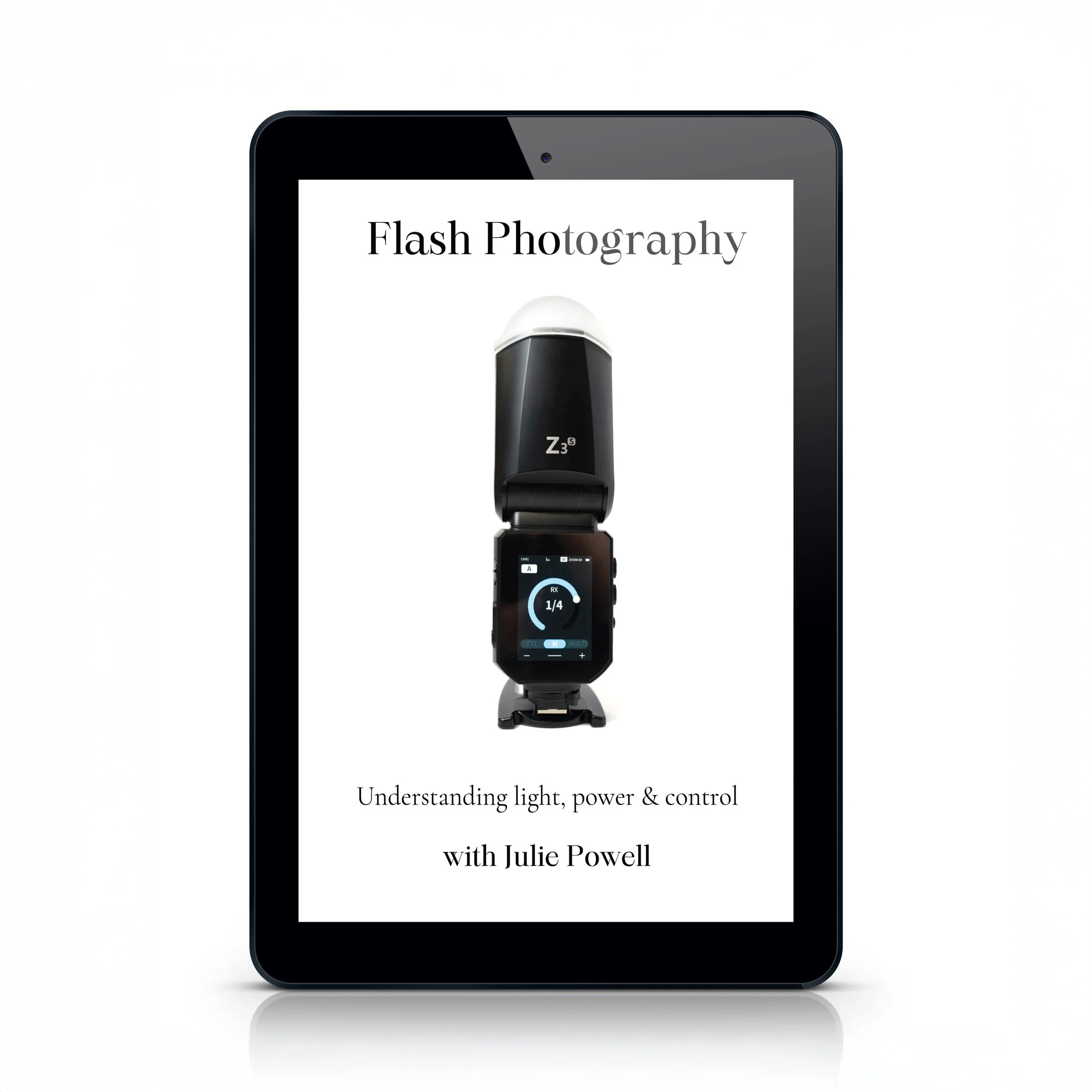
Flash Photography 2026 Edition
Flash Photography Basics
Understanding Light, Power & Control
Flash photography has a bit of a reputation.
For many photographers, it feels complicated, unpredictable, and honestly, a little frustrating.
You try it once or twice, the light looks harsh, the shadows feel wrong, and suddenly you're back to natural light thinking, "Maybe flash just isn't for me."
But the truth is, flash isn't difficult.
It's just different.
Once you understand a few simple ideas about how light behaves, flash starts to make a lot more sense. More importantly, it becomes something you can control.
One of the biggest misconceptions about flash photography is that it's all about camera settings.
Shutter speed. Aperture. ISO. Flash power.
It can feel like there are too many things to think about all at once.
The reality is much simpler.
Most flash problems aren't settings problems. They're light behaviour problems.
Once you understand how light moves, spreads, and falls away, you'll find yourself making more confident decisions every time you pick up your camera.
This guide was created to simplify flash photography and help you understand the principles that really matter. Through clear explanations, practical examples, simple diagrams and real-world techniques, you'll discover how to work with flash confidently, whether it's mounted on your camera or used off-camera.
This isn't a technical manual filled with formulas or complicated jargon. It's the guide I wish someone had handed me when I first started learning flash. My hope is that by understanding light, rather than simply memorising settings, you'll gain the confidence to create the images you've always wanted.
What You'll Learn
Inside this guide you'll discover:
What flash really is and how it works
Understanding flash power levels
Guide numbers explained simply
Why lighting direction matters
How to use bounce flash for softer, more flattering light
Understanding lighting ratios without complicated maths
The inverse square law made easy
When to adjust flash power and when to move the light
TTL vs Manual flash explained
Understanding off-camera flash triggers, channels, groups and IDs
Which camera settings affect flash exposure
A simple step-by-step workflow for working with flash
A handy quick reference guide you'll return to time and time again
Who Is This Guide For?
This ebook is perfect for photographers who:
Feel intimidated by flash photography
Want to understand off-camera flash
Want softer, more natural-looking light
Are tired of guessing their flash settings
Photograph portraits, still life, macro, food or products
Want to build confidence using flash
Whether you've just purchased your first speedlight or you've owned one for years and never really understood how it works, this guide will help you take control of your lighting with confidence.
Product Details
Format: Digital PDF eBook
Length: 17 beautifully designed pages
Skill Level: Beginner to enthusiast
Suitable For: Portrait, still life, macro, food, product and creative photographers
Price: AUD $9.95
Delivery: Instant digital download after purchase.
About the Author
Julie Powell is an internationally published photographer, writer and educator who has spent years helping photographers build confidence behind the camera. Her work has been published in more than 40 countries, she has written hundreds of educational photography articles, and regularly presents workshops, camera club presentations and hands-on training across Australia.
Specialising in portraits, still life, macro and creative lighting, Julie has a passion for making photography approachable. Rather than overwhelming photographers with technical jargon, she focuses on helping them understand the "why" behind the camera settings, making it easier to create consistent, creative images with confidence.
Through her ebooks, workshops, YouTube channel and online education, Julie's goal is simple: to help photographers spend less time feeling frustrated by their gear and more time enjoying the creative process.