Into the Shadows: The Fascinating History of Film Noir in Film and Photography
Dark shadows, mysterious characters, dramatic lighting and stories that leave you wondering what happens next. Welcome to the wonderful world of film noir.
There is something about film noir that I have always loved. Perhaps it's the dramatic lighting, the beautiful black-and-white imagery or the way a single photograph can suggest an entire story.
A woman standing beneath a streetlight. A detective sitting alone in a dimly lit office. A mysterious figure half-hidden in shadow. You don't necessarily know who they are or what has happened, but you immediately want to know more.
That's the magic of film noir.
While many photographers associate film noir with dramatic black-and-white portraits, its history goes much deeper. It began in cinema, drew inspiration from European art and photography, and eventually developed into a visual style that continues to influence photographers today.
So, where did it all begin?
What Exactly Is Film Noir?
The term film noir is French for "black film", although it's generally understood to mean dark cinema.
The name was popularised by French film critics in the 1940s, particularly Nino Frank, who used it to describe a collection of American crime dramas that had developed a distinctly dark and cynical atmosphere.
Interestingly, the filmmakers themselves weren't necessarily setting out to create a new genre called film noir. They were making crime films, detective stories and psychological thrillers.
It was only later that critics began recognising the shared visual characteristics and themes that made these films so distinctive.
Film noir isn't simply about black-and-white imagery. It's about mood, atmosphere, mystery and storytelling.
Classic noir films frequently explored crime, betrayal, obsession, moral ambiguity and characters caught in situations beyond their control.
And visually? Well, that's where things get particularly interesting for us photographers.
The Origins: German Expressionism and the Art of Shadows
To understand film noir, we need to travel back a little further, to Germany in the 1920s.
German Expressionist cinema was experimenting with something quite extraordinary.
Rather than simply lighting a scene so audiences could see what was happening, filmmakers began using light and shadow to express emotion.
Shadows became exaggerated. Camera angles were sometimes deliberately unsettling. Sets could be distorted, with unusual shapes and dramatic contrasts.
One of the most famous examples is The Cabinet of Dr. Caligari (1920), directed by Robert Wiene.
The film used distorted scenery and painted shadows to create a world that felt psychologically uncomfortable.
Another influential film was Fritz Lang's M (1931), which demonstrated how lighting, composition and the suggestion of things unseen could create tremendous tension.
As European filmmakers and cinematographers moved to Hollywood, particularly during the rise of Nazism, they brought many of these visual ideas with them.
Hollywood already had a thriving crime-film industry, and these influences helped shape what would become classic American film noir.
Suddenly, shadows weren't just something to eliminate.
They were something to embrace.
And personally, I think that's a wonderful lesson for photographers.
We spend so much time learning how to light our subjects correctly that sometimes we forget how powerful the absence of light can be.
Hollywood's Golden Age of Film Noir
The classic film noir period is generally considered to run from the early 1940s through the late 1950s.
This was a time when Hollywood produced some wonderfully atmospheric films, filled with private detectives, mysterious women, troubled heroes and morally complicated stories.
Some of the most influential include:
The Maltese Falcon (1941): Directed by John Huston and starring Humphrey Bogart, this detective story helped establish many of the characters and themes we now associate with film noir.
Double Indemnity (1944): Directed by Billy Wilder, this is a fabulous example of how dramatic lighting and shadows can heighten tension.
Laura (1944): A stylish mystery directed by Otto Preminger, with elegant cinematography and a wonderfully atmospheric quality.
The Big Sleep (1946): Another Humphrey Bogart classic, featuring Lauren Bacall, with plenty of mystery, dramatic interiors and sharp dialogue.
Out of the Past (1947): Directed by Jacques Tourneur, this film is often celebrated for its atmospheric cinematography and classic noir storytelling.
The Third Man (1949): A British production directed by Carol Reed, famous for its striking camera angles, dramatic shadows and atmospheric Vienna locations.
What fascinates me about these films is how much they achieved with relatively simple lighting setups.
Of course, Hollywood productions had professional crews and equipment, but the visual principles themselves weren't necessarily complicated.
A carefully positioned light, a dark background, a little smoke or atmosphere, and suddenly an ordinary scene could become something quite extraordinary.
The Signature Look of Film Noir
So, what makes a photograph or film scene immediately feel like noir?
There are several recognisable characteristics.
Low-Key Lighting
Probably the most important element is low-key lighting.
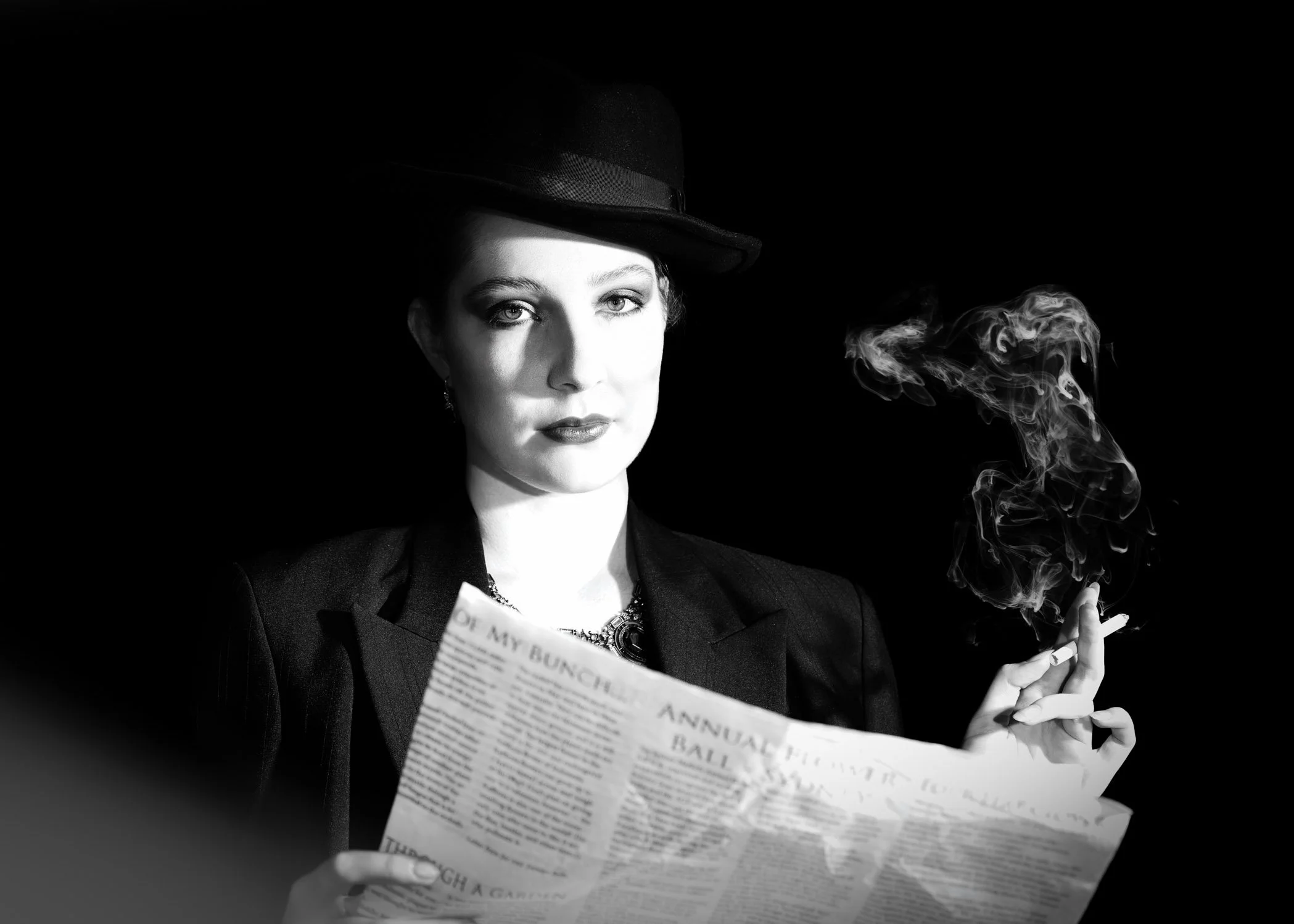
Rather than evenly illuminating everything, noir cinematographers frequently used a strong directional light source, allowing large areas of the scene to fall into darkness.
Faces might be only partially illuminated, with one side disappearing into shadow.
This creates depth, mystery and sometimes a sense of unease.
In photography, we can recreate this effect with a single studio light, a snoot, a gridded softbox or even a carefully positioned continuous light.
The important thing is controlling where the light falls, and perhaps more importantly, where it doesn't.
Chiaroscuro: The Beauty of Light and Dark
The word chiaroscuro comes from Italian and refers to the contrast between light and dark.
It's a technique that was used by painters centuries before photography or cinema existed.
Artists such as Caravaggio and Rembrandt used dramatic contrasts to create depth, emotion and visual impact.
Film noir adopted many of these principles, creating scenes where bright highlights and deep shadows existed side by side.
It's one of the reasons I love working with dramatic studio lighting.
You don't always need multiple lights to create an interesting portrait. Sometimes one beautifully placed light is far more effective.
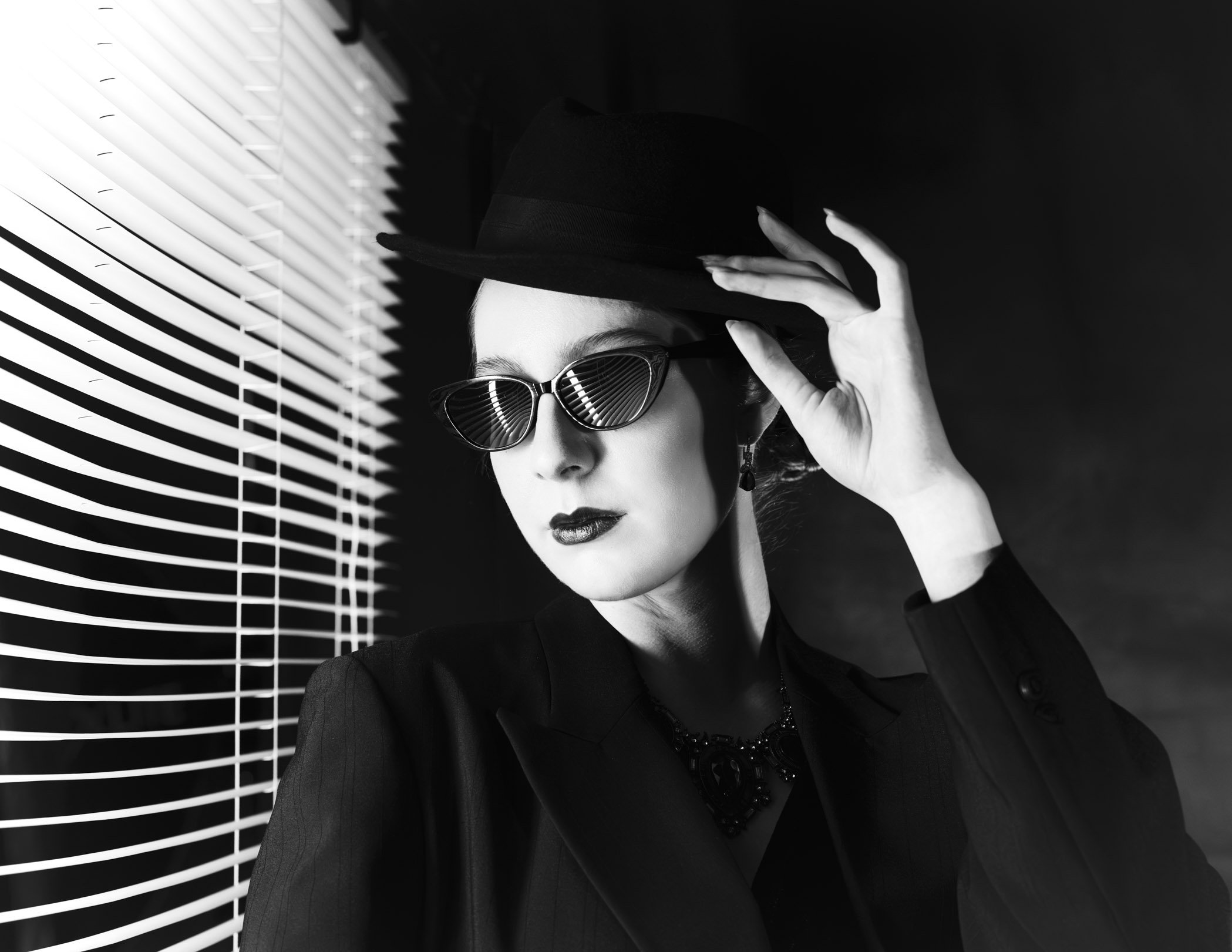
Venetian Blind Shadows
Ah, those wonderful striped shadows!
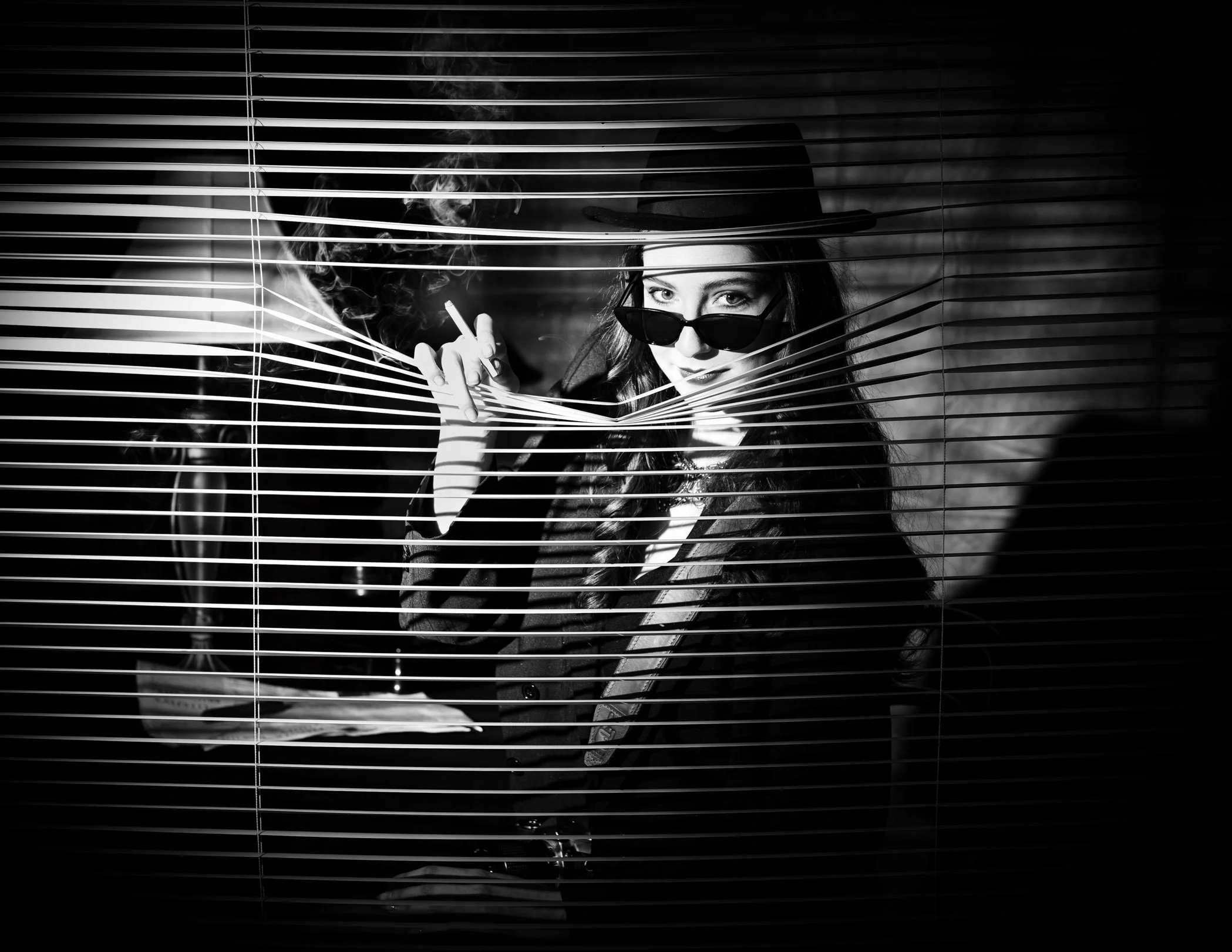
If you've watched classic noir films, you've probably noticed the dramatic patterns created by light passing through Venetian blinds.
These shadows often appeared across walls, desks and faces, adding visual interest and sometimes suggesting confinement, secrecy or danger.
They're also surprisingly easy to recreate in photography.
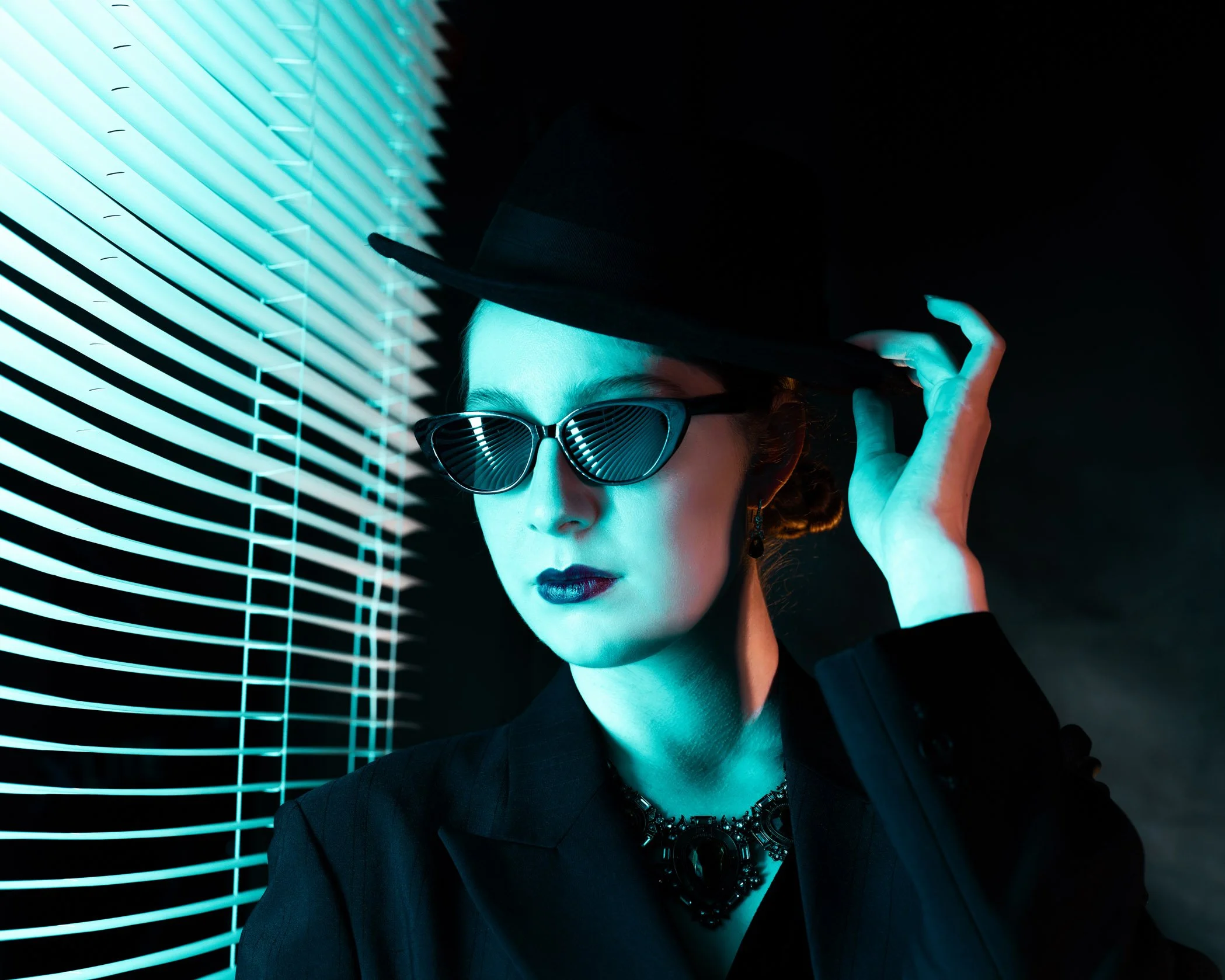
A hard light source and a set of blinds, or even a homemade gobo, can produce those unmistakable patterns.
And they can completely transform an otherwise ordinary portrait.
Smoke, Fog and Atmosphere
Classic film noir often featured smoky rooms, foggy streets and pools of light cutting through the darkness.
Atmosphere helped create depth and made beams of light visible.
In photography, a little controlled haze can produce beautiful results, particularly when combined with strong backlighting.
You don't necessarily need smoke, though. A carefully lit background, interesting shadows and thoughtful composition can create plenty of atmosphere on their own.
Unusual Camera Angles and Composition
Film noir wasn't afraid of unusual compositions.
Low camera angles could make a character appear powerful or threatening.
Dutch angles, where the camera is deliberately tilted, could make a scene feel uncomfortable or unstable.
Characters were frequently framed through doorways, windows, mirrors or architectural elements.
And negative space was often used to create isolation or uncertainty.
These are all techniques we can borrow for our photography.
Sometimes moving your camera just a little can completely change the story your image tells.
From Cinema to Still Photography
Although film noir originated as a term for cinema, its visual language has had an enormous influence on photography.
The connection is particularly interesting because photography was already influencing cinema long before the term film noir existed.
Photographers such as Brassaï, whose atmospheric photographs of Paris at night appeared in his 1933 book Paris de nuit, demonstrated how ordinary streets could become mysterious and cinematic after dark.
Bill Brandt also explored dramatic contrasts, unusual perspectives and moody urban environments in his black-and-white photography.
Meanwhile, photographers working in Hollywood helped create the publicity portraits that shaped how audiences remembered its stars.
Studio portrait photographers such as George Hurrell became famous for glamorous lighting, sculpted faces and beautifully controlled highlights and shadows.
While Hollywood glamour photography and film noir weren't the same thing, their visual techniques often overlapped.
Strong directional lighting, carefully shaped shadows and elegant monochrome tones all helped create images that felt dramatic and timeless.
Street photography also shared some of noir's visual language.
Photographers such as Weegee captured the darker side of city life, photographing crime scenes, nightlife and human drama in New York.
His images weren't simply film noir photographs, but their gritty atmosphere and dramatic use of flash contributed to a visual world that feels closely connected.
Over time, photographers began deliberately borrowing noir's cinematic lighting and storytelling techniques.
And that influence continues today.
Film Noir, Fashion and Creative Portraiture
One of the reasons film noir works so beautifully in portrait photography is that it gives us permission to create a character rather than simply record a face.
A portrait can become a scene from an imaginary movie.
We can suggest a story without explaining everything.
Perhaps our subject is waiting for someone who never arrives.
Perhaps they've just discovered a secret.
Or perhaps they're the one keeping the secret!
Clothing, props, lighting and posing all become part of that story.
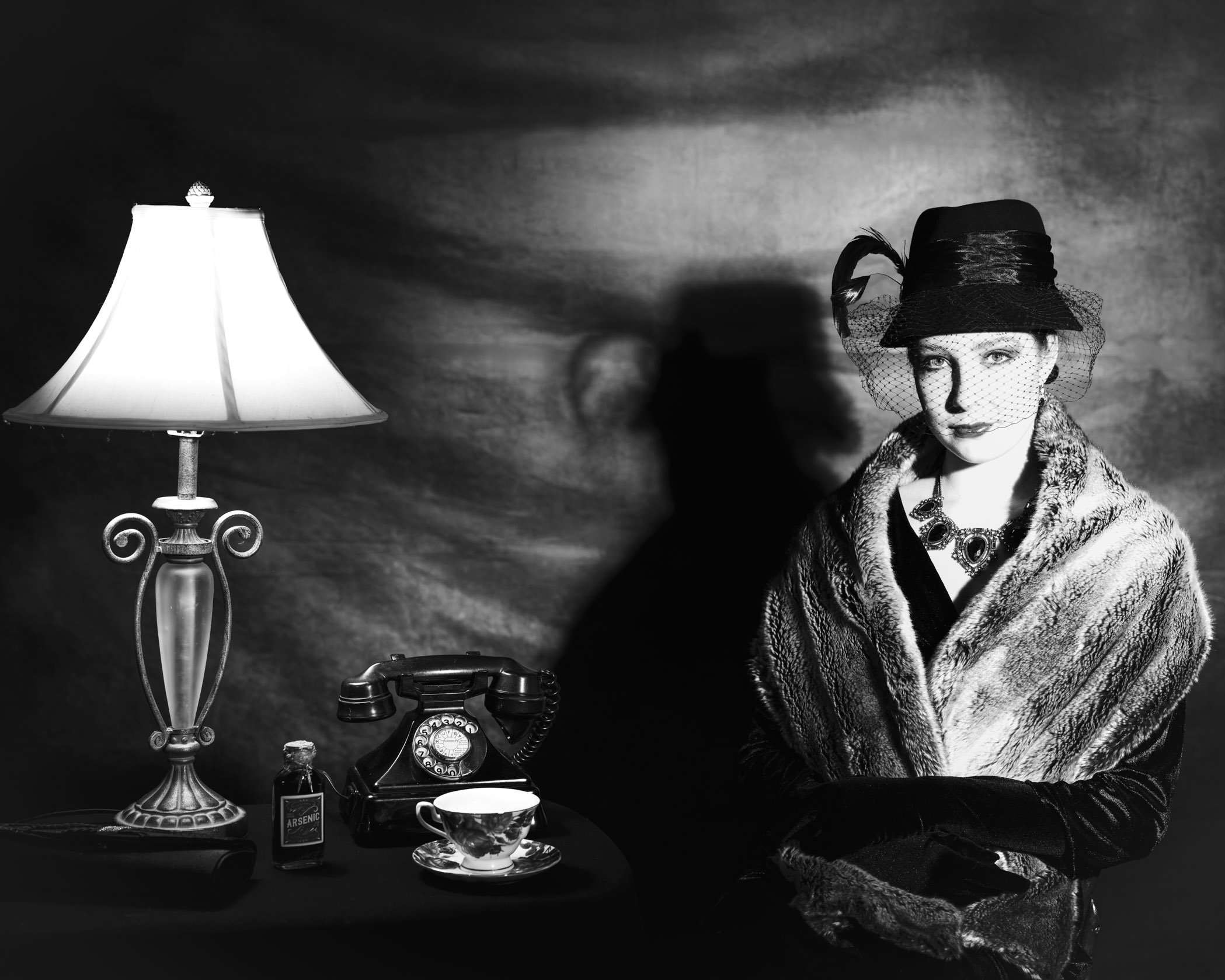
A fedora, a tailored jacket, a vintage dress, gloves, a telephone or a simple chair can help establish the mood.
But props alone don't make an image noir.
You can put someone in a fabulous 1940s outfit, photograph them against a brightly lit white background, and create a lovely vintage portrait.
It just won't necessarily feel like film noir.
The difference is the atmosphere and the story.
It's about what we choose to reveal, and what we deliberately leave hidden.
Film Noir Isn't Always Black and White
This might surprise some people, but film noir doesn't have to be black and white.
Most classic film noir was photographed in black and white, and those dramatic monochrome tones have become closely associated with the style.
But colour noir exists too.
Later films, often described as neo-noir, continued exploring noir's darker themes and visual techniques.
Films such as Chinatown (1974), Blade Runner (1982) and L.A. Confidential (1997) demonstrate how noir influences can work beautifully in colour.
Deep shadows, selective lighting, strong colour contrasts and atmospheric locations can all create a noir-inspired look.
In photography, I particularly enjoy how a carefully controlled colour palette can add another layer to the story.
Cool blue light, warm tungsten tones or a subtle splash of red can produce a wonderfully cinematic atmosphere.
That said, there's something rather special about stripping an image back to black and white.
Without colour competing for attention, we become more aware of shape, texture, expression and light.
And for film noir, those elements are everything.
Creating Your Own Film Noir Photographs
The wonderful thing about film noir is that you don't need a huge studio or complicated lighting equipment to experiment with it.
You can begin with a single light.
Here are a few things I would encourage you to try.
Start with one light. Position it to the side of your subject and allow the shadows to become part of the image. Experiment with moving the light higher, lower, closer and further away.
Control the spill. A snoot, grid or flag can help prevent unwanted light from illuminating your background.
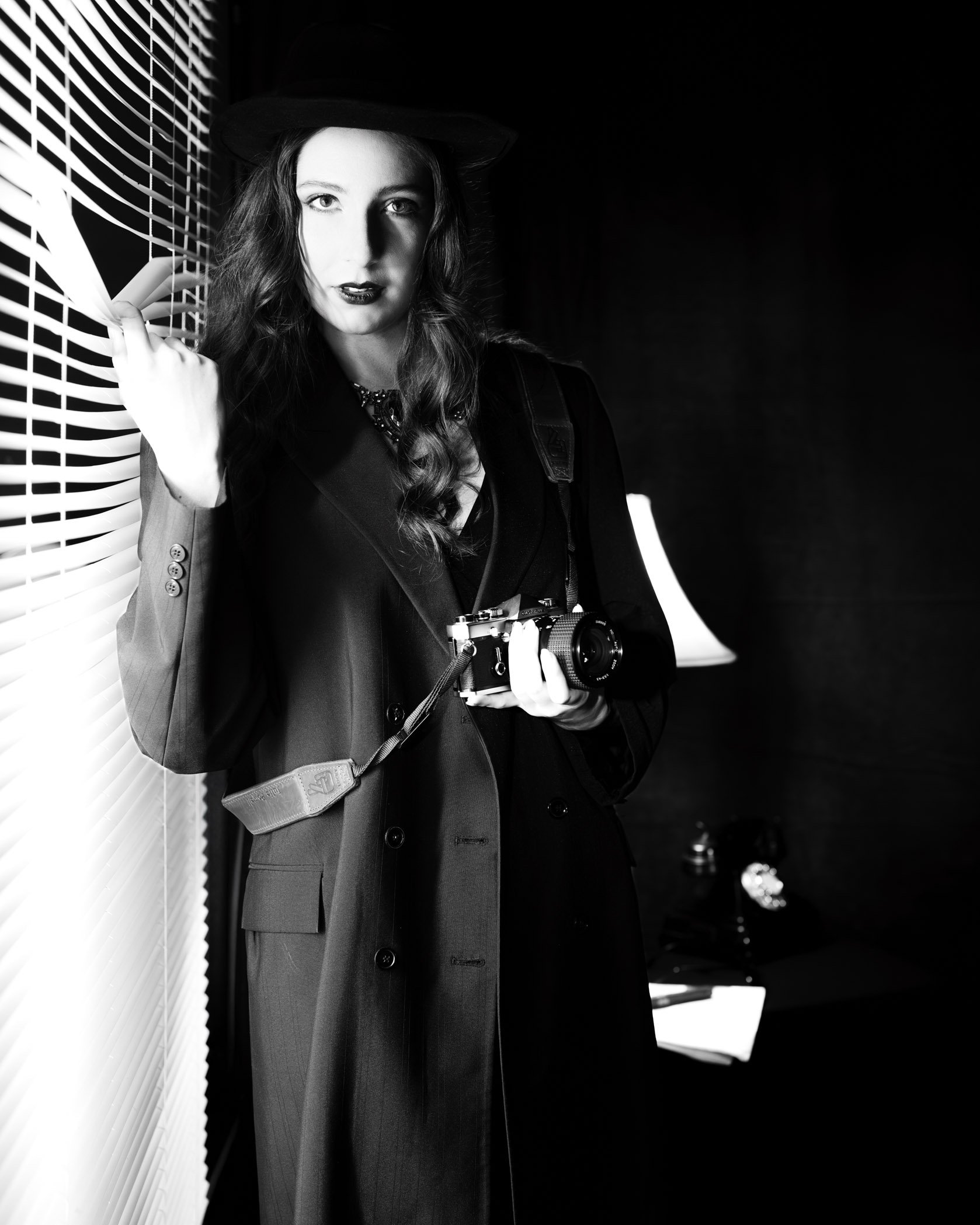
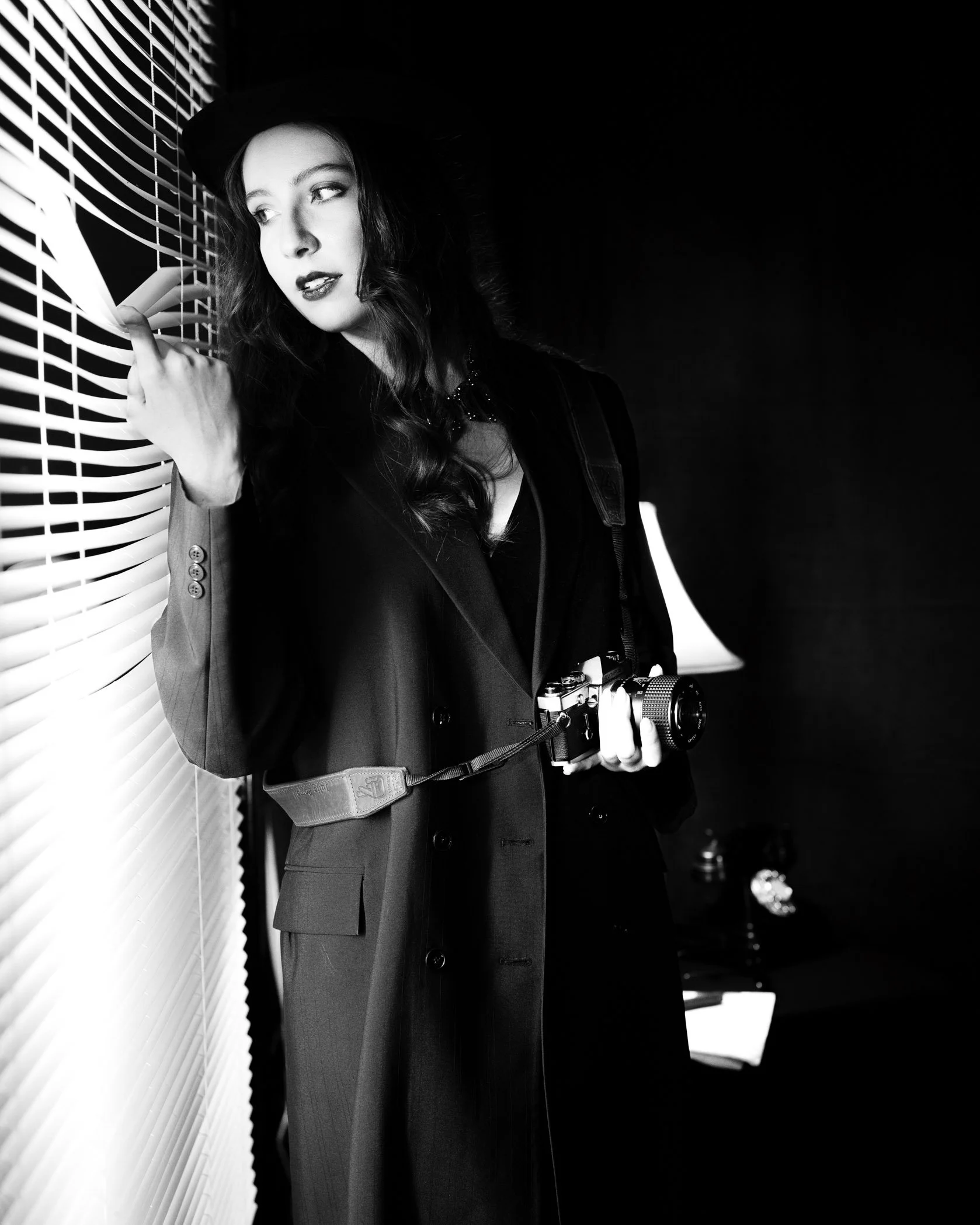
Look for interesting shadows. Venetian blinds, doorways, window frames and simple gobos can add beautiful patterns.
Think about your character. Who are they? What are they doing? What has just happened, or what might happen next?
Experiment with posing. A downward glance, a hand resting against a wall or someone looking over their shoulder can suggest a story without being overly theatrical.
Don't be afraid of darkness. Not every detail needs to be visible. Sometimes what we can't see is what makes an image interesting.
And finally, consider your editing.
Black-and-white conversions, contrast, tonal separation and a little grain can help create a classic cinematic feel.
But remember, a good film noir photograph begins with the lighting and storytelling, not a preset.
Editing should enhance the atmosphere you've already created.
Why Film Noir Still Fascinates Us
More than 80 years after the beginning of classic film noir, we're still drawn to its distinctive visual style.
I think part of that appeal is its simplicity.
It reminds us that photography doesn't always need to be bright, colourful or perfectly illuminated.
Sometimes the most interesting images are the ones that make us curious.
The ones that leave a little room for imagination.
Film noir is also a wonderful reminder that light isn't just there to make our subjects visible.
It's there to create shape, mood, emotion and meaning.
And shadows?
Well, shadows are just as important as the light itself.
For me, that's what makes film noir such a rewarding style to explore in creative portrait photography.
It's not simply about recreating the past. It's about taking those wonderful cinematic techniques and using them to tell our own stories.
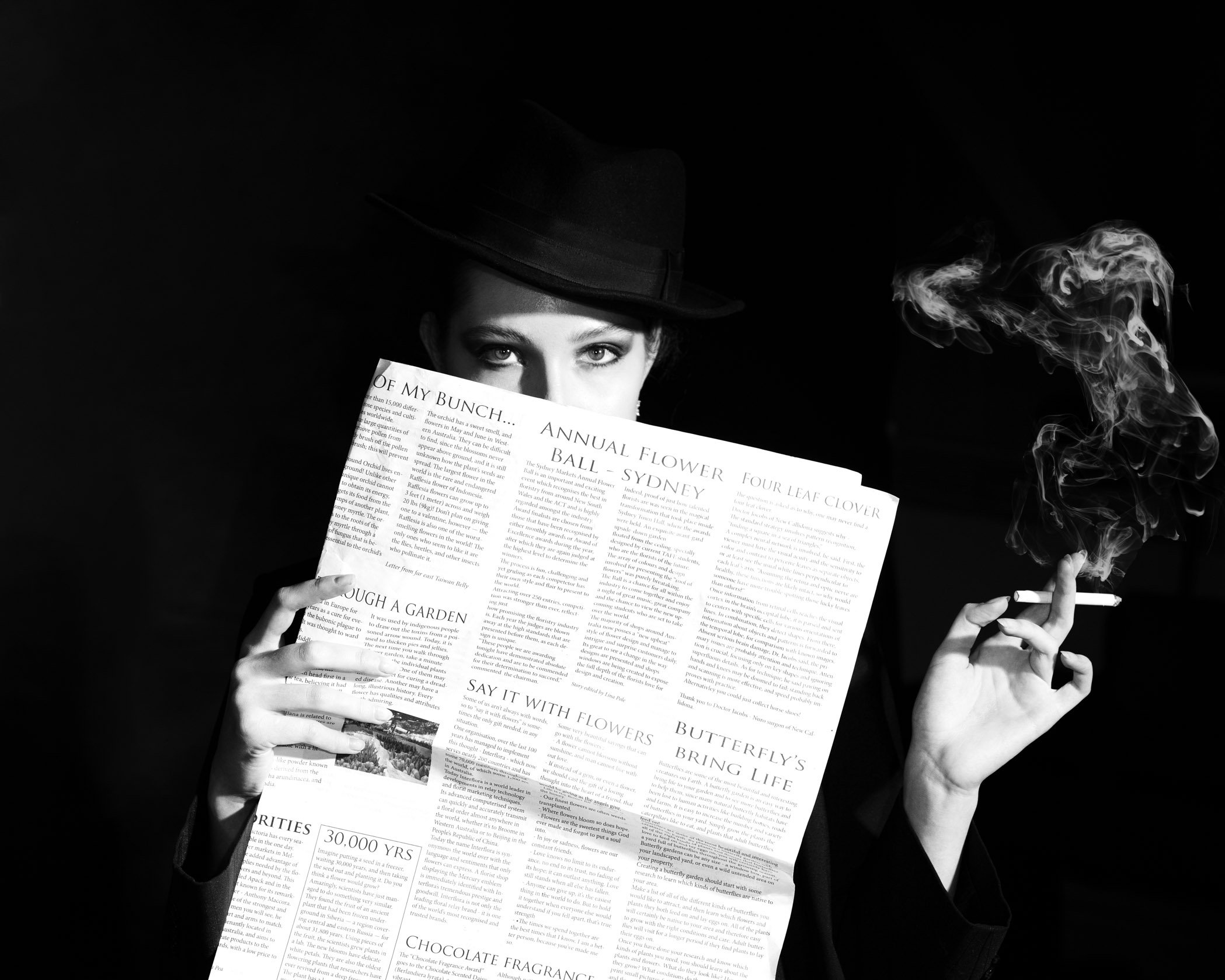
My Own Love Affair with Film Noir: The Femme Fatale and the Private Eye
I've always had a bit of a love affair with film noir. The mystery, the drama, the fabulous lighting and, of course, those wonderfully intriguing characters.
But two characters in particular have always fascinated me: the Femme Fatale and the Private Eye.
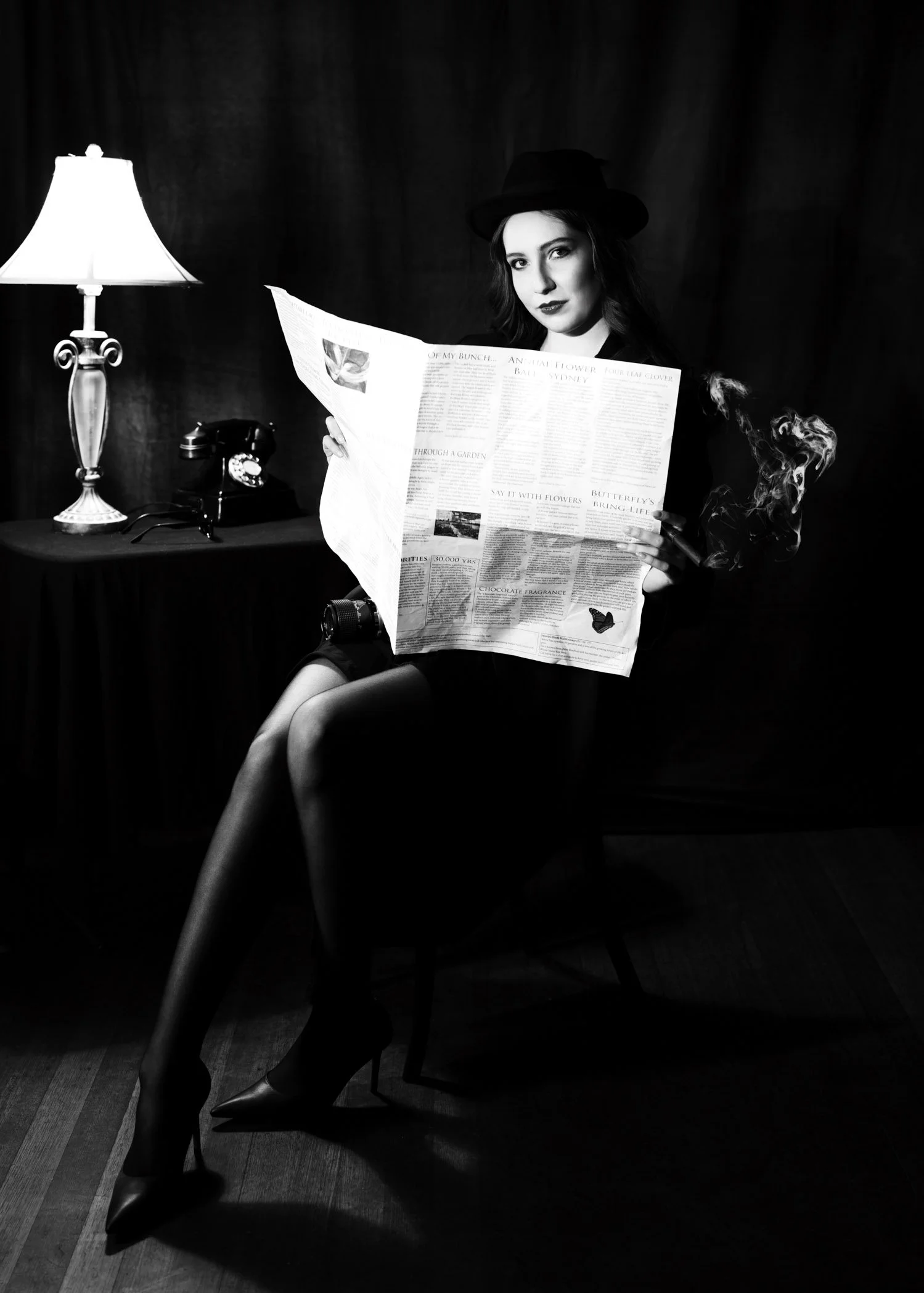
We recently explored this very theme at the Bright Festival of Photography (BFOP), and what a fabulous time we had! Along with creating some wonderfully dramatic portraits, we had quite a few conversations about where these characters originated, what made them so iconic and why we're still so fascinated by them today.
And honestly, that's one of the things I love most about photography workshops. It's not always just about camera settings and lighting. Sometimes it's about the stories, the history and the inspiration behind what we're creating.
The Femme Fatale: Beautiful, Mysterious and Potentially Dangerous
The Femme Fatale is probably one of the most recognisable characters in classic film noir.
The term is French for "fatal woman", and while the archetype existed in literature, mythology and art long before cinema, Hollywood gave her a particularly memorable identity.
She was often glamorous, intelligent, confident and seductive. But beneath that beautiful exterior, there was usually something more complicated going on.
Was she innocent? Was she manipulating everyone around her? Was she simply trying to survive in a world where men held most of the power?
Sometimes it was difficult to tell, and that was rather the point.
Actresses such as Barbara Stanwyck in Double Indemnity (1944), Rita Hayworth in Gilda (1946) and Jane Greer in Out of the Past (1947) helped establish the classic image of the Femme Fatale.
Interestingly, these characters weren't always villains. Some were trapped by circumstances, some were fiercely independent, and others were quite deliberately dangerous.
For me, that's what makes the Femme Fatale such a wonderful character to photograph.
She's not simply a beautiful woman in a vintage dress.
She's a character with secrets, confidence, vulnerability and perhaps a little danger lurking beneath the surface.
And photographically, there is so much to work with.
A sideways glance. A subtle smile. A hand resting against her cheek. A face partially hidden in shadow.
Sometimes the smallest gesture can suggest an entire story.
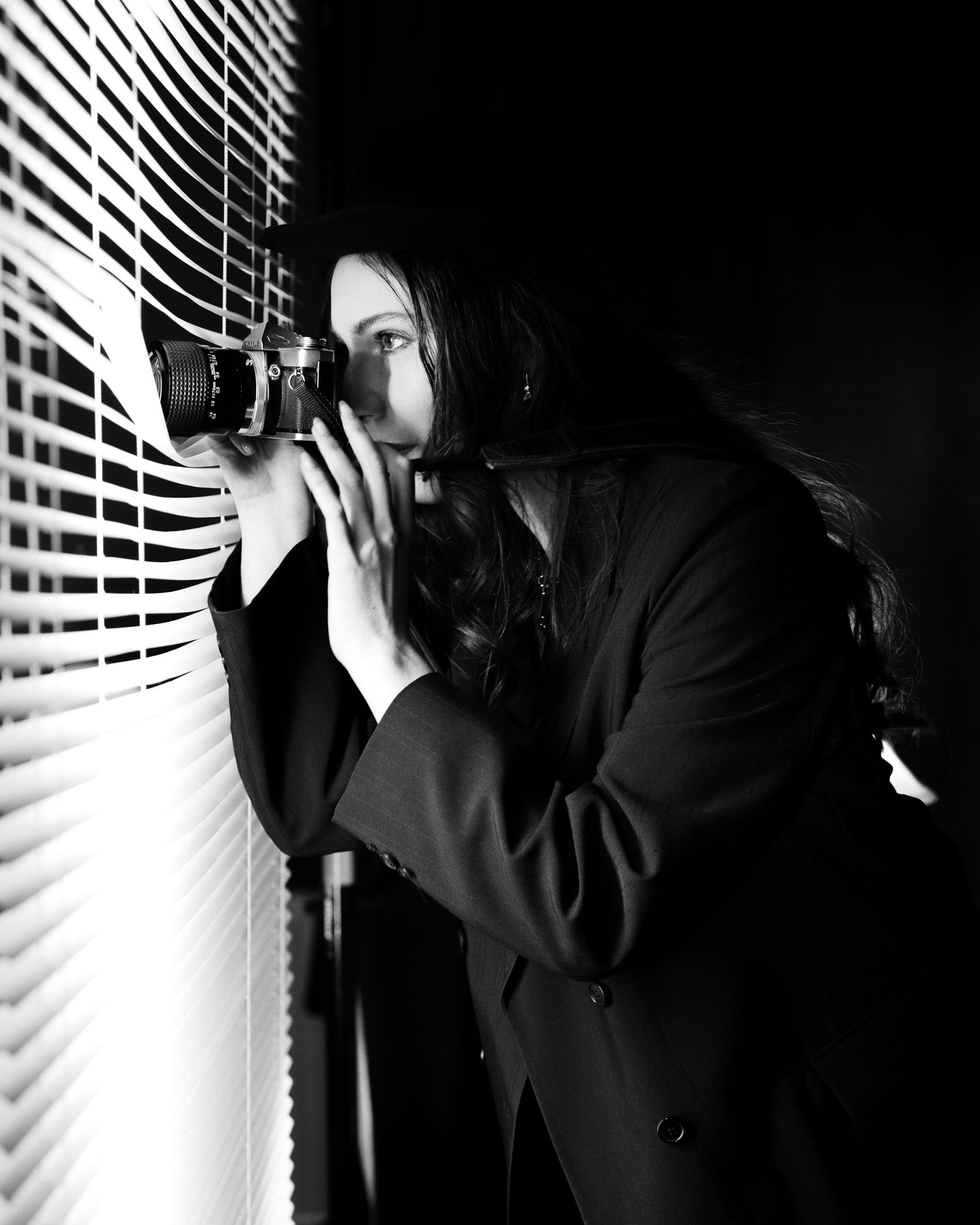
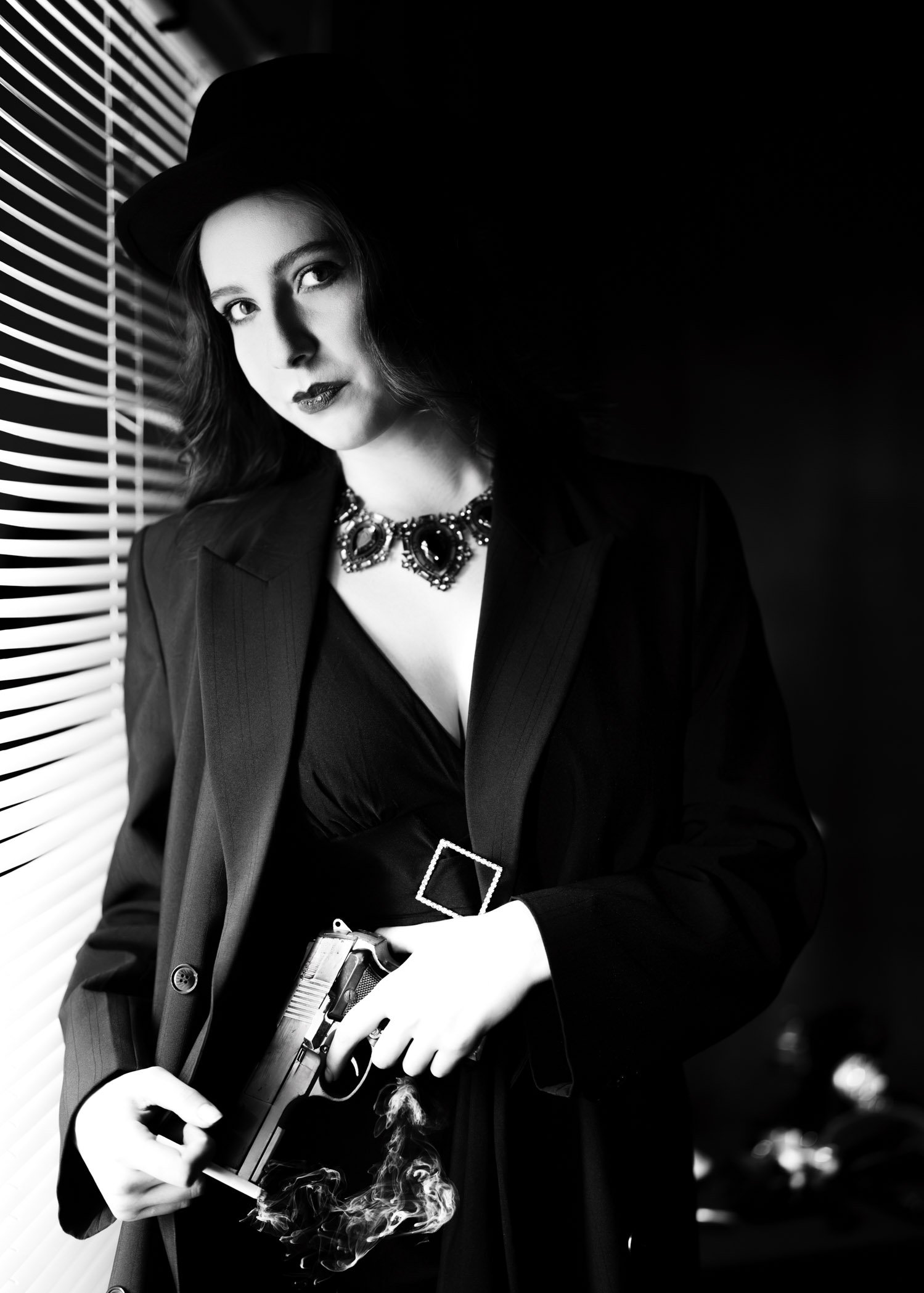
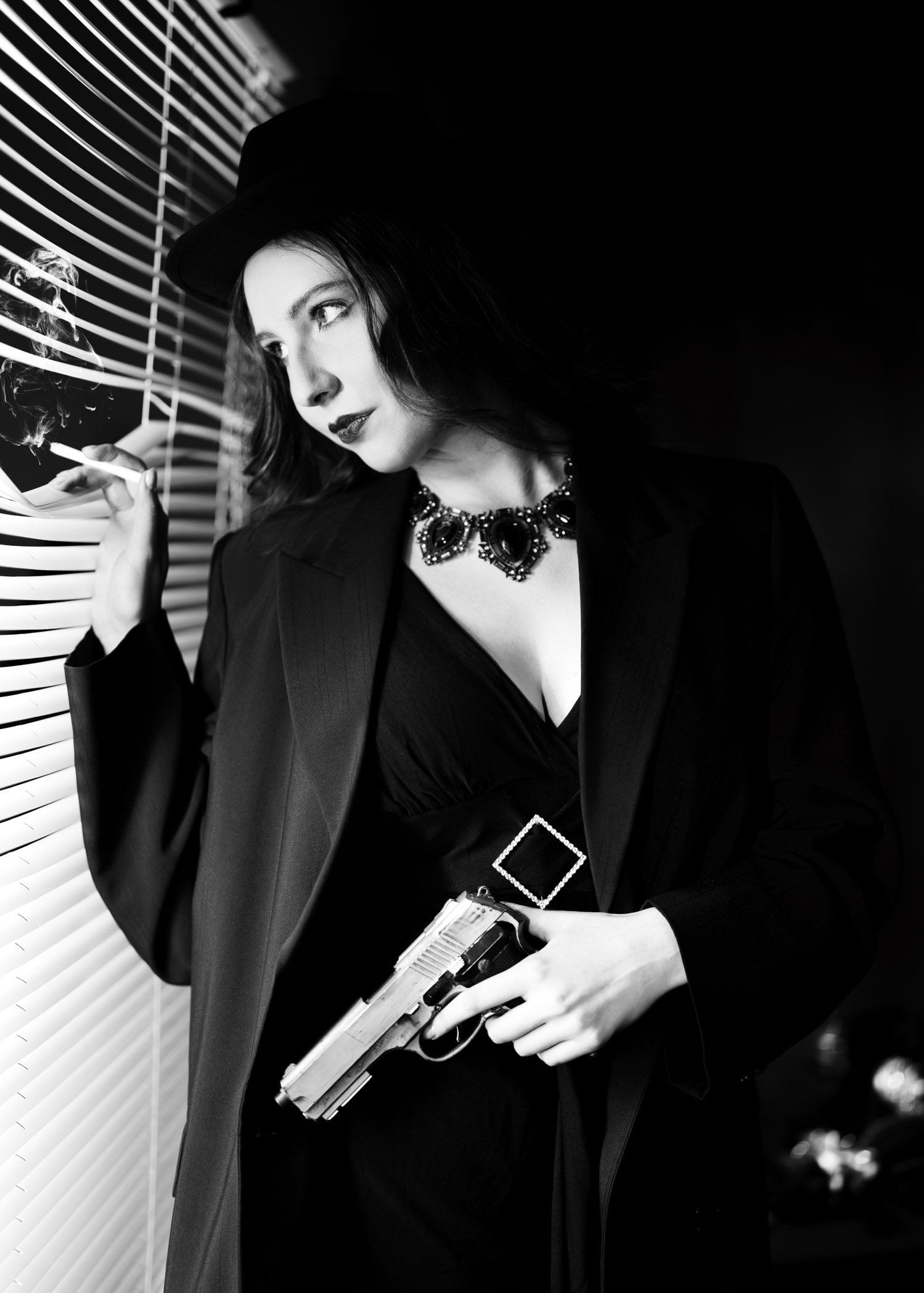
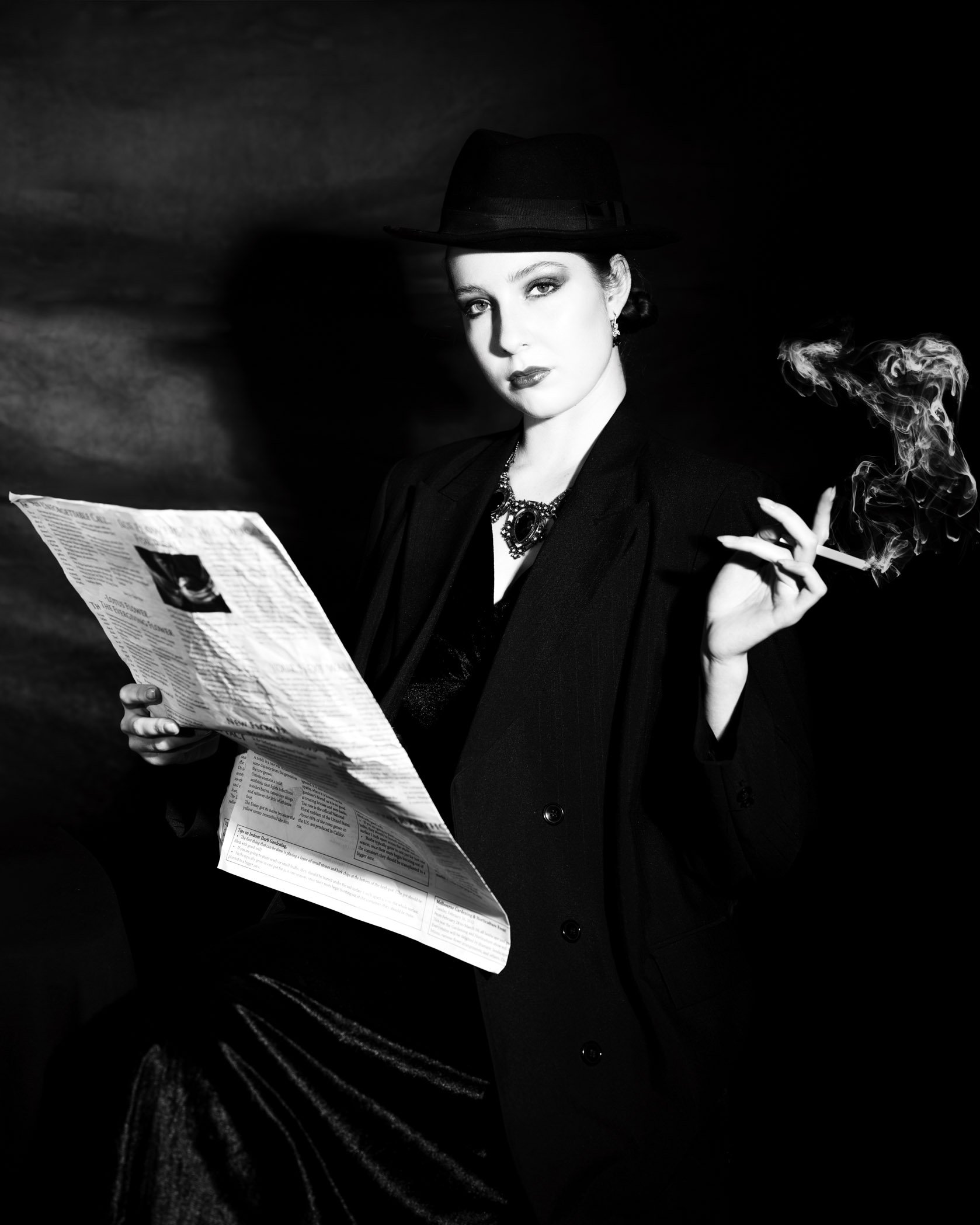
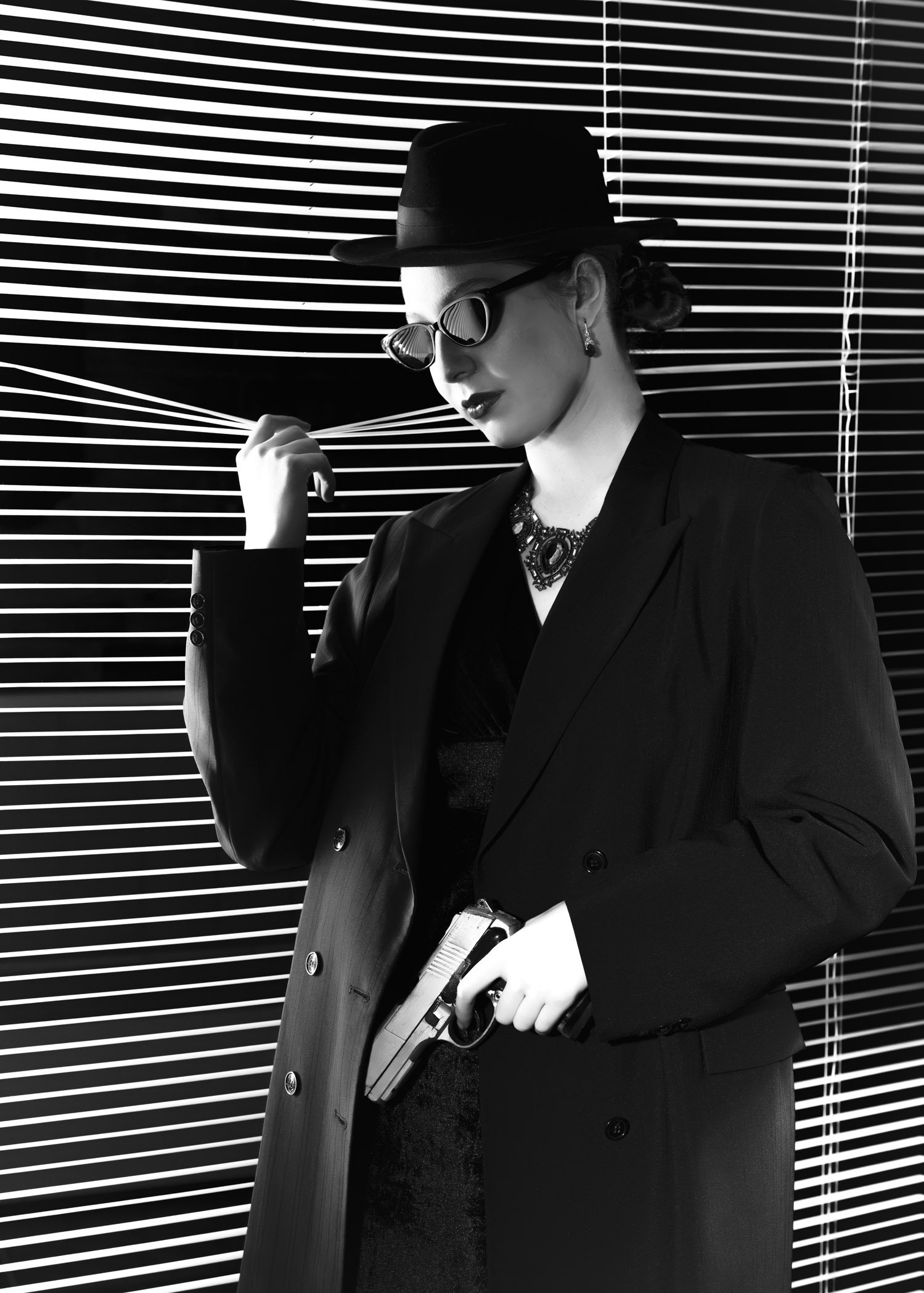
The Private Eye: A Detective with a Past
Then, of course, we have the Private Eye.
The world-weary detective, often wearing a fedora and trench coat, sitting in a dimly lit office with a mystery to solve.
He's clever, cynical, occasionally charming and usually has more than a few problems of his own.
The character grew out of American hardboiled detective fiction, particularly the stories of writers such as Dashiell Hammett and Raymond Chandler.
Humphrey Bogart's portrayals of Sam Spade in The Maltese Falcon (1941) and Philip Marlowe in The Big Sleep (1946) helped cement the Private Eye as one of cinema's most memorable characters.
He wasn't necessarily a traditional hero.
He operated in a morally complicated world where almost everyone had something to hide.
And, more often than not, he found himself caught up with a mysterious woman who might be his greatest ally or his biggest mistake.
For photography, the Private Eye gives us another fabulous opportunity to explore character and atmosphere.
A strong side light, a shadow across the eyes, a slightly hunched posture or a thoughtful expression can create that classic detective look.
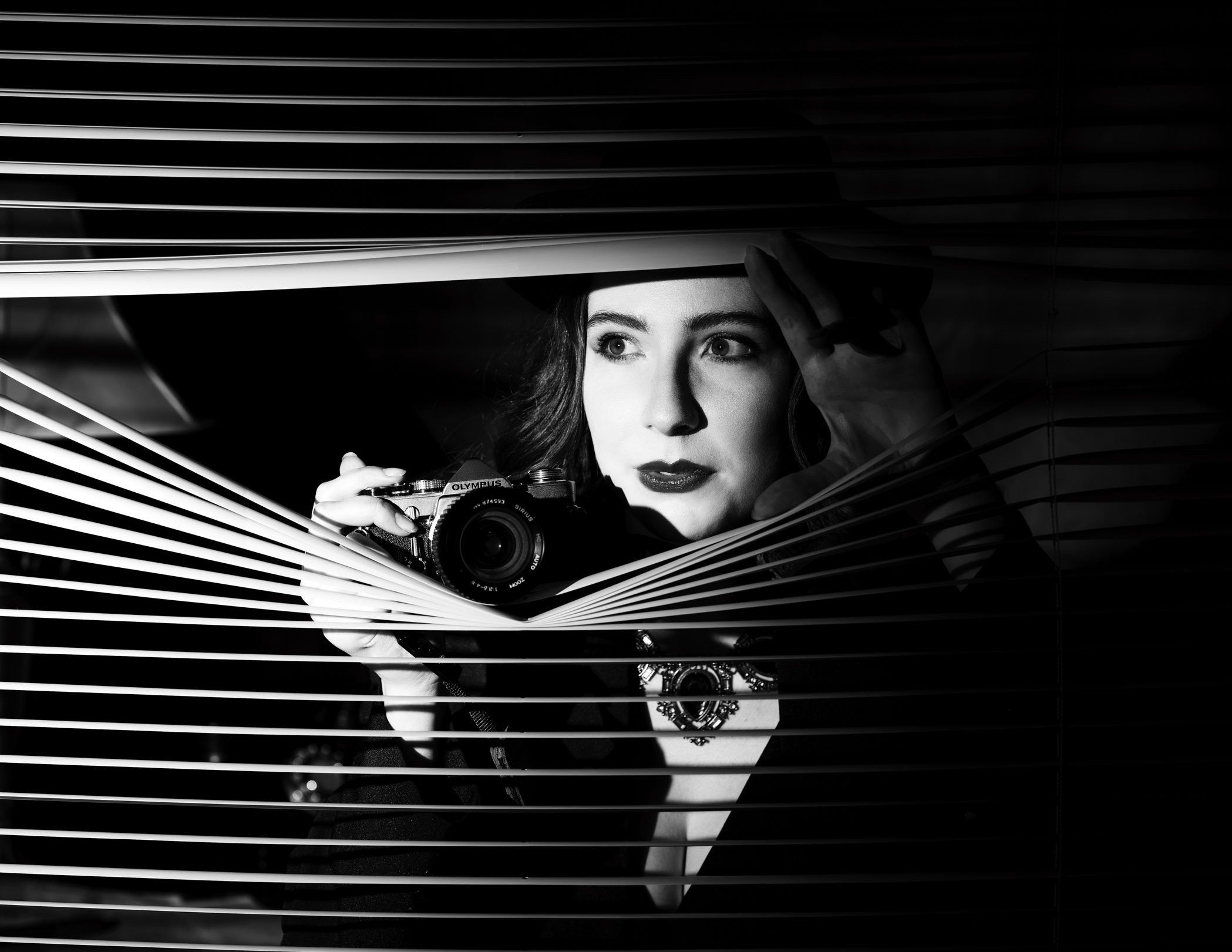
Add a vintage telephone, a desk lamp or the shadows of Venetian blinds, and suddenly you've stepped into another era.
Bringing These Characters to Life at BFOP
One of the things I particularly enjoyed about our recent Film Noir workshop at BFOP was exploring these classic characters with our model, Nicola Paige.
We weren't simply trying to recreate an old movie still.
We wanted to capture the feeling of film noir. The tension, the glamour, the mystery and those wonderful dramatic shadows.
And while the styling and props certainly helped, it was the lighting, posing and expressions that really brought everything together.
We talked about the history of the Femme Fatale and the Private Eye, how these characters developed and why they became such recognisable figures in cinema.
I love that we could take something that began in literature and classic Hollywood filmmaking and reinterpret it through our own photography.
It's also a reminder that a character doesn't need an elaborate set to come alive.
Sometimes a simple background, carefully positioned light and a little imagination are all you need.
And perhaps that's why I keep returning to film noir.
It's a style that encourages us to think beyond the technical side of photography and consider the story we're trying to tell.
Who is this person? What are they thinking? What happened just before this moment? And what might happen next?
We don't have to provide all the answers.
In fact, I think film noir works best when we don't.
A little mystery is a wonderful thing.
And if our photographs leave someone wondering what happens next, then I think we've done our job rather well.
So, the next time you're setting up a portrait, perhaps try turning off a few lights rather than adding more.
You might be surprised by what you discover in the shadows.
And if you're looking for a little inspiration, perhaps settle in with one of those wonderful old noir films. Pay attention to the lighting, the composition and the way the shadows are used. There's a wealth of photographic inspiration waiting to be discovered. Another one to check out is Spider Noir, in B&W, on Prime TV - Amazing.
Happy shooting!
Julie
P.S. Have you ever tried film noir photography? Do you prefer the classic black-and-white look, or do you enjoy experimenting with colour and cinematic lighting? I'd love to hear your thoughts.