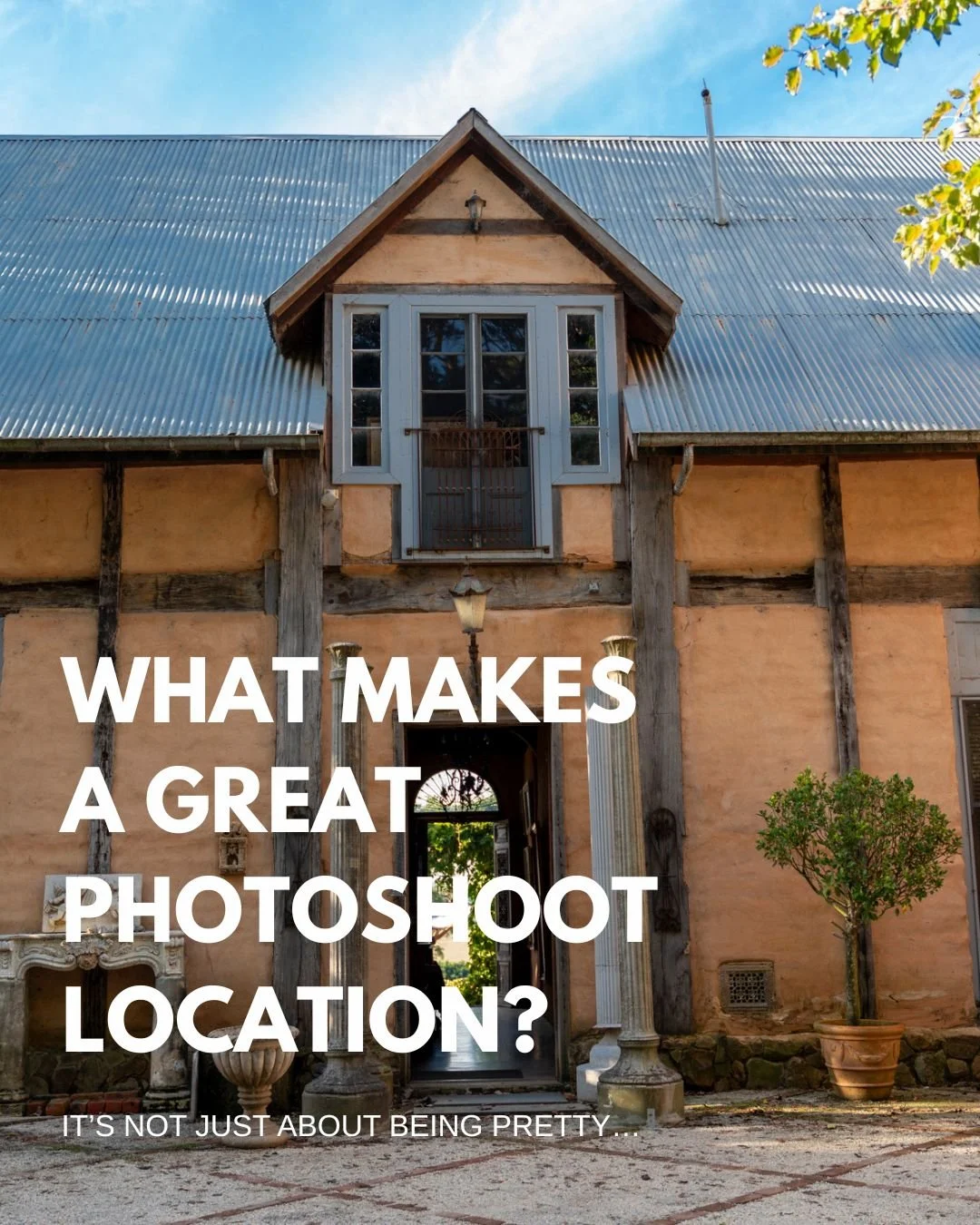
What Makes a Great Photoshoot Location?
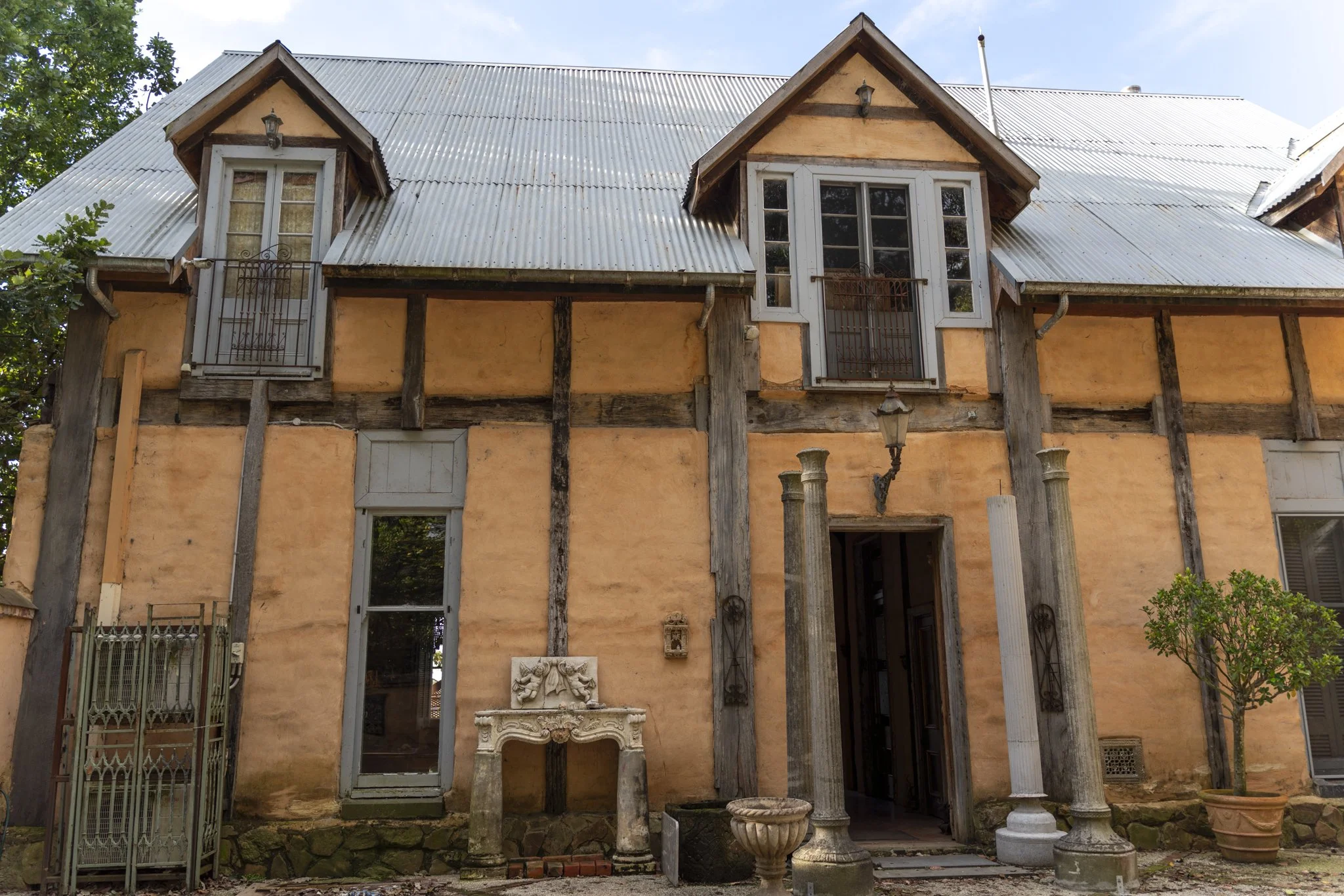
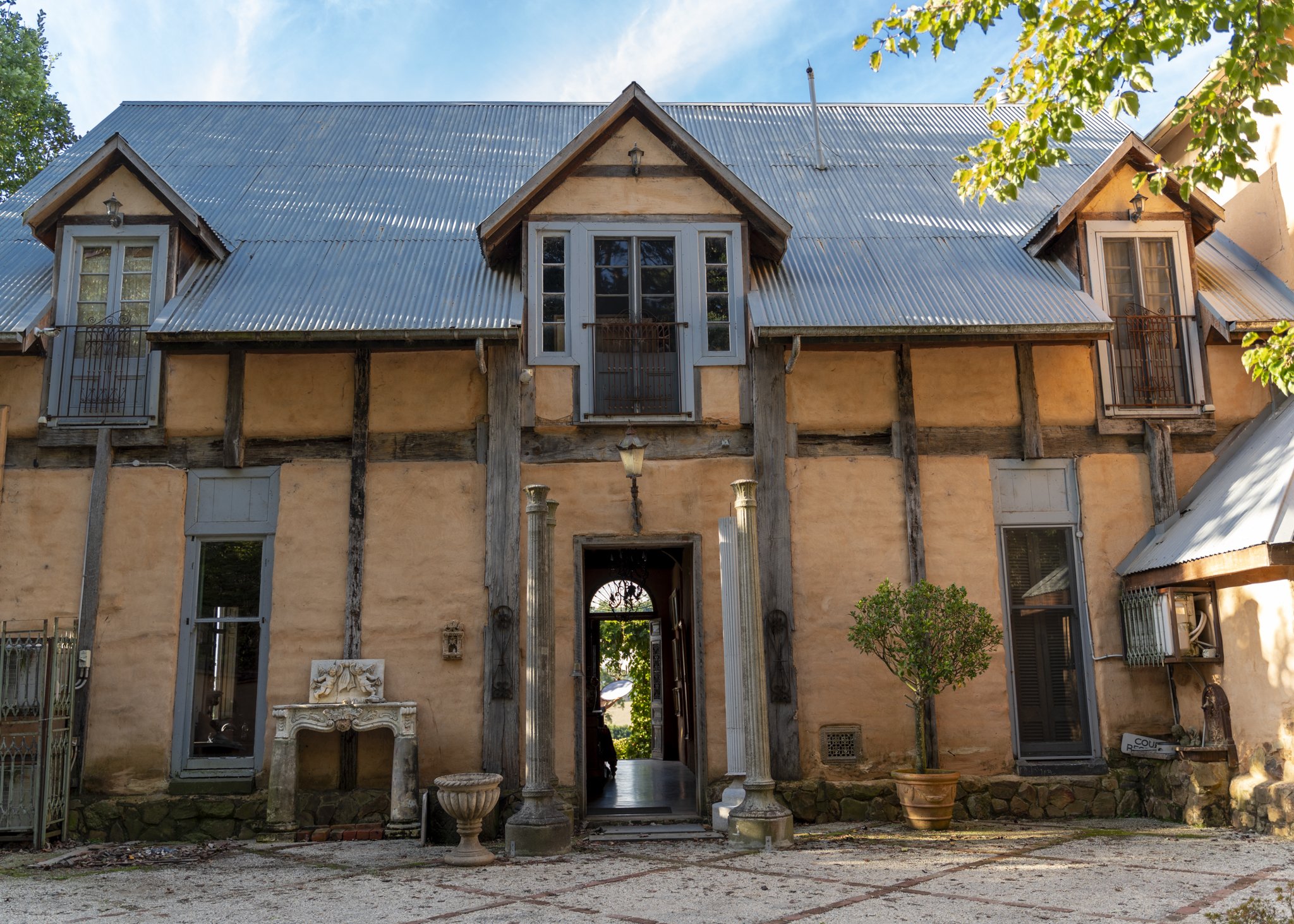
When you see an incredible location like Mont du Soleil, it’s very easy to think, well, obviously I’d want to photograph there. Look at it!
And yes, being beautiful certainly helps.
But when I’m scouting locations for a creative portrait shoot or photography workshop, “pretty” is actually quite a long way down my list.
A spectacular building might look amazing in photographs, but if there’s only one usable spot, terrible light, nowhere for a model to change and no room to move around, it can become frustrating very quickly.
I’m looking for something more.
I want a location that gives me possibilities.
1. Can I create more than one look?
This is one of the first things I consider, especially when planning a workshop.
If photographers are spending several hours at a location, I don’t want every photograph to look as though it was taken in exactly the same place.
I look for variety.
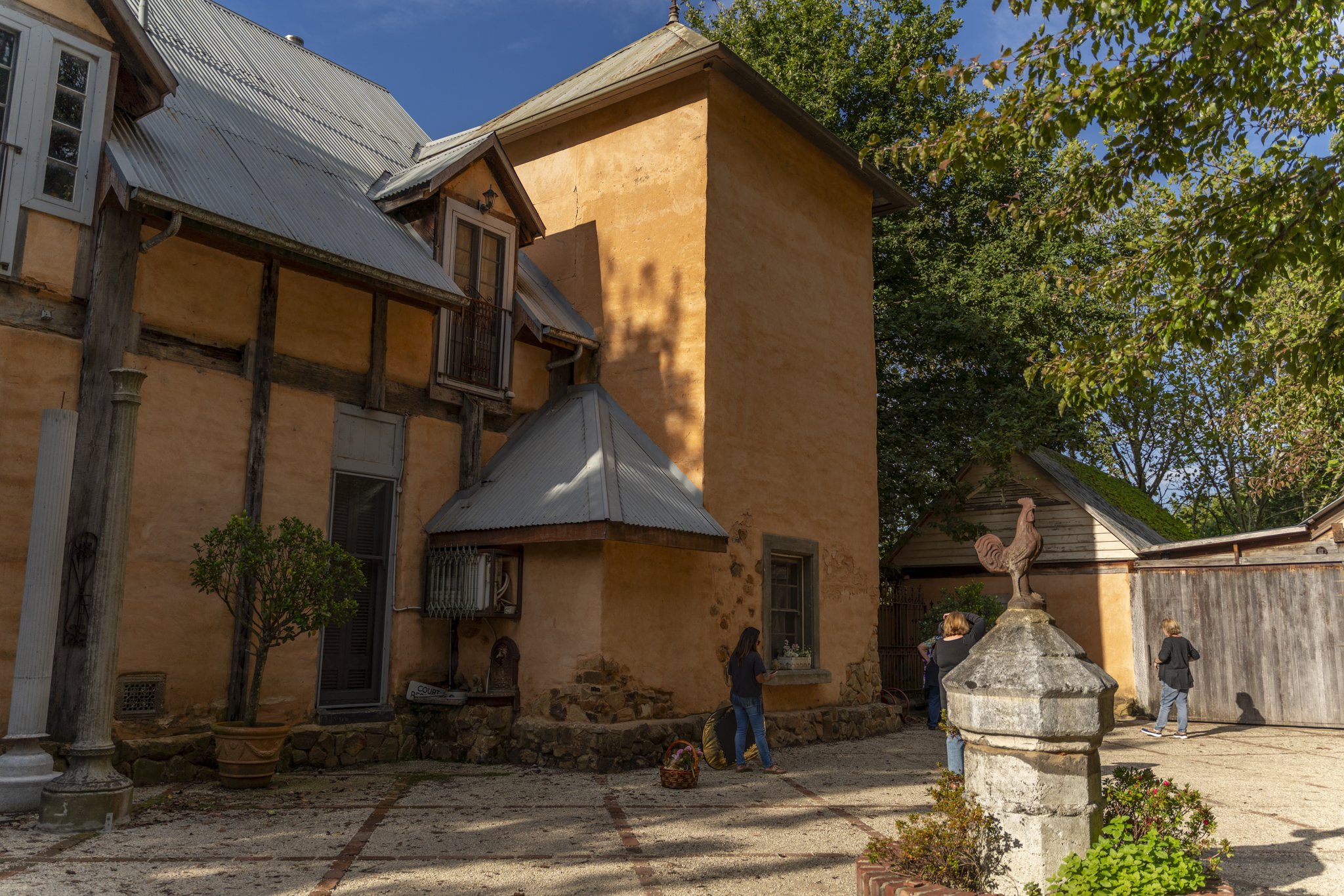
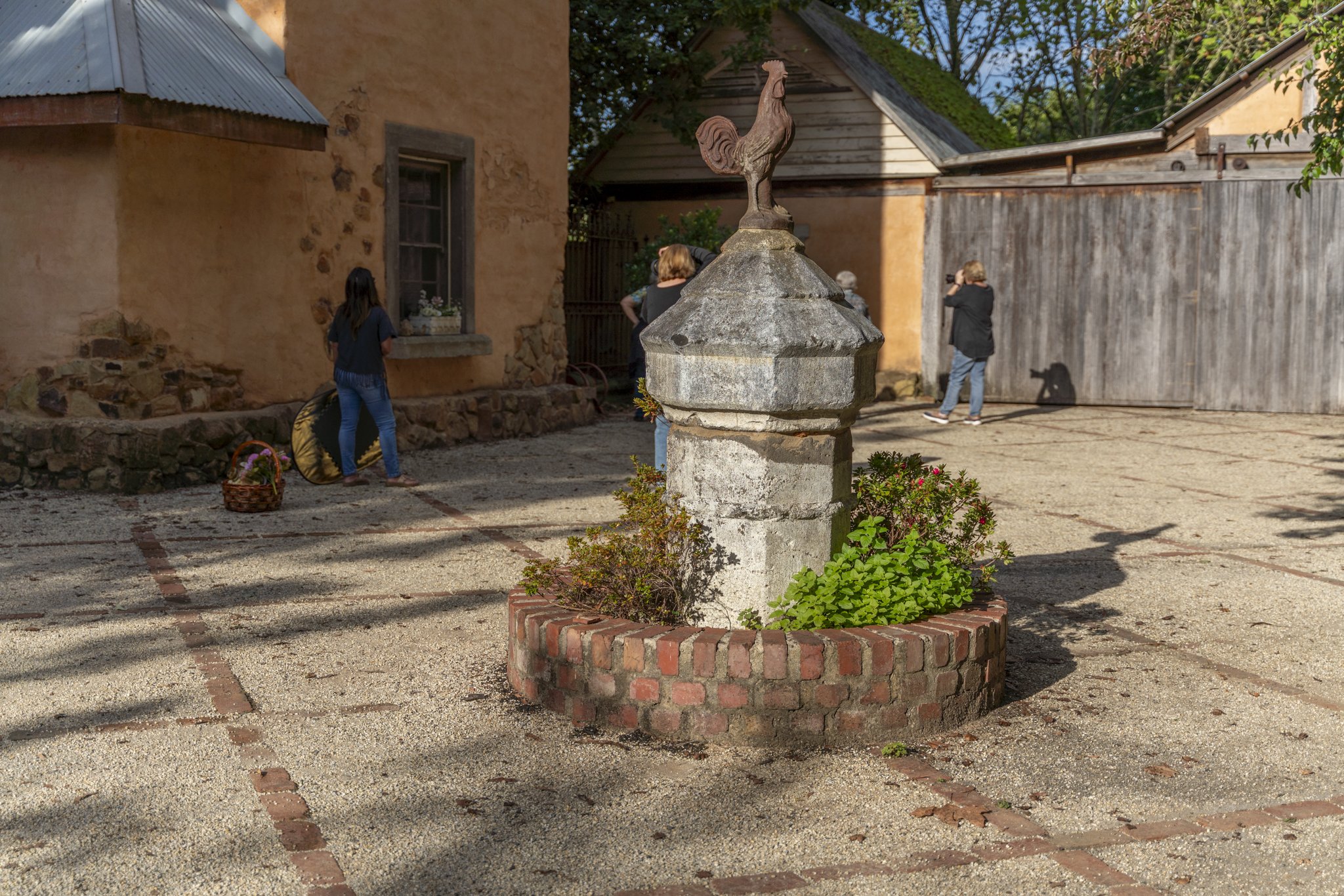
Different backgrounds, architecture, gardens, pathways, interesting walls, interiors, open spaces and smaller tucked-away corners can all become completely different scenes.
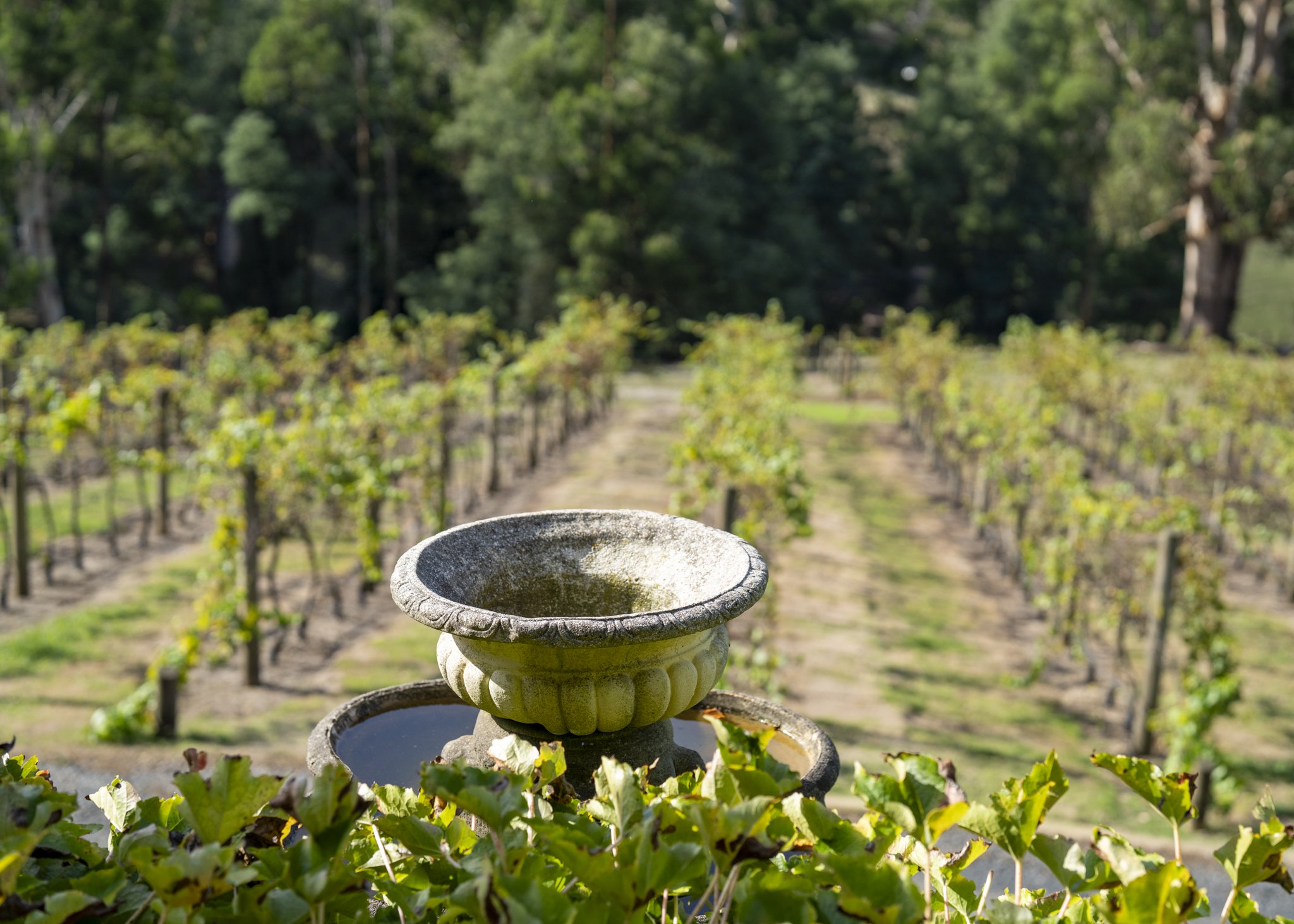
This is one of the things I love about Mont du Soleil in the Dandenong Ranges.
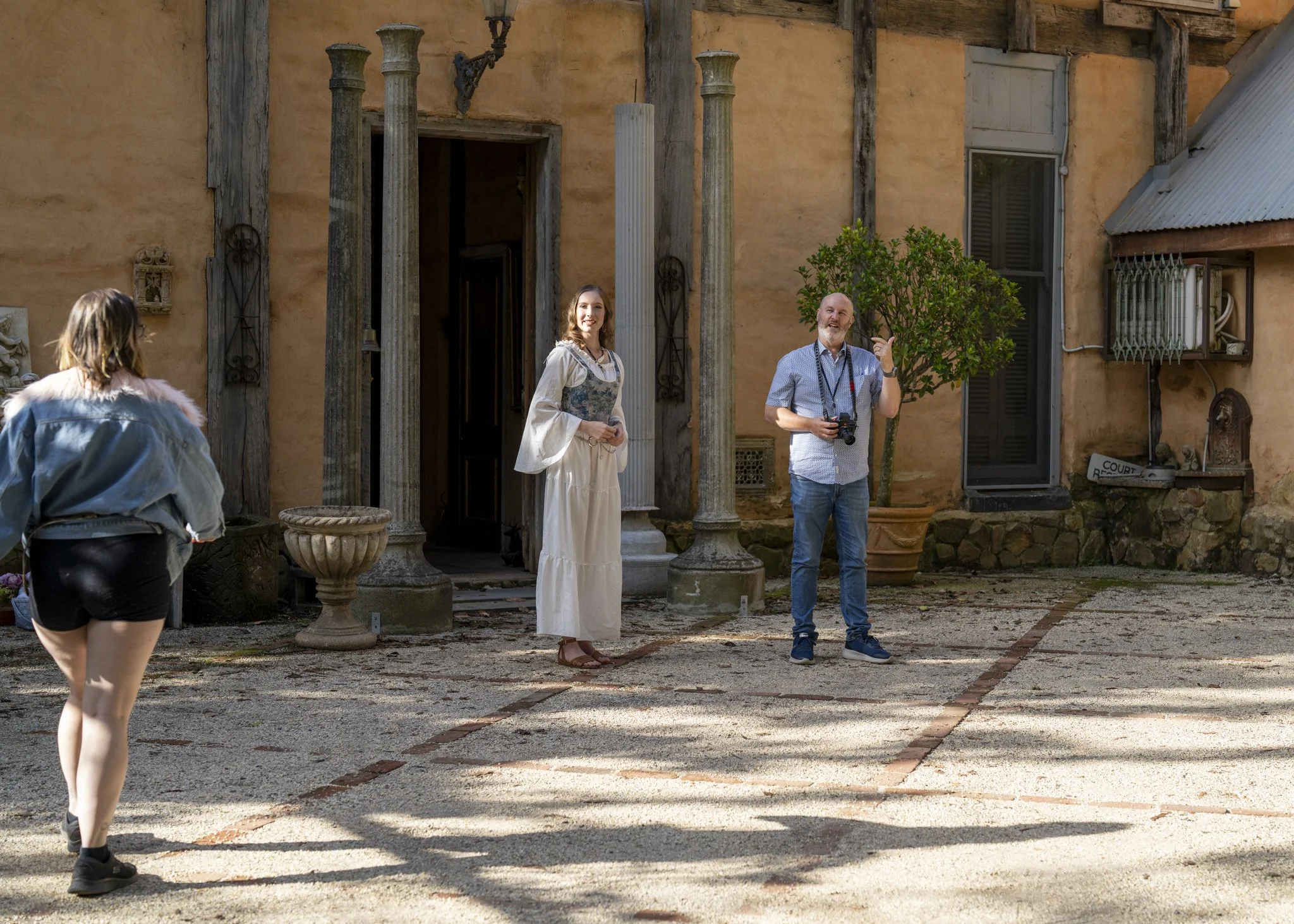
There are grand European-inspired architectural elements, stonework, arches, gardens, interiors and all sorts of interesting little areas to explore.
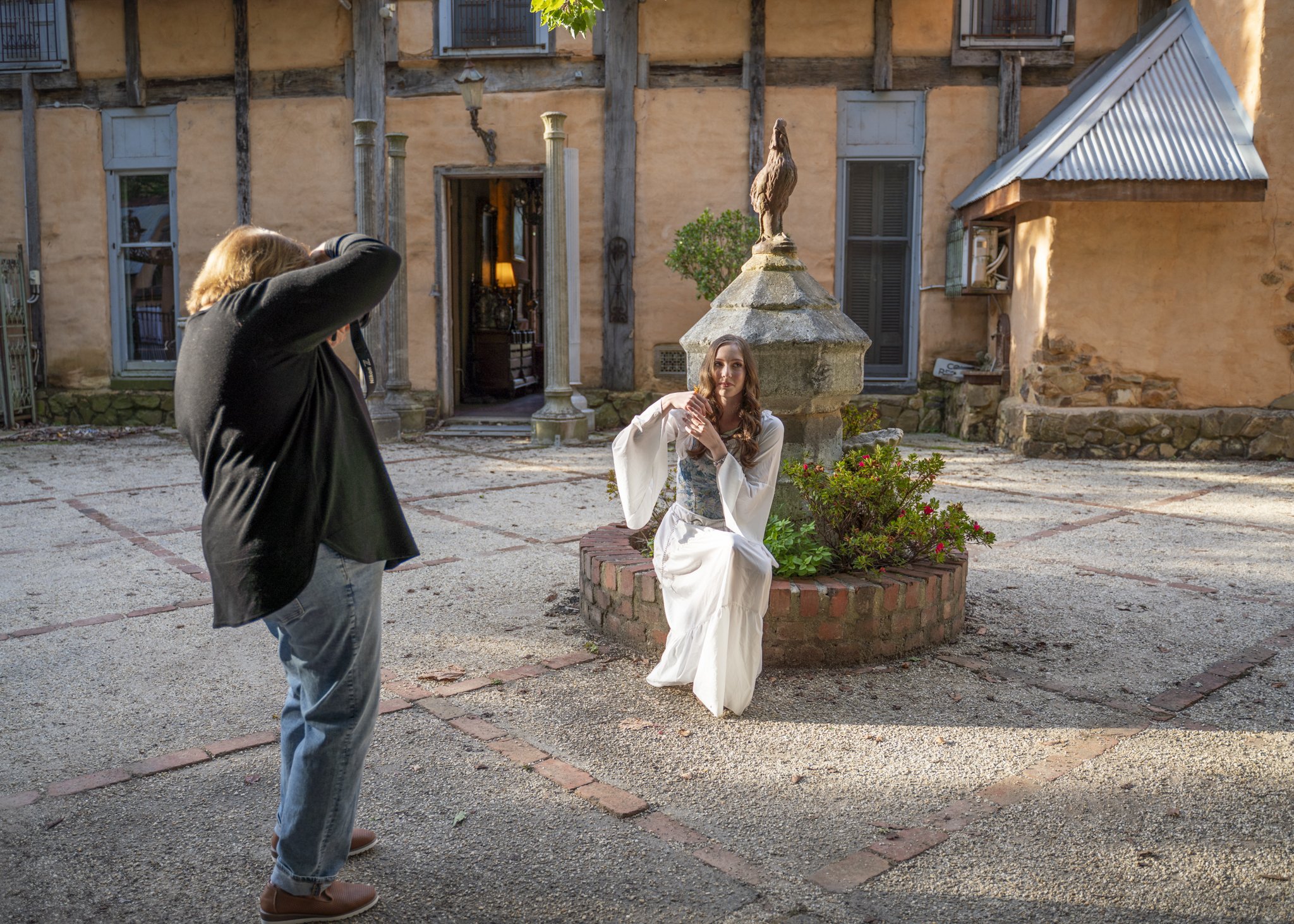
Move a few metres, change your lens or shooting angle, and suddenly you have an entirely different photograph.
2. Where is the light?
Before I start thinking about where I’ll put a model, I’m looking at the light.
Where does the sun fall at the time we’ll be shooting?
Where is the open shade?
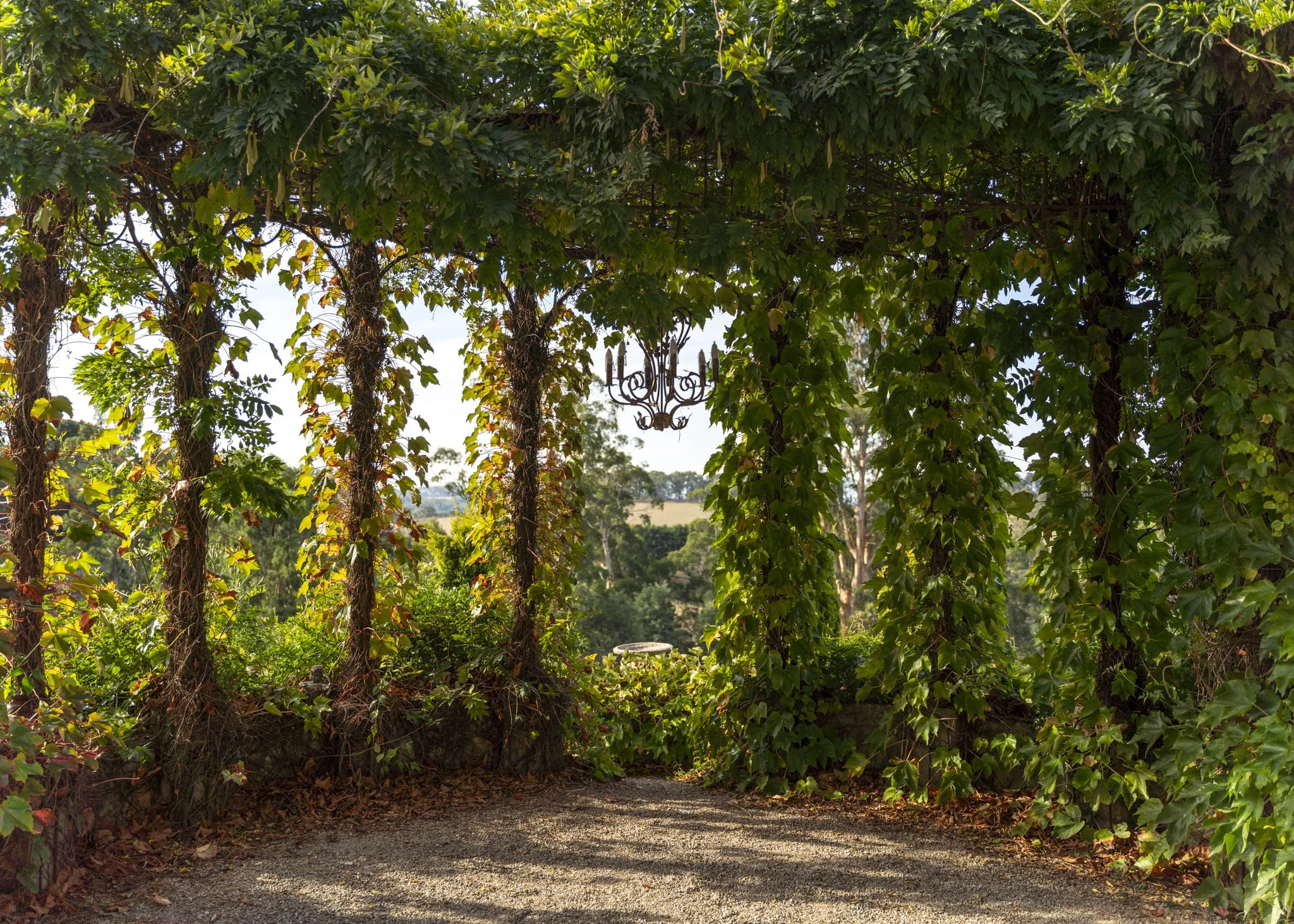
Are there verandahs, archways or doorways?
Are there windows that might give me beautiful directional light?
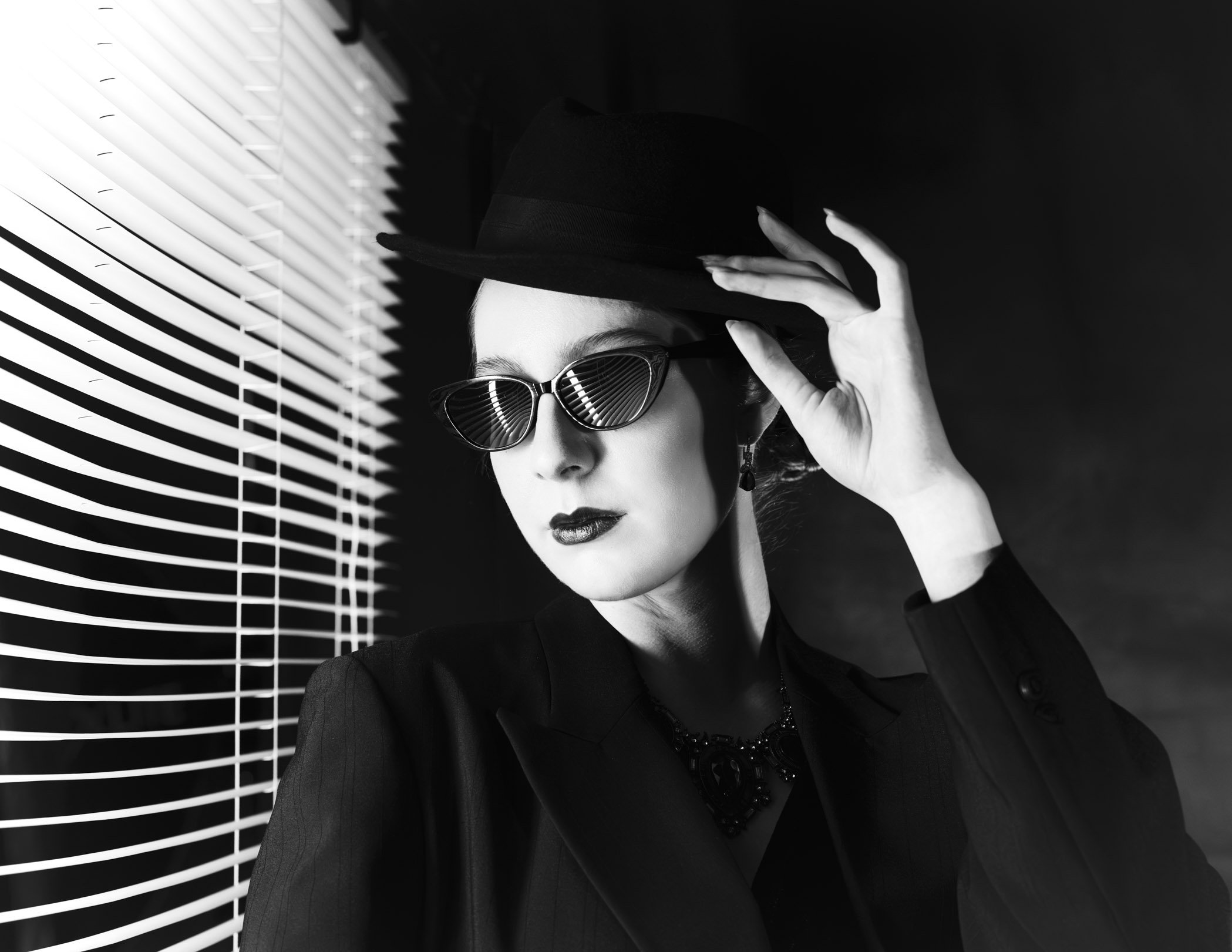
Are there darker areas where I can introduce flash or continuous lighting and completely control the mood?
Sometimes the most visually impressive part of a location isn’t actually the best place to photograph.
A quiet doorway with beautiful soft light might give me something far more interesting.
Light wins over pretty almost every time.
3. Can I create depth?
I’m always looking for ways to create layers within an image.
Rather than simply putting a model in front of a beautiful building and taking a photograph, I want to explore how I can use the location.
Can I photograph through an arch?
Can I use foliage in the foreground?
Can a doorway frame my subject?
Can stairs, columns or pathways lead your eye through the photograph?
Foreground, subject and background can transform a location portrait from something quite flat into an image that feels much more immersive.
This is also where changing lenses and perspectives can make an enormous difference.
Don’t just photograph what is directly in front of you.
Move.
Get lower. Step back. Get closer. Shoot through something. Look behind you.
Often the photograph isn’t where you first thought it was.
4. What happens when I stop looking at the BIG picture?
When we arrive somewhere spectacular, there’s a temptation to photograph the whole thing.
But sometimes the best photographs happen when you stop trying to fit everything in.
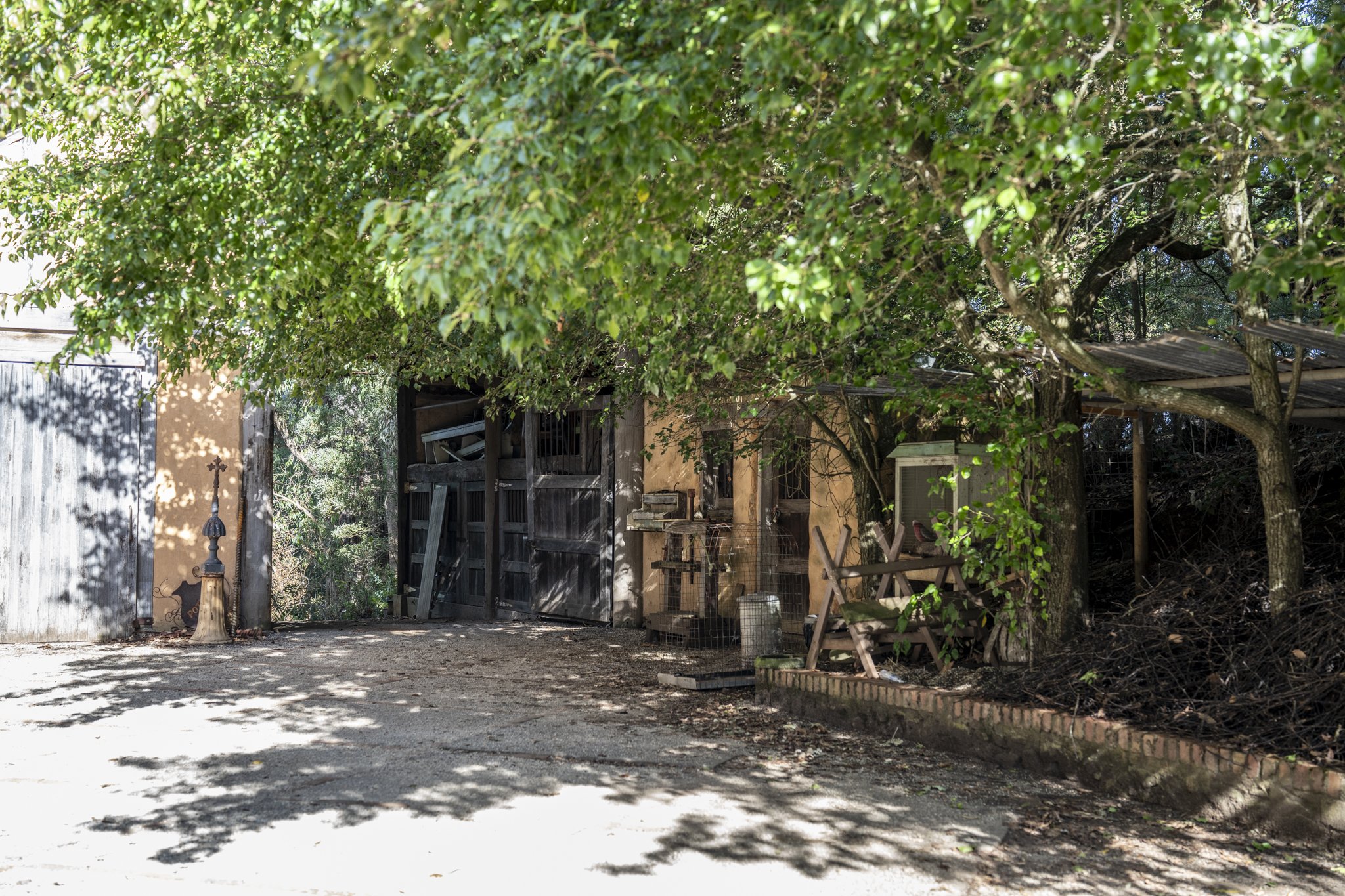
I look for textures, old doors, stonework, windows, stairs, furniture, foliage and little pockets of interesting light.
A tiny section of a much larger location can become its own little photographic world.
You might never know from the finished photograph that the model was standing in a two-metre-wide corner.
And honestly, I rather love that.
5. Does it make me imagine a story?
This might be the most important one for me.
A great location should make my imagination start working.
I want to walk around and immediately start thinking:
What could I create here?
What sort of character belongs in this space?
What would she wear?
Would I photograph this softly and romantically, or make it dark and dramatic?
What props could I introduce?
What happens if I put something completely unexpected into this very elegant setting?
When a location starts giving me ideas before I’ve even picked up the camera, I know I’ve found somewhere interesting.
That’s exactly what happened with Mont du Soleil.
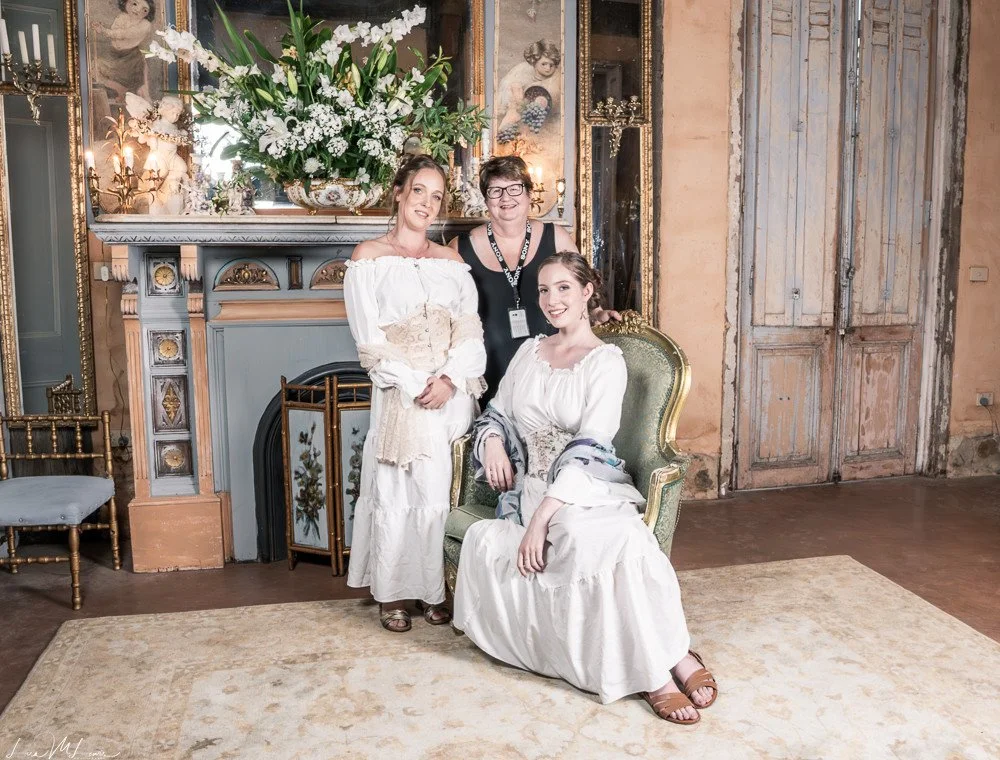
It lends itself beautifully to elaborate, romantic, almost painterly portraits, but I also look at all that elegance and immediately want to mess with it a little.
Which may explain Marie II: Beauty & Rebellion.
6. Then there’s the boring stuff…
This isn’t nearly as exciting as beautiful light and grand architecture, but it matters.
Especially for a workshop.
Where will everyone park?
How easy is access?
Are there toilets?
Is there somewhere for models to change?
Can hair and makeup work comfortably?
Is there access to power if we need it?
Can we safely bring lighting equipment into the space?
What happens if the weather turns?
Is there somewhere undercover?
Can a group of photographers work without constantly getting in each other’s way?
A location can be absolutely magnificent, but if the practical side doesn’t work, the entire experience can suffer.
And when I’m running a workshop, I’m not just thinking about the photographs I could create there.
I’m thinking about the experience everyone else is going to have too.
A location should give you possibilities
Ultimately, that’s what I’m looking for.
Not simply somewhere beautiful.
I want somewhere that changes as I move through it. Somewhere that works with different lenses, different light and different ideas. Somewhere that lets me create the big spectacular portrait and then turn around and make something completely different in a quiet little corner.
Most importantly, I want a location that makes me excited to pick up my camera.
Mont du Soleil does exactly that.
Which is why, after photographing there previously, I knew I wanted to go back.
And we ARE going back…
On November 21, 2026, we’re returning to Mont du Soleil for MARIE II: Beauty & Rebellion, a creative portrait photography workshop featuring Holly Mackenna and Nicola Paige, with hair by Rose Thorogood and makeup by Jolie Nguyen.
We’ll begin with the beautiful side of Marie, elaborate styling, gorgeous gowns and elegant portraits that make the most of this extraordinary location.
And then…
We’re going to mess her up a little.
The second part of the shoot will bring back my Grunged Marie concept, taking all that Rococo-inspired elegance and giving it a much more rebellious, contemporary twist.
Same location.
Same inspiration.
Two completely different stories.
And that, really, is exactly what I want from a great photoshoot location.
MARIE II: Beauty & Rebellion
Saturday, November 21, 2026
Mont du Soleil, Dandenong Ranges
What about you? When you’re scouting a location, what do you notice first: the location itself, the light, or the possibilities?