Photography Basics Without the Overwhelm
Photography can feel like a lot when you first begin.
Aperture, shutter speed, ISO, lenses, camera modes, focus points, white balance, histograms, metering, light, composition… suddenly it feels like you need to learn a whole new language before you can even take a decent photo.
And honestly, that can take the joy out of it very quickly.
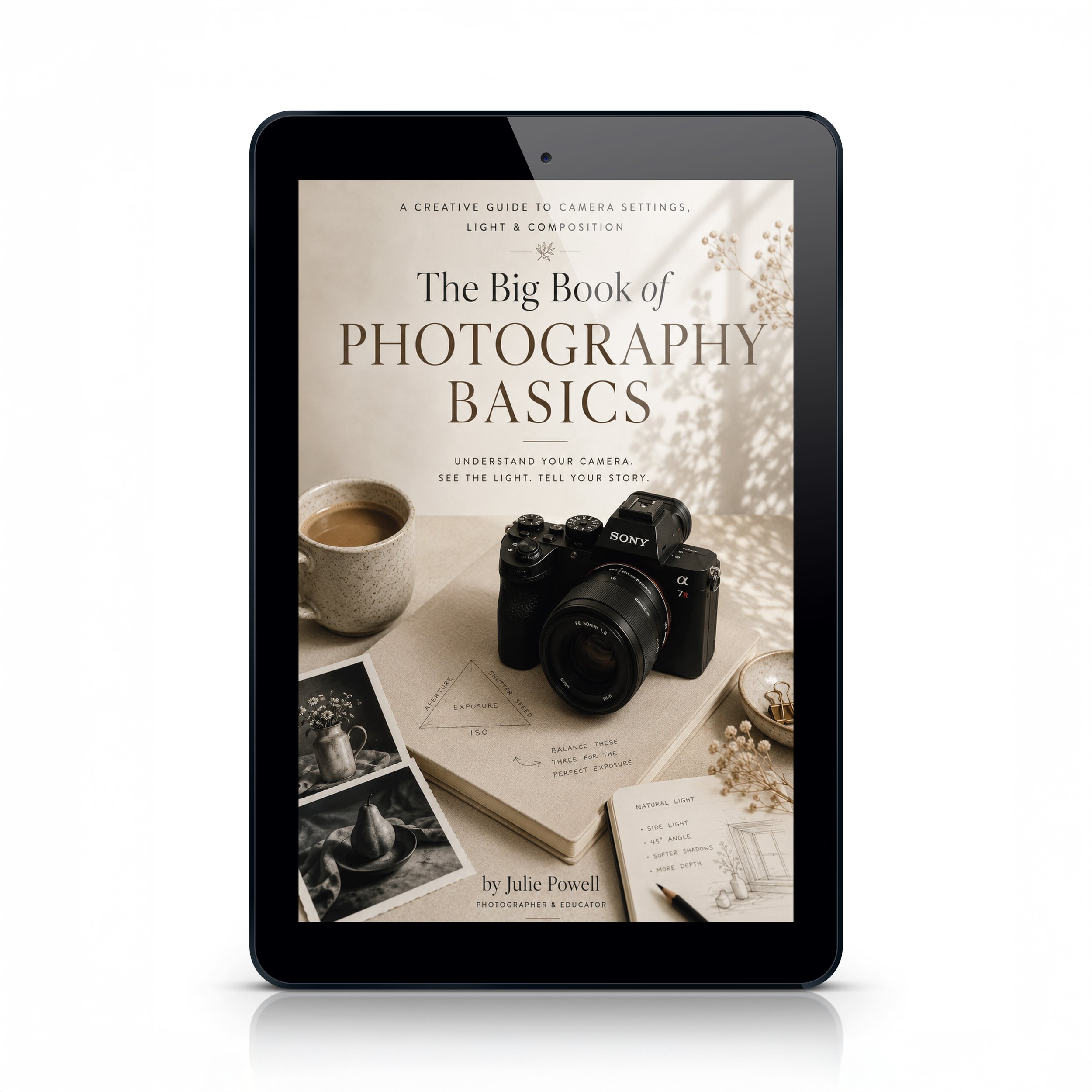
That’s one of the reasons I created The Big Book of Photography Basics.
I wanted to make a beginner-friendly photography guide that explains the essentials in a clear, calm and practical way, without making it feel like you are reading a camera manual from 1998. You know the ones. Tiny text, terrifying diagrams, and absolutely no emotional support.
This ebook is designed to help you understand the foundations of photography, but in a way that feels approachable, visual and creative.
What’s inside The Big Book of Photography Basics?
This book walks you through the core building blocks of photography, starting with your gear and gently moving through the creative and technical skills that help you make stronger images.
Inside, you’ll find sections on:
camera gear and why you do not need the most expensive equipment to begin
DSLR vs mirrorless cameras
understanding different lenses
camera modes, including Auto, Aperture Priority, Shutter Priority and Manual Mode
aperture, shutter speed and ISO
the exposure triangle
focus and depth of field
white balance and colour temperature
understanding and controlling light
using filters to control light
composition
colour theory
backgrounds and subject separation
creative rule breaking
beginner exercises
common mistakes
suggested starter settings
what to practise next
The goal is not to overwhelm you with every tiny technical detail. The goal is to help you understand what matters, why it matters, and how to start using that knowledge when you pick up your camera.
It’s not just about camera settings
Camera settings are important, of course. Understanding aperture, shutter speed and ISO gives you more control over your images.
But photography is not only about settings.
A technically correct photo can still feel flat if the light is dull, the background is distracting, or the composition does not guide the viewer’s eye.
That’s why this book also looks at the creative side of photography. Things like light, colour, backgrounds, negative space, subject separation and visual storytelling.
Because once you understand the basics, you can start making more intentional choices.
You can begin to ask:
Where is the light coming from?
What do I want the viewer to notice first?
Is the background helping or distracting?
Does the colour support the mood?
Can I simplify the frame?
What happens if I break the rules on purpose?
That is where photography starts to become more personal and creative.
Who is this ebook for?
The Big Book of Photography Basics is perfect if you are a beginner photographer, or if you have had a camera for a while but still feel unsure about the foundations.
It is especially helpful if you have ever thought:
“I don’t really understand my camera settings.”
“I always forget what aperture, shutter speed and ISO actually do.”
“My photos feel flat and I’m not sure why.”
“I want to move beyond Auto Mode, but Manual Mode feels scary.”
“I need simple exercises to help me practise.”
“I want to take better photos, but I don’t want to be buried in jargon.”
You can use this guide whether you enjoy photographing still life, flowers, food, portraits, travel, macro, landscapes, family moments or everyday scenes.
The basics apply across every genre.
Why I wanted it to feel different
I have written and refreshed quite a few photography guides lately, including my books on flash, artificial lighting, still life, macro and light painting.
With this one, I wanted to create something broader. A solid foundation guide that brings the basics together in one place.
I also wanted it to feel beautiful.
Not intimidating. Not cluttered. Not dry.
The 2026 edition has been designed with a softer, more editorial feel, with calm layouts, visual examples, practical tips and simple exercises throughout.
It is the sort of guide you can read through from start to finish, or dip into when you need a quick reminder.
Photography is a practice
One of the biggest things I want beginners to know is this:
You do not need to master everything overnight.
Photography improves when you practise with intention. You learn by noticing, adjusting, experimenting, making mistakes, and trying again.
Some images will work. Some won’t. Some will surprise you. Some will teach you exactly what to practise next.
That is all part of the process.
The aim of this ebook is to help you feel less overwhelmed and more willing to pick up the camera, try something, and keep going.
Ready to learn the basics?
The Big Book of Photography Basics is now available as a digital download from my website.
It is a gentle, practical and beautifully designed guide to help you understand your camera, see light more clearly, and create stronger, more intentional images.
You can find it here:
THE BIG BOOK OF PHOTOGRAPHY BASICS
And while you are there, you can also browse my other photography ebooks and guides, including Flash Basics, The Guide to Artificial Lighting, The Art of Still Life Photography, Macro Magic, and Light Painting with Still Life.
Whether you are just beginning, returning to photography after a break, or simply wanting to feel more confident with the basics, I hope this guide helps you slow down, notice more, and enjoy the process of creating.
Keep shooting,